



The morning sun draped Telluride’s streets in a golden haze, streaming through trees and casting intricate patterns on the cobbled path where Anika walked. Every day she traversed this route to the tiny café owned by her uncle. Her uncle, a robust and jovial man, often reminded Anika that family was everything. This mantra had been instilled in her since she was old enough to carry trays and take orders. Yet beneath the surface of her smile, a quiet conflict churned.
Anika’s family had immigrated from India two decades ago, seeking a life of stability and opportunity. Her parents worked tirelessly, her father as an accountant and her mother as a homemaker, their days filled with the rhythm of labor without rest. They dreamed of seeing their daughter succeed in the cultural definition of success: a reputable career, a suitable marriage, and a life anchored in tradition.
But Anika, standing on the cusp of adulthood, found herself drawn to artistry—the kind that required freedom, unpredictability, and, most terrifyingly, the potential for failure. The contrast between her ambitions and familial expectations was stark, like two colors that couldn’t help but clash.
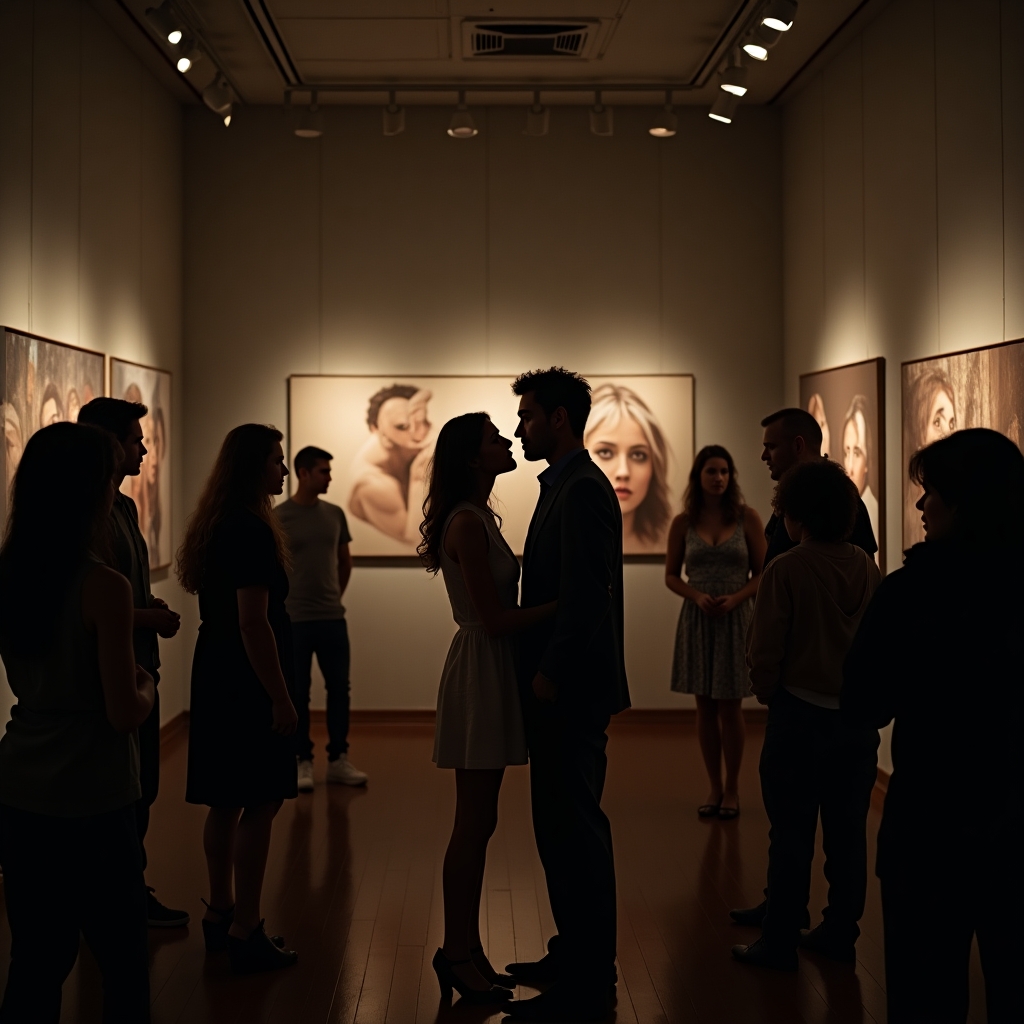
Each evening after the café closed, Anika would retreat to her room, her sanctuary lined with books, canvases, and unfinished symphonies. She painted till her fingers ached, poured her soul into each brushstroke, yet never found the courage to share this part of herself with her family. The fear of disappointing them was a shadow she couldn’t shake off.
One particular canvas, hidden in the corner of her room, was a testament to her dreams. It depicted a phoenix rising from ashes—a symbol of rebirth, of finding oneself amidst constraints. She would stare at it, imagining her own metamorphosis, only to hide it again before dawn.
Days turned to weeks, and the weight of her internal struggle grew. Anika’s once vibrant laughter dulled, her conversations with family became mechanical. Her mother noticed the change, her eyes filled with concern, but words of inquiry remained unspoken, resting between them like a silent specter.
It was during one of these muted evenings that Anika experienced her moment of clarity. The café was emptying slowly, the chatter of patrons dwindling to a quiet hum. Anika was clearing a table when her uncle approached, his usually warm eyes clouded with a rare seriousness.
“Anika,” he began, “I’ve watched you grow, seen the light in your eyes dimming. What burdens your spirit?”
Taken aback by his directness, Anika hesitated, the urge to deflect clashing with the longing for honesty. As silence stretched between them, her uncle reached into his pocket, pulling out a small, worn notebook. “Your father used to write,” he said softly, “poetry mostly, before life swept him into its current.”
Anika stared at the notebook, realization dawning with each breath. Her father, the man she saw as the epitome of duty, once harbored dreams, too. The notebook was a bridge between the past and present, a testament to a shared struggle hidden beneath layers of expectation.
Something shifted within Anika. The boundaries she had constrained herself with began to blur, the reality that her dreams did not have to be sacrificed for love or loyalty became a faint possibility.
That night, as stars speckled the sky, Anika found herself facing the canvas of the phoenix. With a newfound resolve, she picked up her brush, revising the painting, adding colors of boldness and hope. In that moment, she allowed herself to believe that she could weave her own path from the threads of her heritage and individuality.
The following morning, Anika woke with a lightness she hadn’t felt in years. She took the phoenix painting, wrapped it in a cloth, and carried it to the breakfast table where her family gathered. Her hands trembled slightly as she unfurled it before them, her heart beating a rhythm of hope and fear.
Her father’s gaze softened as he looked at the painting, his expression unreadable. Then, with a gentle nod towards the worn notebook Anika now held, he uttered words that resonated deep within her soul. “The heart’s whispers are sometimes drowned by the world’s noise,” he said, “but they remain true, nonetheless.”
In that shared silence, Anika felt the emotional healing begin—not just for herself, but spanning generations, as understanding and acceptance blossomed in the spaces where silence once reigned.