

The sun cast a gentle glow over the hillside village where Maya had grown up, a place where tradition was the unspoken law, guiding each person’s steps from cradle to grave. The narrow lanes, lined with the vibrant splash of blooming bougainvillea, seemed to echo with the whispers of generations, each carrying the weight of expectation. Yet, beneath the soft, sunlit veneer of this picturesque place, Maya carried a storm within her.
Maya, at twenty-two, stood at a crossroads that felt as ancient as the hills themselves. Her heart yearned to pursue a life of her own making, one where her love for art could flourish into something more than just a secret hobby. But the expectations of her family, deeply rooted in cultural traditions, dictated a different path—one where her future was laid out in terms of a respectable career and a suitable marriage.
Days blurred into each other as she walked the familiar paths, her sketchbook tucked under her arm like a clandestine diary. Each stroke of her pencil was an act of defiance, a silent rebellion against the destiny scripted for her. Yet, guilt gnawed at her resolve, each moment of silent rebellion shadowed by the thought of her parents’ disappointment.
The village prepared for the annual harvest festival, a tapestry of color and sound that wove the community together. But for Maya, it was a reminder of the roles she was expected to play, of the unspoken promise she was bound to—a future she had not chosen.
One evening, as the village square buzzed with preparations, Maya found herself at the edge of the market, her eyes drawn to the art supplies stall. She hesitated, her fingers grazing over the vibrant paints that promised worlds unimagined. Yet, even as desire surged within her, she heard her mother’s voice, gentle yet firm, reminding her of responsibilities, of heritage.
Maya’s chest tightened. She turned away, the colors blurring into a swirl of unfulfilled dreams and obligations. It was as if her heart and mind were engaged in a quiet, relentless battle that left her weary and unsure.
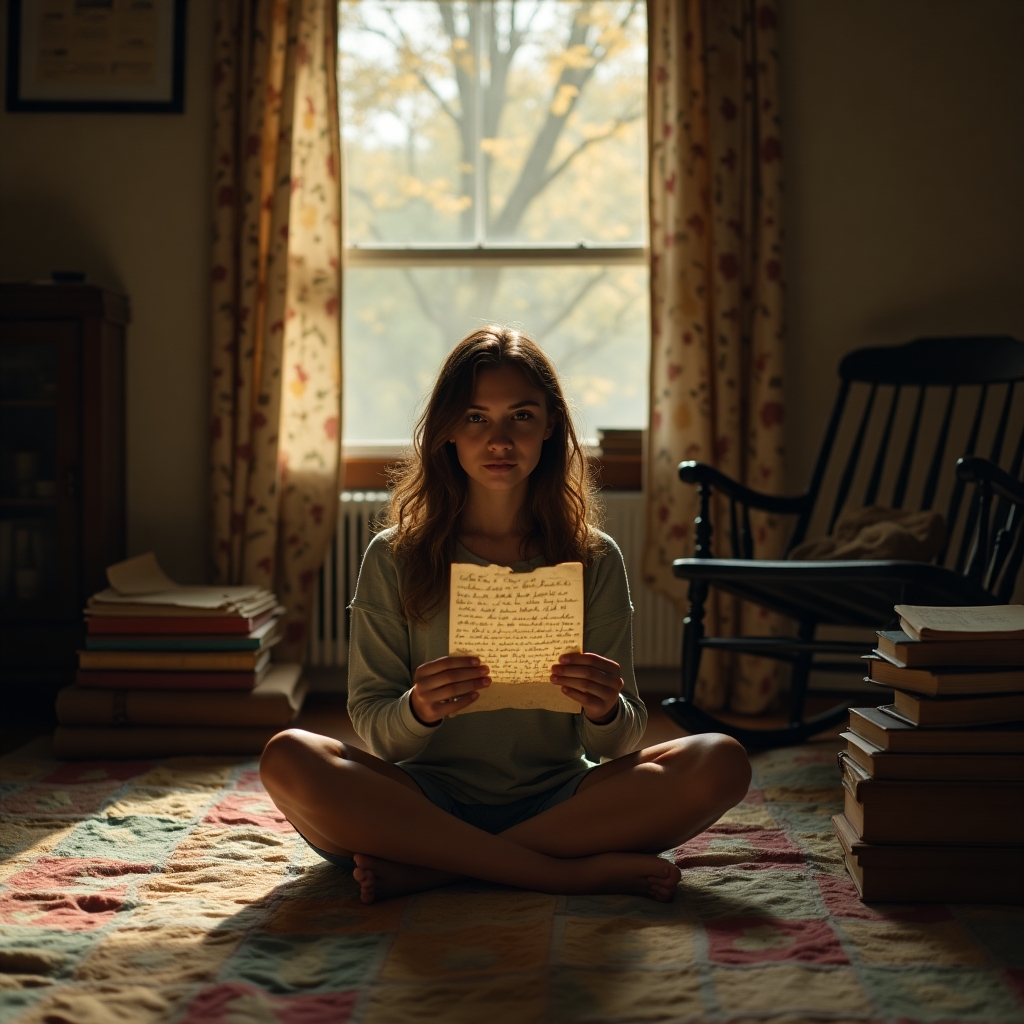
In the quiet sanctuary of her room, away from prying eyes and the steady hum of tradition, Maya poured her turmoil onto the pages of her sketchbook. Lines and colors intertwined, a vivid dance of emotions she could not voice. Her art became the mirror to her soul, reflecting the tension that lay beneath her composed exterior.
Then, one day, her grandmother called her to the veranda, her presence a blend of wisdom and warmth. “You have a gift, Maya,” she said, her eyes twinkling with a depth that belied her years. “I see it in your eyes, in the way you look at the world around you.”
Maya’s heart skipped a beat, fear and hope warring within her. Her grandmother, a woman who had lived through times of great change, reached for Maya’s hands. “We all have paths to follow. Sometimes, they are not the ones our family imagines for us. But what matters is the truth we hold inside.”
The words, gently spoken, broke the dam within Maya. She realized that she had been waiting for permission to be herself. Her grandmother’s quiet acceptance was the affirmation she had craved.
In the days that followed, Maya found herself lighter, her steps more assured. She began to make small changes, allowing her art to take up a little more space in her life. And though the path was not without its shadows, she found strength in her truth.
Her family noticed the change, a subtle shift in the air. Her parents, initially resistant, began to understand, if not fully accept, the depth of her passion. The village, too, was a part of this quiet evolution, learning to embrace her individuality as part of their collective tapestry.
Maya’s journey was not one of dramatic upheaval but of gentle persistence, a path paved with moments of clarity and courage. The whispers of tradition still lingered, but alongside them, Maya’s voice rose—a melody of self-discovery and quiet strength.