




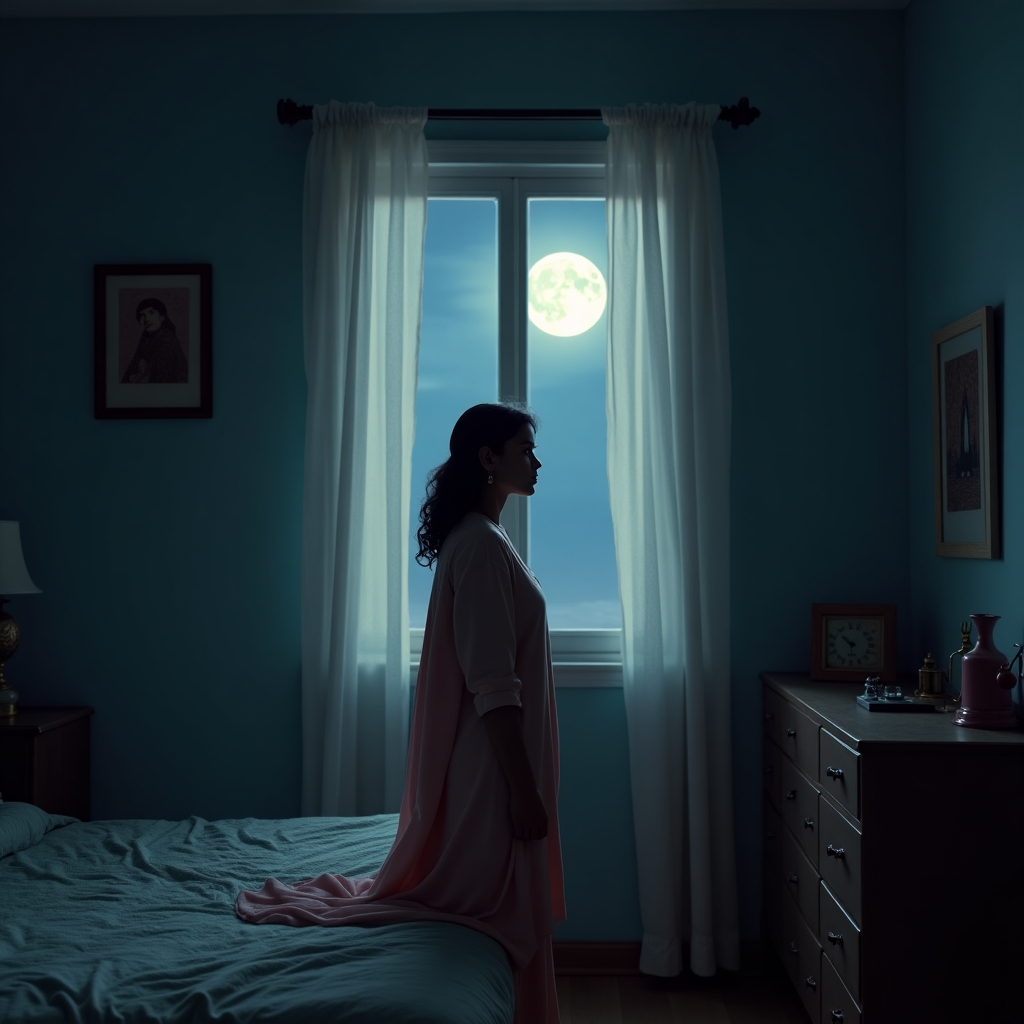
Amina sat on the cushioned window seat of her small bedroom, the gentle hues of twilight painting her walls in shades of lavender and rose. She gazed out at the garden below, where jasmine flowers bloomed, their scent interweaving with the cool evening air. This was her sanctuary, a quiet corner in the family home in which she had grown up, nestled within the suburbs of a bustling, multicultural city. Here, she could think, escape, and dream.
At twenty-five, Amina was caught between two worlds. The daughter of Pakistani immigrants, she was born amid the intricate tapestry of her parents’ values and the often contrasting rhythm of Western expectations. Her parents had instilled in her deep roots tied to family honor, cultural dignity, and collective responsibility. But there was also the world beyond their front door, where individualism beckoned, where dreams were self-made, and choices bore personal significance.
Amina had always been a dutiful daughter. Her compliance was the product of love and respect, rather than fear or oppression. She attended every family gathering, participated in cultural festivals, and adhered to norms that sometimes felt like an ill-fitting garment, yet one she could not discard. Her heart, however, whispered its desires in quiet moments. It spoke of a different life, one where choices were her own, unclouded by the shadows of expectation.
This inner conflict had simmered gently for years, like a pot left on low heat, until recently. Her parents had broached the topic of marriage, introducing it with the subtlety of dropping a pebble in a pond, but the ripples were far-reaching. They arranged meetings with suitable young men, each encounter feeling like an audition for a role she wasn’t sure she wanted. Amina felt the weight of generations pressing upon her, hopes pinned like badges she had not earned.
The quiet tension grew, eroding her peace. Her love for her parents was unquestionable, as was her yearning to meet their expectations. But her own aspirations pulled fiercely in another direction. She longed to travel, to explore art and literature, to write stories that had lived in her heart for so long, yet never fully breathed. She dreamt of a partnership born of mutual passion and respect, not simply a merging of two suitable family trees.
One evening, after another cordial, yet soul-dampening meeting orchestrated by her parents, Amina retreated to her room. She lay back on her bed, eyes tracing patterns in the ceiling. She thought of her grandmother, whom she’d lost two years ago. It was Bibi who had taught her to sew, to sing old songs, and to embrace her heritage with pride. Yet Bibi had also whispered in Amina’s ear, tales of her own dreams, ones that had withered in sacrifice.
In the stillness, Amina allowed herself to listen deeply to those whispers. They mingled with her own, forming a symphony of silent rebellion. Her heart ached with the resonance of unspoken truths. It was then she realized that her grandmother’s legacy wasn’t just tradition; it was resilience and quiet strength.
That night, as the moonlight pooled on her floor, Amina found the courage she had been searching for. There was no epiphany, no dramatic revelation, just the soft certainty that she must speak her truth. The path before her was undefined, but the desire to forge it was undeniable.
The next morning, she approached her parents, her resolve wrapped in vulnerability. Her voice trembled as she spoke, but her eyes were steady, reflecting the jasmine in full bloom. “I love you both, and I am grateful for everything you’ve given me. But I need to build my own life, my own way, based on dreams that are important to me.”
Her parents listened, their expressions shifting from surprise to contemplation. It was a quiet moment, the air thick with unsaid words, yet it was a beginning. Amina understood that change would not come swiftly, but she had planted a seed of truth, nourished by her courage.
In the days that followed, there were difficult conversations, tears, and moments of understanding slowly unfurling like petals. Her parents began to see her not as a challenge to their values, but as an extension of their hopes, a bridge between the world they knew and the one she wished to explore.
Amina’s journey had only just begun, but she walked it with a newfound clarity, her heart a delicate harmony of past and present, tradition and dreams. She realized that love was not about casting aside one world for another, but finding her place within both, becoming a thread in the tapestry that honored her family and stayed true to herself.