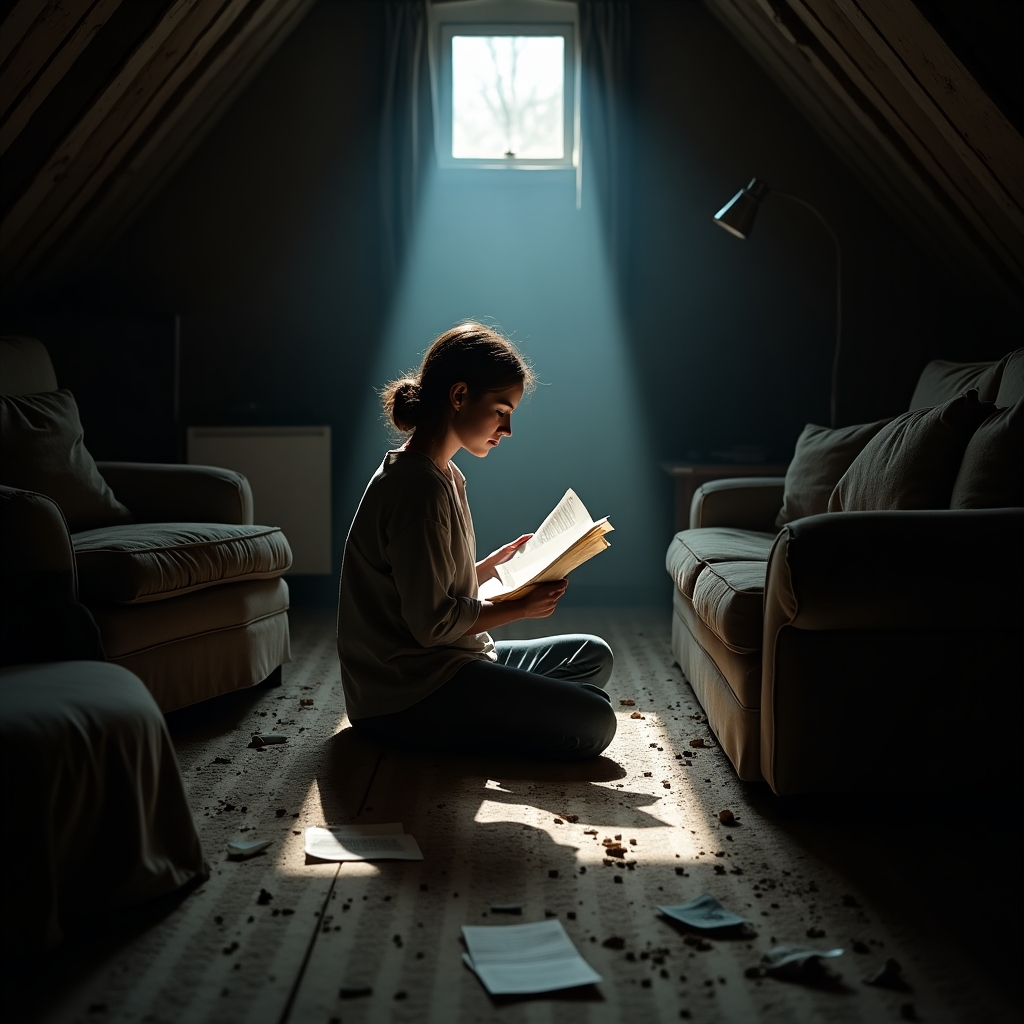





The sun had barely begun its ascent over the muted hills of Elmwood when Anya slipped quietly from her room, her footsteps careful not to awaken the sleeping house. The soft glow of dawn filtered through the lace curtains, painting delicate patterns on the walls of the hallway. She moved towards the kitchen, where the scent of faded spices lingered, a perpetual reminder of the household’s traditions.
Anya was 22, on the cusp of adulthood but still ensnared in the web of her family’s expectations. Her parents had immigrated to the small town from a distant land, bringing with them the tapestry of their culture’s customs and beliefs. To them, maintaining these traditions was not merely an obligation but an honor—a way to preserve their identity in a foreign world.
For Anya, these rituals were both familiar and alien. She appreciated their beauty and the sense of belonging they imbued, yet she couldn’t ignore the quiet push of her own desires. She yearned for independence, a life where she defined her own path, unencumbered by the weight of her ancestors’ dreams.
As she prepared the morning tea, the ritualistic clinking of porcelain against wood, she thought of her grandmother, whose presence was felt in every inch of the home. Grandmother Miriam was a formidable figure, albeit confined to her room for much of the day due to age. Her stories of the old country, filled with rich imagery and deep emotion, had always enchanted Anya. Yet, they were also stories woven with expectations—a roadmap laid out for Anya, with little room for deviation.
The air in the house was thick with unspoken rules, the kind that lingered in the silence between conversations. Anya’s father, a man of few words, expressed his love through actions: fixing things around the house, ensuring the family was provided for. Her mother, though more vocal, was a master of the unsaid. She conveyed her hopes for Anya through gentle nudges rather than direct declarations.
Each day, Anya felt the weight of the choices she hadn’t yet made. She was expected to pursue a career that was stable and respectable, marry within their cultural circle, and above all, maintain the family’s traditions. Her heart, however, whispered of a different path—a vocation in art, where her soul felt alive, and love that was chosen freely, not dictated by lineage or expectation.
Over time, Anya noticed a subtle shift in her own demeanor. She moved through her days with a quiet tension, a restless spirit masked by a composed exterior. Decisions loomed over her, casting shadows on moments that should have been joyous.
It was during one of her grandmother’s stories that clarity began to form. Miriam spoke of a festival from her youth, where merriment bloomed and boundaries blurred under the starlit sky. As she described the dance, a longing slipped into her words—a longing for freedom she had never quite grasped.
Anya watched her grandmother’s face, the lines of age softened by memory, and saw her reflection in the older woman’s eyes. It was in that moment Anya understood: the expectations placed upon her were rooted not only in love but in fear. A fear of losing identity, of disappearing into the vastness of the new world.
With this insight, Anya felt an emotional shift, a quiet resolve building within her. She realized her truth need not erase her family’s history—it could coexist, like threads in a tapestry, each holding its own color and strength.
The culmination of her internal struggle came quietly, on a day much like any other. Anya found herself in the garden, where the scent of jasmine lingered on the breeze. It was in the tender solitude of nature that she found the courage to articulate her truth.
She spoke gently to her parents that evening, words chosen with care and respect. She told them of her passion for art, her wish to explore different cultures, and her commitment to carry their traditions within her own heart, rather than as a burden.
Her father was silent, his expression unreadable, while her mother’s eyes glistened with unshed tears. But there was no anger, no disappointment, only a palpable shift in the air as they absorbed her words.
In the days that followed, the conversations continued, each one unraveling a thread of tension, weaving a new pattern of understanding. Anya’s journey was not solitary; it was a dance of give and take, of holding on and letting go.
With time, she saw her decision did not sever her ties to the past but enriched them. Her art became a bridge, connecting her to her heritage while allowing her the freedom to explore her individuality.
Anya learned that courage was not always loud; sometimes it was the quiet assertion of truth against the backdrop of expectation. And in that courage, she found a way to heal the generational wounds, to nurture both her dreams and her roots, creating a legacy uniquely her own.