



Aarav sat cross-legged on the polished wooden floor of his family home, his fingers delicately tracing patterns on a fraying prayer mat. The rhythmic chants of his father echoed through the dimly-lit room, mingling with the fragrance of incense that clung to every corner like an old memory. Each syllable spoken was a weight pressing down on Aarav’s shoulders, one that had grown heavier with each passing year.
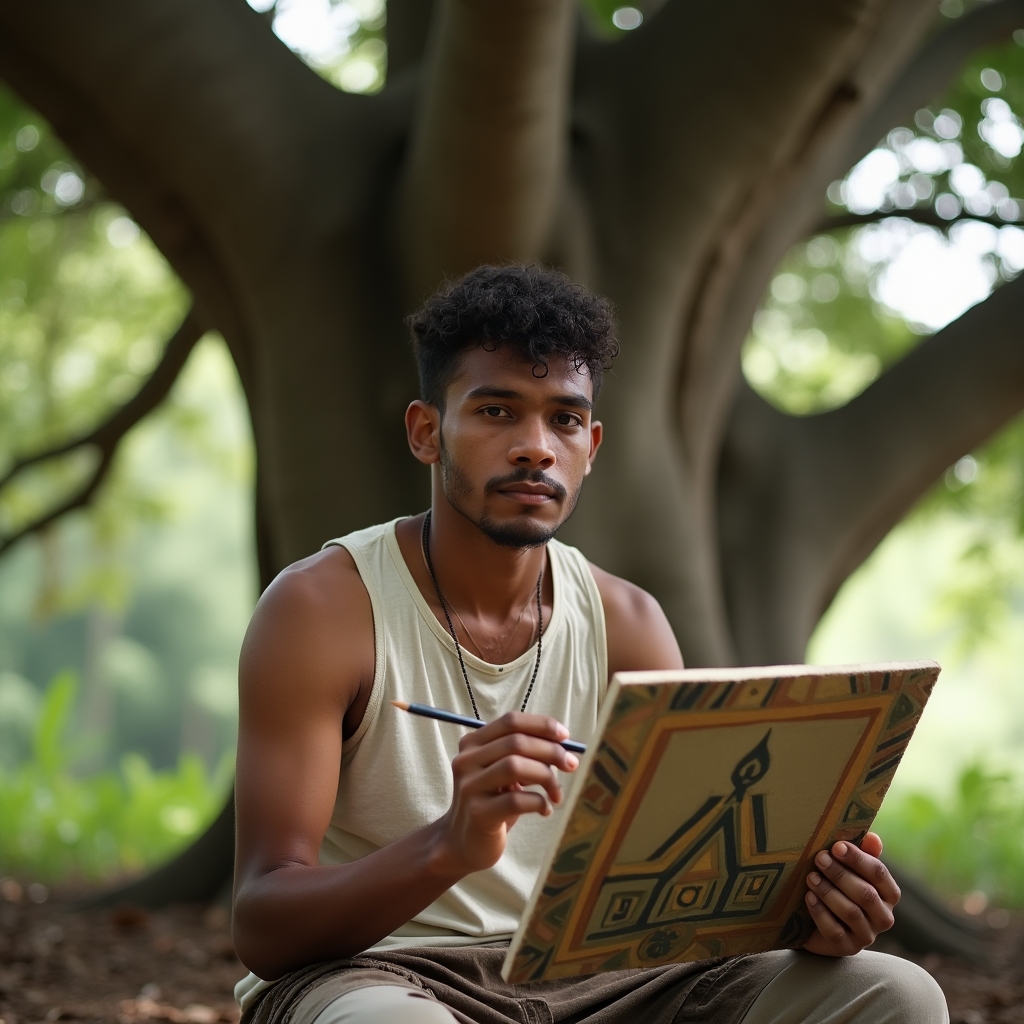
The house was a sanctuary of tradition, a relic of a bygone era preserved within its walls. In every room, echoes of ancestral expectations reverberated, from the intricate tapestries depicting tales of valor and virtue to the stern visages of past generations captured in fading photographs. Aarav often found solace beneath the sprawling branches of the old banyan tree in the courtyard. Here, the world seemed simpler, the air fresher—free from the burden of expectation.
Yet as Aarav reached adulthood, the whispers of compliance grew louder. His family expected him to continue the legacy, to shoulder the mantle of tradition and carry it forward. It was a path clearly laid out, a well-trodden road paved by those who came before him. Yet, within the confines of his mind, Aarav yearned for something different.
His heart pulled towards the arts—a world of boundless expression and unfettered creativity. He longed to paint with colors as vivid as his dreams, to capture emotions in brush strokes and carve stories from sculptures of clay. But in a family where engineering was revered and creativity was seen as mere dalliance, Aarav’s aspirations were met with silence.
He felt caught in the crossfire of competing loyalties. To pursue his passion felt like a betrayal, a severing of ties with a lineage that had thrived on conformity. Yet, to abandon his dreams was to lose himself, to become a shadow in the very home that shaped him. Aarav’s nights were restless, filled with visions of a life unlived.
Then came Diwali, a festival of lights, a celebration of renewal and triumph over darkness. Aarav’s family gathered in the courtyard, laughter and joy rippling through the air like waves on a tranquil pond. As Aarav watched his family, he felt the tether of obligation tighten around his heart.
In the glow of the flickering lamps, he saw the reflections of his ancestors standing tall, their expectations a palpable presence in the night. Aarav wished for guidance, for a sign to illuminate the path forward. His mind was a battlefield of contradictions, a tug-of-war between duty and desire.
It was during the festival’s crescendo, amid the crescendo of bursting fireworks, that clarity finally dawned. Aarav watched a single flame flicker, its determination unwavering against the night breeze. In its dance, he found the mirror of his soul, a relentless spirit yearning to break free.
He realized that honoring his family did not mean forsaking himself. Perhaps, just maybe, there was space for both—a future where tradition and passion could coexist, where he could walk a path of his own making while carrying the values that shaped him.
The next morning, beneath the banyan tree, Aarav sat with his father. The air was thick with unspoken words, yet beneath the surface, lay an understanding forged by love. Aarav spoke of his dreams, his fears, and the future he envisioned. His father listened, the lines on his weathered face shifting, the weight of history softening in the light of a new understanding.
In that moment, Aarav found his truth. It was not about choosing one over the other but allowing both to exist harmoniously. He saw his father’s nod, a silent blessing, an acknowledgment of his son’s journey. Aarav knew then that he was free—not from his family, but from the chains of doubt that had held him captive.
As the sun dipped below the horizon, casting long shadows across the courtyard, Aarav felt a sense of peace. The whispering leaves of the banyan tree swayed gently, a silent witness to the quiet strength that had blossomed within him, a testament to the courage it took to forge a new path while honoring the old.
In the days that followed, Aarav painted his first canvas—a vibrant tapestry of colors and emotions. The artwork hung in the family home, a symbol of new beginnings and the delicate balance between past and future.
The banyan tree stood tall, its roots deeply entwined with the earth, its branches reaching towards the sky—a perfect mirror of Aarav’s journey of self-discovery, a silent guardian of the dreams that had finally taken flight.