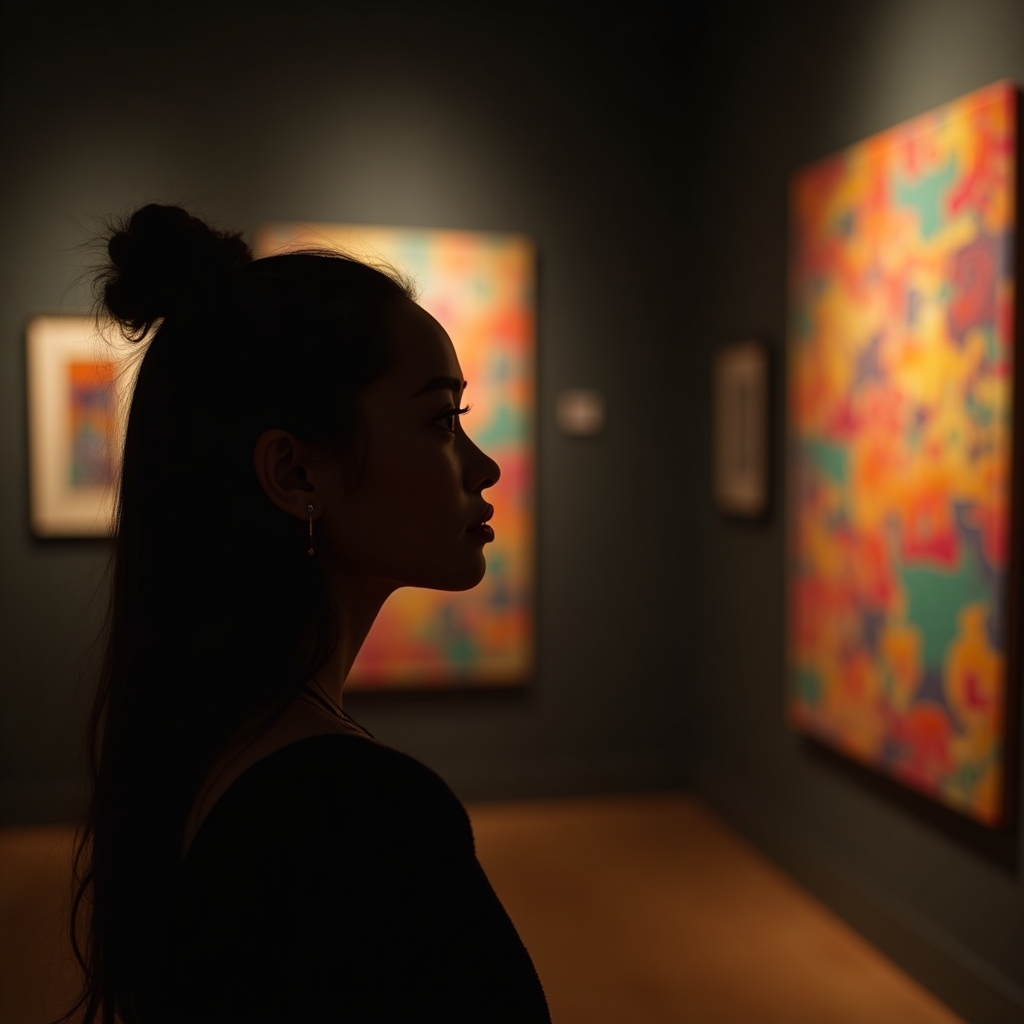





Amara sat quietly on the windowsill of her room, her fingers tracing the gentle grain of the ancient wooden frame that had held countless memories of her childhood. Outside, the sprawling branches of the banyan tree swayed softly in the evening breeze, its leaves whispering secrets only the wind could carry. This was her sanctuary, a place she turned to when the world demanded more than she was ready to give.
Raised in a traditional Indian family, Amara had always been the dutiful daughter, balancing her parents’ high expectations with her own dreams. Her father, a respected professor, dreamed of her following in his academic footsteps, while her mother, a consummate homemaker, envisioned her daughter’s future steeped in the familial roles she herself had mastered. But inside Amara burned a quiet rebellion—a yearning for a life that blended her cultural roots with her love for art and literature, passions her parents viewed as mere hobbies, not suitable pursuits for a respectable career.
The internal conflict gnawed at her, a slow erosion of certainty in the bedrock of her identity. She felt like a rope in a tug-of-war, stretched between the desires of her heart and the duties to her family. The tension molded her days into a series of subdued negotiations, a quiet dance of compromise and self-denial.
Every morning, Amara would sit with her family for breakfast, the room filled with the comforting aroma of masala chai and freshly cooked parathas. Her parents would discuss her future with pride, talking about prospective colleges and the prestigious careers that awaited her. While she played along, nodding at appropriate moments, her mind wandered to the books tucked away under her bed, each a portal to a world where she could lose herself in tales of adventure and self-discovery.
It wasn’t that she didn’t love her family. Quite the opposite, her love was profound, anchored in the gratitude and respect for all they had provided. But this love was a double-edged sword, binding her dreams in chains of obligation and guilt. Her heart ached at the thought of disappointing them, yet the idea of forsaking her dreams left her feeling hollow, as if a vital part of her soul was withering.
The days turned into months, and Amara’s internal struggle became an inseparable part of her existence, a shadow that lurked just beyond the periphery of her daily life. Then, one serene afternoon, as she sat beneath the expansive canopy of the banyan tree, the weight of her indecision pressed down upon her with uncharacteristic force.
As the sun filtered through the leaves, casting playful patterns of light and shadow on the ground, Amara closed her eyes, listening to the rustling leaves. She remembered the stories her grandmother used to tell her about the banyan tree being a symbol of enlightenment, a bridge between the earth and the heavens. Amidst the gentle sounds of nature, clarity began to bloom within her.
In this quiet moment, Amara realized that the life she envisioned wasn’t a betrayal of her heritage, but a tribute to it. Her passion for stories and art was woven into the rich tapestry of her identity, an inheritance from her ancestors who were storytellers and artisans in their own right. By pursuing her dreams, she would not be discarding her roots but nurturing them, ensuring they flourished in new and vibrant ways.
The realization was subtle but powerful, a soft illumination that banished the shadows of her doubt. Amara opened her eyes, her heart lightened by the understanding that she could honor her family while also being true to herself. She felt an overwhelming sense of peace, a quiet resolve that whispered of newfound strength.
Later that evening, Amara spoke with her parents, her words informed by the clarity she had found. Her voice was calm but unyielding, expressing her desire to carve a path that embraced both tradition and individuality. As she spoke, she saw the flicker of surprise in her parents’ eyes, but also a glimmer of understanding.
Her father, after a moment of contemplation, reached across the table, taking her hand in his. There was no dramatic confrontation, just a simple nod of acceptance and the quiet promise of support. Her mother, tears brimming in her eyes, pulled her into a warm embrace, whispering words of love and encouragement.
Amara knew the journey ahead would not be easy, but the gentle strength she had found beneath the banyan tree had given her the courage to walk it with her head held high, honoring both her dreams and her family.
In this quiet victory, she found not just her voice, but the beginning of a new harmony, a promise of generational healing where her own children might dance freely in the spaces between tradition and innovation.