


Riya Singh stood by the large bay window of her apartment, the dusky glow of the evening sun casting long shadows on the hardwood floor. The city buzzed beneath her with the usual cacophony of honking horns and distant chatter, but her mind was far away, amidst the rustling leaves of the banyan tree in her grandfather’s ancestral home.
Riya was the only daughter of the Singh family, a lineage known for its upstanding reputation in their small town in Rajasthan. Her parents had migrated to the city in search of better opportunities, but the roots of tradition ran deep, binding her to expectations that felt as natural as they were suffocating.
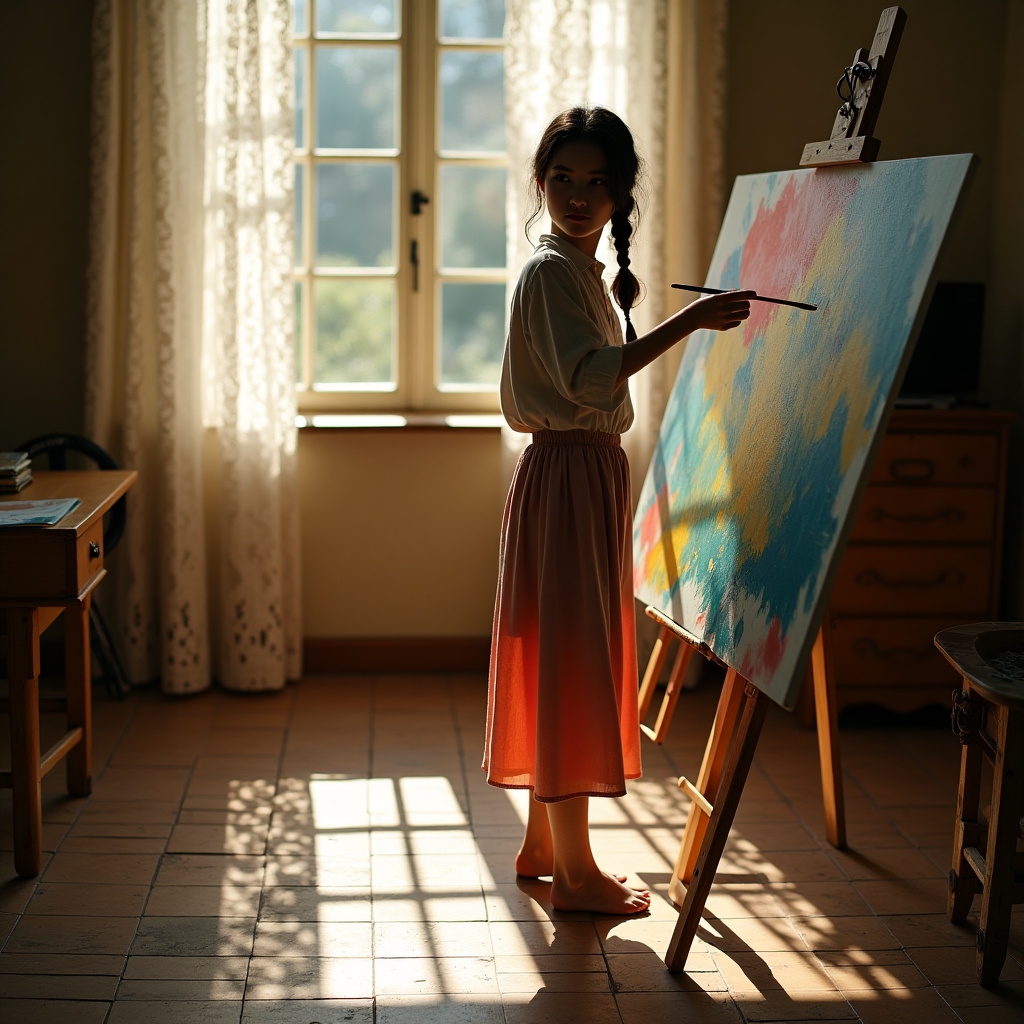
In the Singh household, every decision was woven tightly with cultural threads—the choice of education, career, and even love. Riya had always excelled in academics, not just for her own satisfaction, but as a means to meet the expectations placed upon her. An engineer by profession, she had carved a niche for herself in a reputed firm, yet her heart yearned for something else. It longed for colors, brushes, and canvases.
Her art was a world kept secret, a refuge where she could breathe freely and express her innermost thoughts without judgment. It was a clandestine affair, her sketchbook hidden like a forbidden tome. She painted in solitude, the strokes revealing parts of herself she dared not share under the critical eyes of tradition.
The struggle between her passions and familial duties simmered quietly within her. Every weekend at her parents’ house was a reminder of the life charted out for her—a life of stability, matrimony, and adherence to norms. The gentle prodding from her mother about prospective suitors was a subtle reminder of the unspoken expectations. Her father’s pride in her career was a silent weight resting on her shoulders.
Yet, there was love in these expectations, a love tangled with the desire for her well-being. This made her internal conflict all the more challenging. The silence between her desires and responsibilities was not a void but a crowded room of whispered promises and unspoken aspirations.
One evening, as she prepared dinner in her small kitchen, her phone buzzed with a message from her mother about an upcoming family gathering. It was another occasion to meet with relatives and suitors, the dances of cultural obligations set to play out once more. Riya sighed, a soft exhale that spoke volumes.
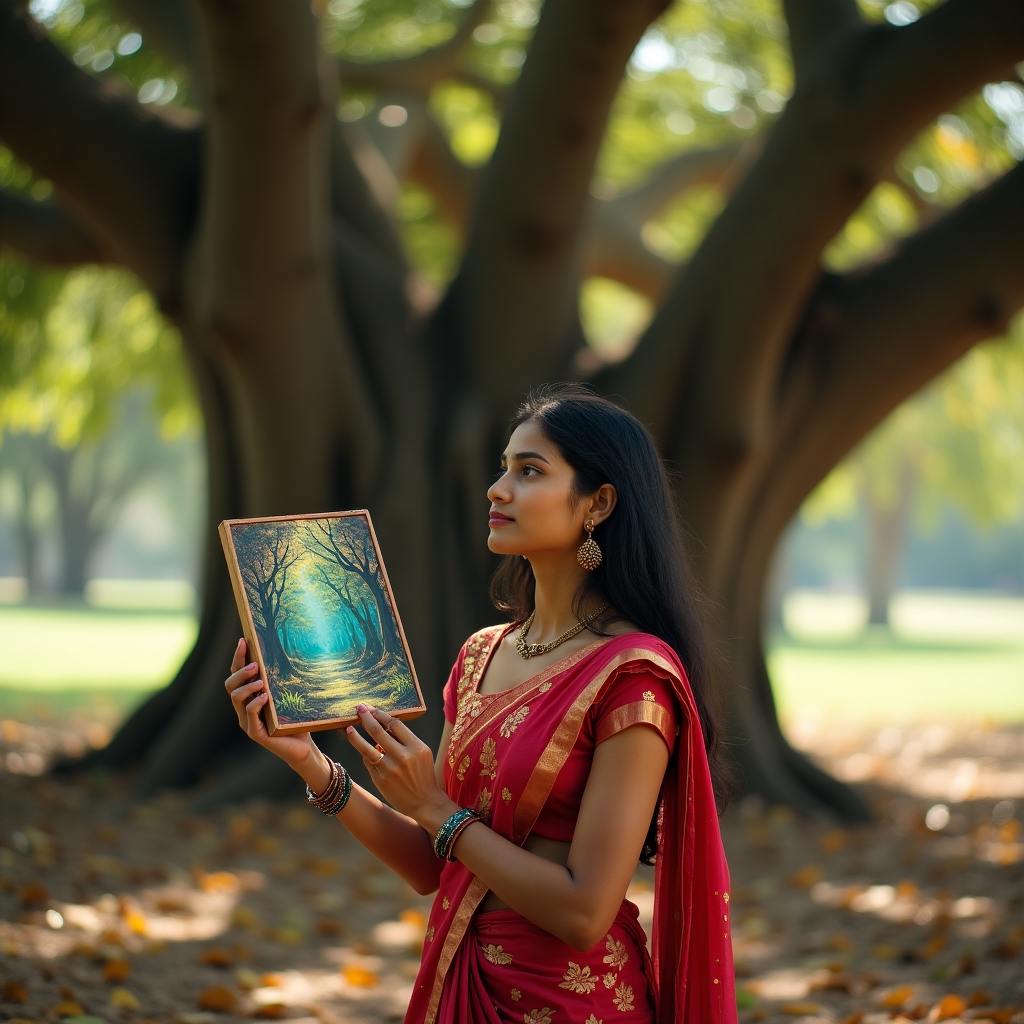
A small canvas stood propped on the kitchen counter, a splash of blue and gold depicting a fantasy world of her creation. It was unfinished, like her dreams, hanging in the balance. As she stirred the pot absentmindedly, her mind drifted to her grandfather’s stories of the banyan tree, its roots stretching far and wide yet grounded firmly in tradition.
That night, sleep eluded her. She lay in her bed, staring at the ceiling, the quiet hum of the city outside morphing into a symphony of introspection. Her thoughts were a wild dance between fear and courage, expectation and desire.
In the stillness of the night, she made a decision. It was not loud or definitive but a gentle resolve to find a middle path. She would speak to her parents, not in defiance but with the clarity of her truth.
The following weekend, Riya found herself standing under the sprawling banyan tree, its presence as majestic and reassuring as ever. Her parents sat on the veranda, her mother’s needlework resting on her lap, her father reading the newspaper. The scene was serene, yet the air crackled with the energy of unspoken words.
“Ma, Papa,” she began softly, her voice carrying the weight of her heart. “I want to talk to you about something important.”
Her parents looked up, curiosity and concern etched on their faces. Riya’s heart pounded in her chest, but there was a calm clarity in the air, a gentle breeze rustling the leaves above.
“I love my work, but there’s something else that brings me joy—painting,” Riya confessed, her voice trembling yet steady. “It’s not just a hobby; it’s a part of who I am.”
Her mother’s hands stilled, her father lowered his newspaper. There was silence, not the uneasy kind but a space where understanding began to take root.
“We want you to be happy,” her father finally spoke, his voice a mix of authority and affection. “But happiness doesn’t always look the same from one generation to the next.”
Riya nodded, tears pricking her eyes, as she realized they were not just words of concession but an opening for dialogue, for blending her world with theirs.
In that moment, amidst the whispers of the banyan tree, Riya saw a path—a tapestry woven with the threads of her dreams and the colors of tradition. It was not a rebellion but a gentle assertion of her truth, a step towards a future where her passion could coexist with her heritage.
Riya’s journey was not one of defiance but of quiet strength, a testament to the courage found in vulnerability, and the healing that lies in the intertwining of generational roots with personal growth.