




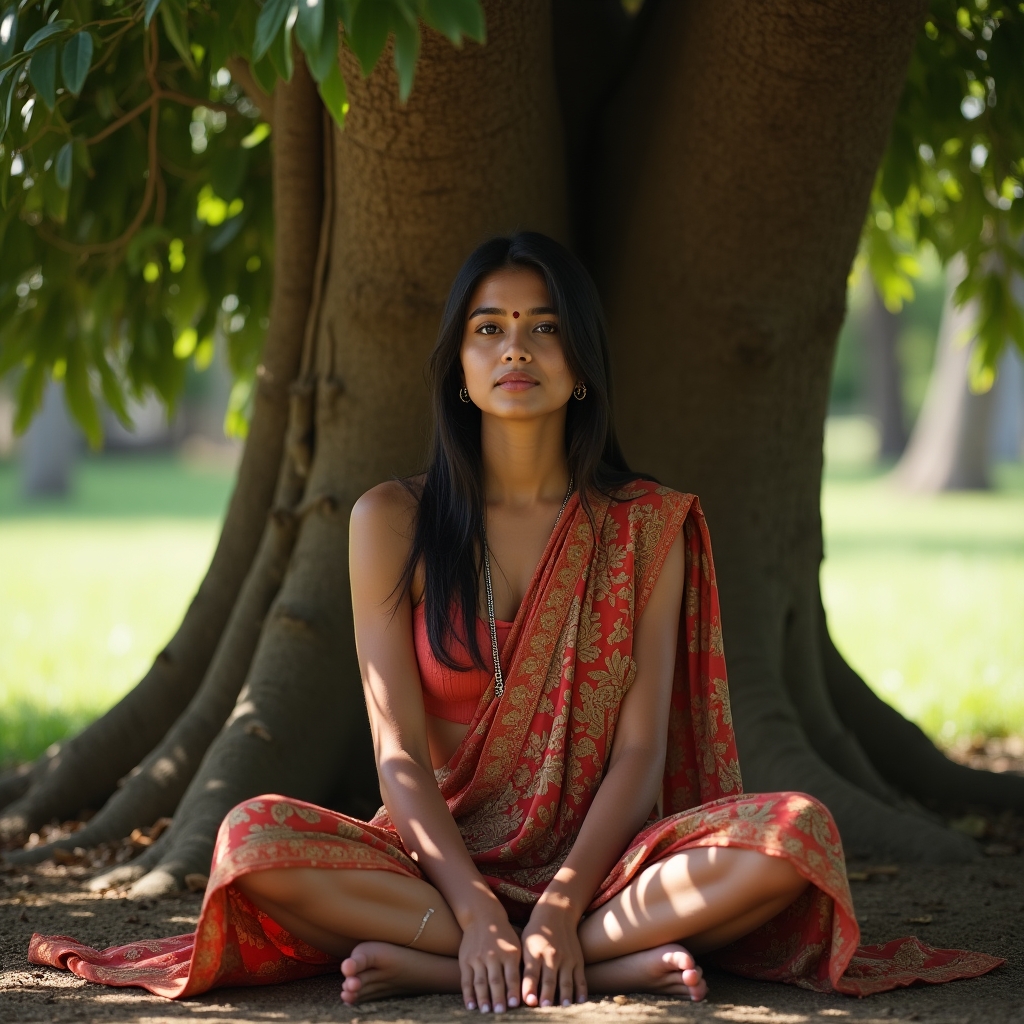
Asha sat cross-legged on her bed, a delicate silk scarf draped around her shoulders. Its soft, intricate patterns swirled like the thoughts in her mind, as she pondered the path that stretched before her like a road obscured by fog. She felt the weight of centuries pressing down, anchored by her family’s profound expectations and the cultural traditions that wrapped around her like vines. They were comforting yet constraining, beautiful yet binding.
Growing up in a close-knit Indian family in the bustling city of Mumbai, Asha had always been the dutiful daughter, the one who followed the script carefully laid out by generations before her. She excelled in school, participated in every family event, and never questioned the trajectory set for her by her loving yet traditional parents. But now, at twenty-two, on the cusp of carving out her own life, she realized that the path she was expected to take was not her own.
Her family urged her towards an arranged marriage, a prospect that had once seemed inevitable and even desirable. But since attending university, Asha’s worldview had expanded. She had grown close to people from diverse backgrounds, formed friendships that challenged her perspectives, and discovered passions for art and literature that her family deemed impractical.
The house was quiet, save for the distant humming of a ceiling fan, as Asha turned the pages of a journal, each entry filled with her private musings and dreams. It was here that she could be unreservedly herself, where her inner voice found expression free from judgment.
Her mother, Arundhati, was deeply woven into the fabric of their community, a respected figure who wore her sari like a queen. She was steeped in tradition, and her expectations were clear: Asha would marry a nice boy from a good family, start a new life, and uphold the values that had shaped their identity.
Asha admired her mother; she was strong and nurturing, yet there was an unspoken chasm between them—a quiet, persistent tension that neither dared to breach. Asha knew her mother only wanted what was best for her, but the idea of a preordained life suffocated her, like trying to breathe under water.
One afternoon, while visiting the local bazaar, Asha found herself lost in thought as she wove through the colorful stalls. Her eyes drifted over the vibrant fabrics and shimmering jewelry, but inside, she was far away, adrift in a sea of possibilities, none of which felt entirely right.
She stopped at a stall selling paintings, where a particular piece caught her eye: a banyan tree standing solitary yet thriving amidst a barren landscape. It seemed to embody resilience and freedom, its roots deeply entrenched yet its branches stretching wide, reaching for the sky. It was as if the tree held a secret, whispering stories of strength and endurance.
Back home that night, Asha sat with her family for dinner. The air was thick with the aromas of cumin and coriander, as her mother served steaming hot chapatis. The conversation inevitably drifted to her future.
“Asha,” her father began, looking at her over the rim of his glasses, “have you thought any more about meeting the Agarwal boy? His family is quite respectable.”
Asha hesitated, her heart beating a steady tattoo of anxiety against her rib cage. “Yes, Papa, I’ve thought about it,” she replied cautiously.
Her mother nodded approvingly, “It’s a good match, Asha. We want what’s best for you.”
Asha’s throat tightened. “I know you do,” she said, her voice barely above a whisper, “but I need more time.”
The statement hung in the air like mist, met by her parents’ concerned gazes. To them, her indecision was unfathomable; to her, it was a necessary pause.
That evening, as the rest of the house slept, Asha found herself again in front of her journal. She wrote furiously, her words spilling out like a river breaking through a dam. She penned her fears, her hopes, and the conflict that churned within her, until she fell asleep with the ink still wet on the pages.
In the early morning, when the first light crept through the curtains, a sense of clarity washed over her. Asha rose quietly and wrapped the silk scarf around her shoulders, a comforting weight that reminded her of her heritage.
She stood before the mirror, looking into her own eyes, searching for strength. She realized that the banyan tree was not just a symbol of endurance; it was a testament to the possibility of coexistence—of being deeply rooted while still reaching for the sky.
The days that followed were not easy. Conversations with her parents were gentle but assertive. Slowly, Asha began to articulate her dreams, her voice gaining confidence with each exchange. Her parents, initially resistant, started to listen, sensing the earnestness and sincerity in her words.
One afternoon, as they sat together under the shade of the real banyan tree in their garden, Asha spoke. “I’ve learned so much from you, from our culture,” she said softly, “but I need to explore where my heart leads me, too. I want to find a way to honor our traditions while also creating my own path.”
Her mother looked at her with eyes that held an ocean of emotion. After a pause, she reached out and took Asha’s hand. “You are my daughter,” Arundhati said, her voice a blend of pride and vulnerability, “and I have always wanted you to be happy. Perhaps, it is time to learn from you now.”
In that moment, amidst the rustling leaves and the warm embrace of the afternoon sun, Asha felt a profound sense of belonging—not to a prescribed future, but to herself. It was a quiet victory, a gentle assertion that resonated through her soul.
Asha knew there would be more conversations, more negotiations between tradition and self-discovery. The path ahead was still uncertain, but she now walked it with a newfound confidence, carrying the whispers of the banyan tree with her—a symbol of her journey towards authenticity and the soft but unyielding courage to embrace her truth.