



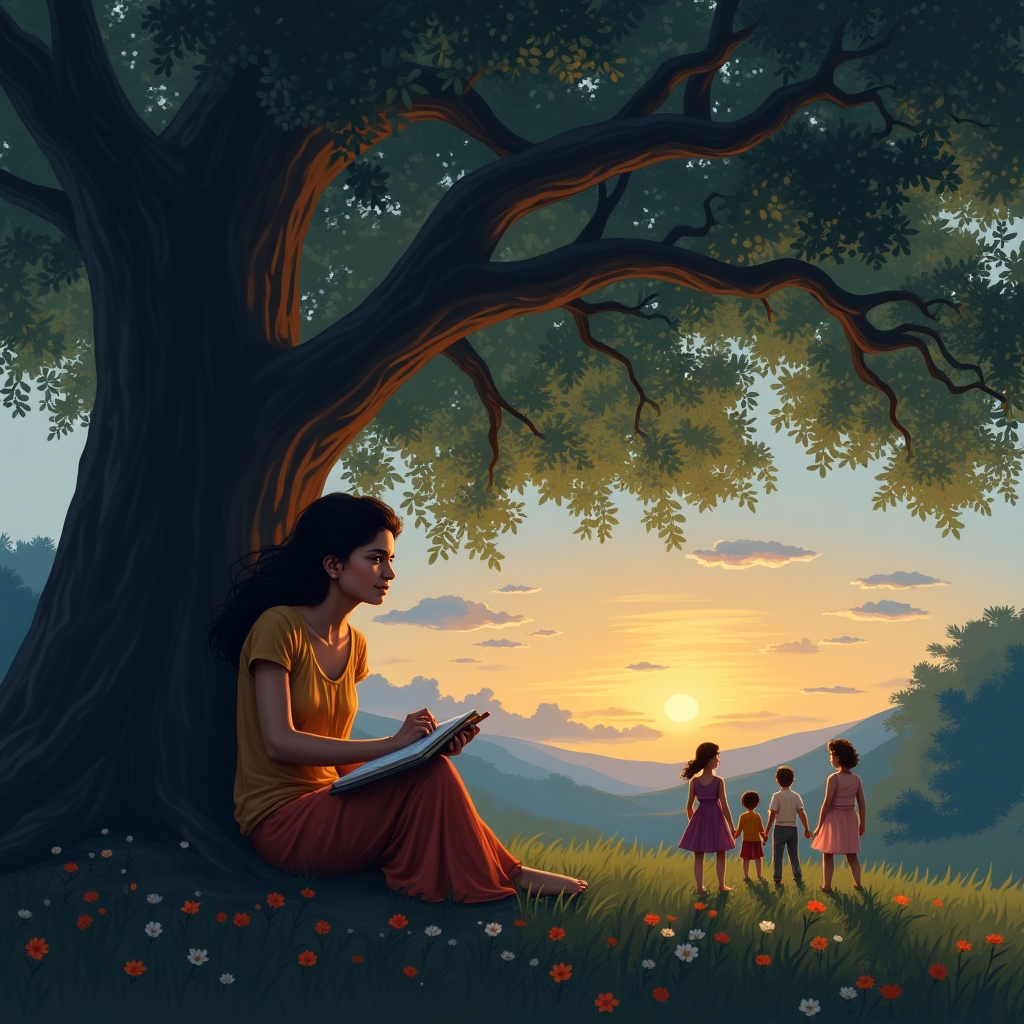
Asha sat on the worn wooden bench in the garden behind her family’s ancestral home, her fingers tracing the intricate patterns carved into its surface by generations before her. The banyan tree, its sprawling branches casting a dappled shadow, seemed to whisper her name—a silent witness to the evolution of her family’s lineage. Here, at the heart of her world, she felt the weight of expectation like a heavy cloak around her shoulders.
Growing up in a traditional South Indian family, Asha had always been the obedient daughter, the one who never questioned the path laid before her. With her parents both being respected doctors in the community, it was no surprise they expected her to follow suit. The path was clear: medical school, a prestigious career, a suitable marriage, and a family.
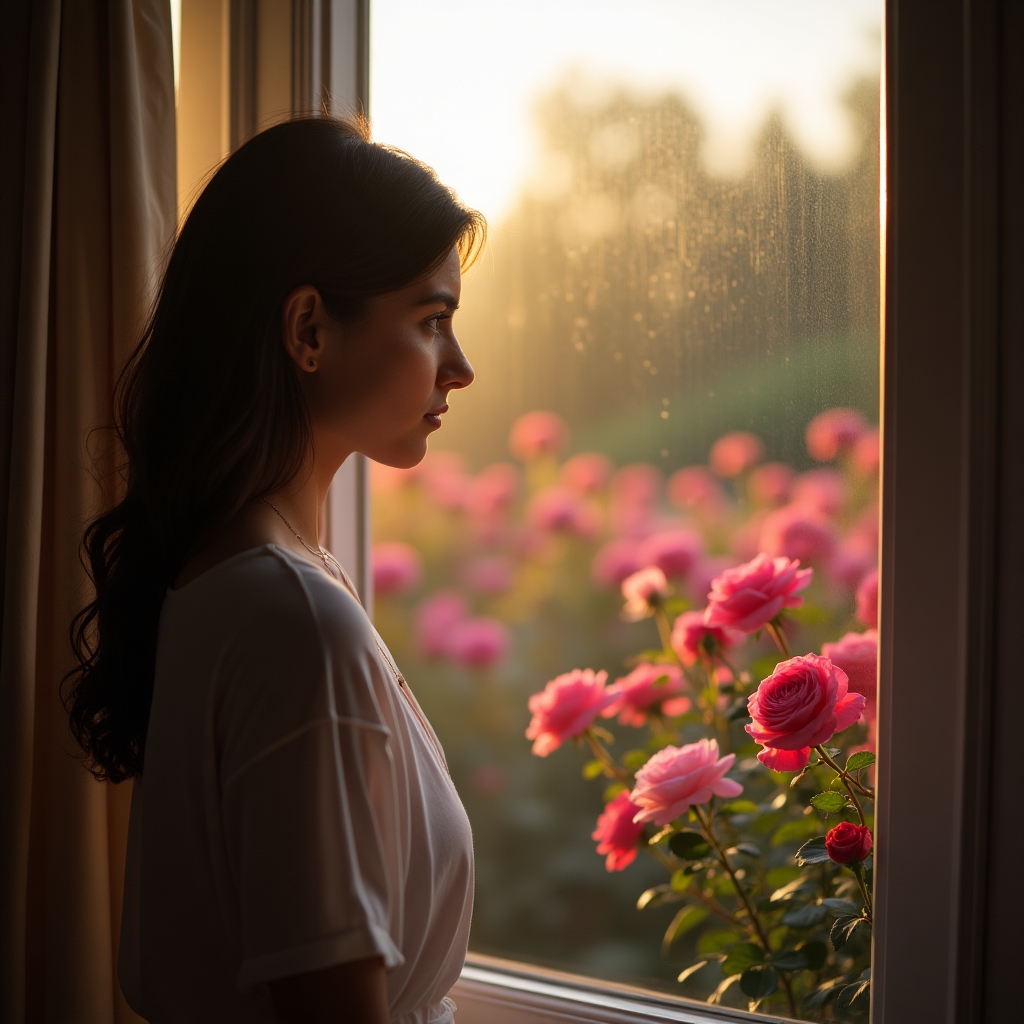
Yet, in the quiet hours of the morning while the world slept, Asha dreamt of colors, shapes, and stories. Her heart danced to the rhythm of creativity—a passion for art that was as vivid as the sunrise she often painted, hidden away in her sketchbook. It was in these stolen moments that she felt alive, but as soon as day broke, the expectations crept back in, curling around her dreams like the roots of the banyan tree.
Her father’s voice echoed in her mind, “Asha, you’re destined for greatness, just like us. Medicine is your future.” His words were always delivered with love, yet they felt like an unrelenting tide, pulling her away from the shores of her true self. Her mother, too, offered gentle nudges towards a life that seemed etched in stone, never acknowledging the small rebellions Asha hid in her paintings.
As Asha sat beneath the banyan, the smell of jasmine wafted through the air, mingling with the scent of rain-soaked earth. Her senses stirred, awakening a storm of emotions she could no longer ignore. The quiet battles fought within her heart began to surface, each one demanding to be heard, to be understood.
Her parents’ dreams were noble, and she admired their dedication and sacrifice. Yet as the branches swayed above her, she couldn’t help but wonder what sacrifices she was being asked to make. Was it disloyal to craft a different narrative? To paint her life in strokes of her own choosing?
Days turned into weeks, the tension within Asha growing like the monsoon clouds ready to burst. She felt caught in a dance of shadows, moving between the light of her passion and the dark contours of expectation. It was a dance she knew she couldn’t sustain, a rhythm that would eventually demand resolution.
The catalyst came one evening during a family gathering. The air was heavy with laughter and the clinking of glasses, a celebration of her cousin’s recent admission to a prominent law school. Amidst the revelry, Asha’s aunt turned to her, “So, dear Asha, when will we celebrate your medical school acceptance? Surely, you must be making us proud as always.”
The room grew silent, all eyes turning to her, anticipation hanging thick like the sweet paan her grandmother loved. Asha’s heart raced, her pulse quickening as the familiar pressure of expectation bore down on her. In that moment, the banyan tree’s whispers became a roar, urging her towards her truth.
Asha took a deep breath, the world around her fading into a soft blur as she centered herself in the quietest part of her soul. “Actually, I’ve decided to pursue art,” she heard herself say, her voice steady but soft, like the first drops of rain on parched soil.
Shock rippled through the room, a collective intake of breath as the family struggled to reconcile their expectations with her revelation. Her father’s brow furrowed, a storm of emotion flickering in his eyes. Her mother’s lips parted in surprise, her hand resting gently on her heart.
Silence embraced them, the moment stretching on as the truth of her words settled like dust after a summer storm. Asha braced herself for the disappointment, for the questions steeped in the tradition she had dared to challenge.
But then, an unexpected warmth spread across her father’s face—a gentle smile breaking through the storm. “Asha,” he began, his voice softer than she had ever heard it, “If your heart sings in colors, then you must follow its song.”
Tears welled in Asha’s eyes, a river of relief surging forth. Her mother reached out, enveloping her in an embrace that spoke volumes—a bridge across the generational divide, built on love and understanding.
The banyan tree swayed gently in the evening breeze, its whispers now a soothing lullaby, a reminder that roots can nurture branches daring enough to reach toward the sky.
In the days that followed, Asha found herself returning to the garden, her sketchbook brimming with new ideas, a testament to the freedom she had claimed. Her family, though adjusting to the new rhythm of her life, stood by her, their support a balm that healed old wounds while nurturing new dreams.
As she painted, Asha realized that cultural and familial expectations were not chains to bind but roots to ground her, the strength from which she could draw as she painted her life’s canvas. The whispers of the banyan tree became her muse, a reminder that dreams could coexist with the past, that healing was possible across generations when love and understanding formed the brushstrokes of their shared journey.