

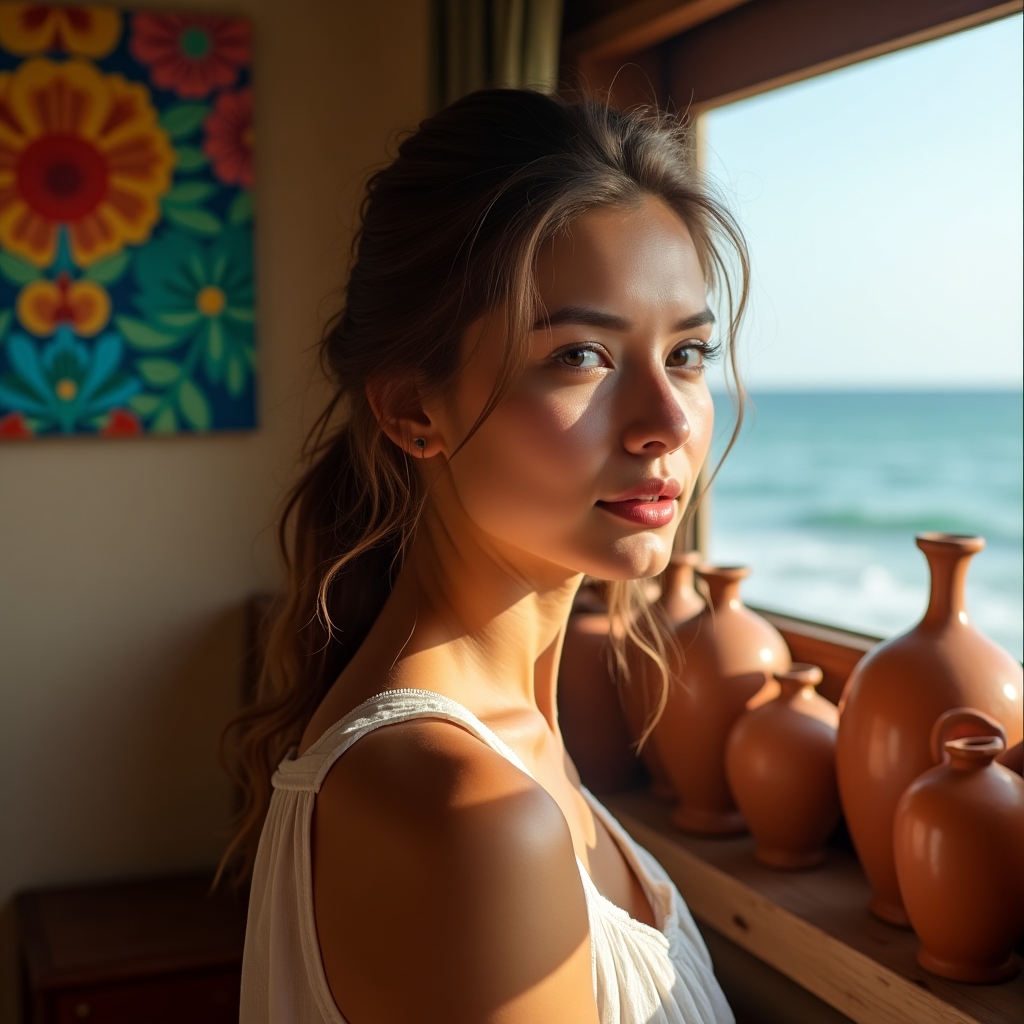
In the small coastal town of Karaluna, nestled between towering cliffs and the expansive sea, lived Elara, a young woman of twenty-three. Her days were interwoven with the salty breeze and the rhythmic crash of waves that sang a timeless melody passed down through generations. Her family, the Benavides, held a significant place in the community, known for their traditional pottery—a craft steeped in heritage, passed from one hand to the next, like an ancient hymn whispered softly through time.
From a young age, Elara was taught to shape the clay with reverence, to feel the lineage of her ancestors coursing through her fingers as she molded each piece. Her parents, especially her mother, Adela, instilled in her the importance of legacy, often recounting tales of past generations who had dedicated their lives to this art. It was not merely a craft but a way of life, a testament to their identity.
Yet, as Elara grew, she found herself drawn to another world—painting. Unlike the patient, methodical process of pottery, painting was an explosion of colors and emotions, a dance of spontaneity that called to her spirit. In the quiet of her room, Elara would lose herself in canvases, capturing the vibrant life of the ocean, the subtle changes of sky and sea—a form of expression that felt uniquely her own.
This duality of passions created a subtle, quiet tension within her, a whisper of an internal struggle that grew louder with each passing day. Elara adored her family and respected their traditions deeply, yet the yearning to follow her heart, to paint and share her own voice with the world, was undeniable.
The pressure of expectation was felt most acutely during family gatherings, where the achievements of her ancestors were celebrated with such fervor. At dinners, the conversations were infused with subtle reminders of her duty, woven into the fabric of familial pride. “One day, Elara,” her mother would often say, “you will shape the clay with the same respect as your great-grandmother.”
Elara would nod, offering a soft smile, but her heart whispered a different truth. She would stay awake at night, staring at the ceiling, her thoughts a tangled web of dreams and doubts. Could she honor her family’s legacy while forging her own path? Was it selfish to desire something different, something more?
The days rolled into weeks, each similar yet distinct. Until one afternoon, as Elara sat in the family workshop, shaping clay with practiced hands, her mother approached. A gentle silence fell between them, the kind that was both comforting and unsettling.
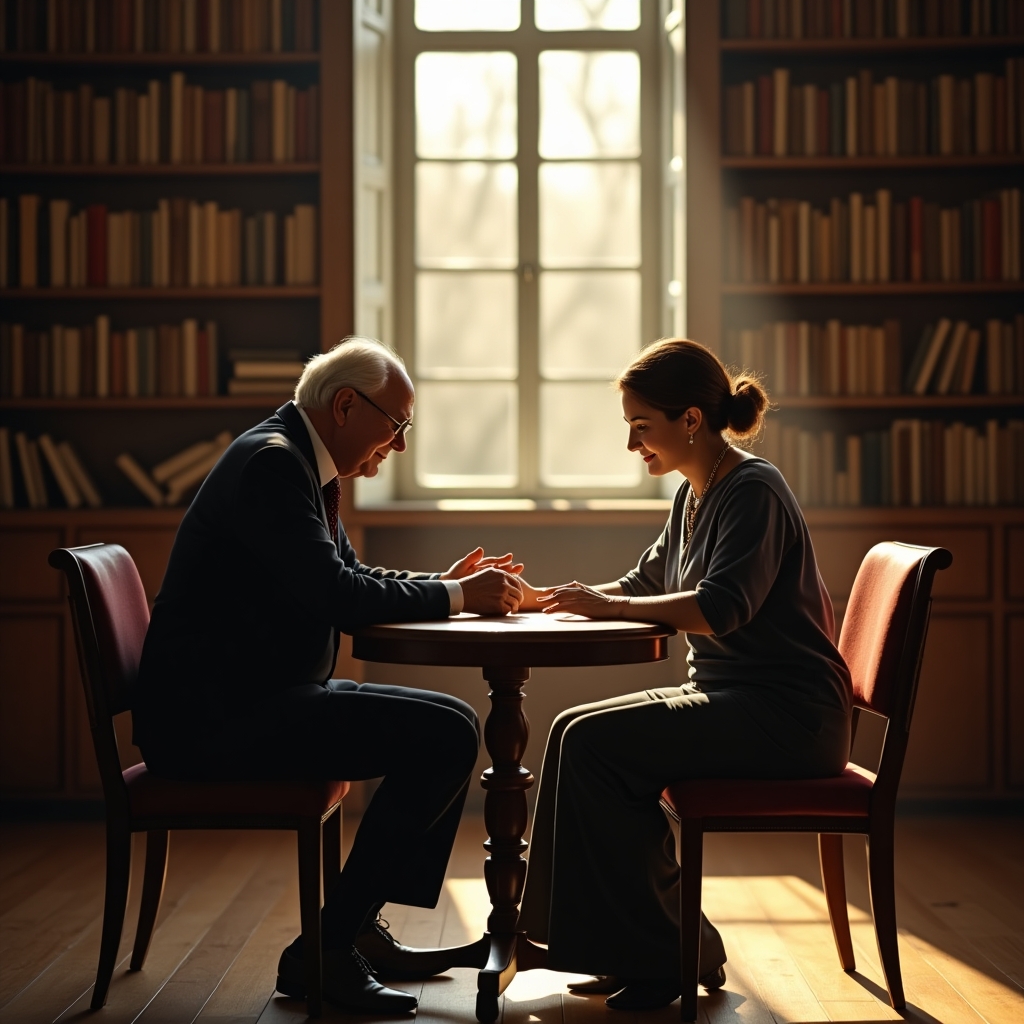
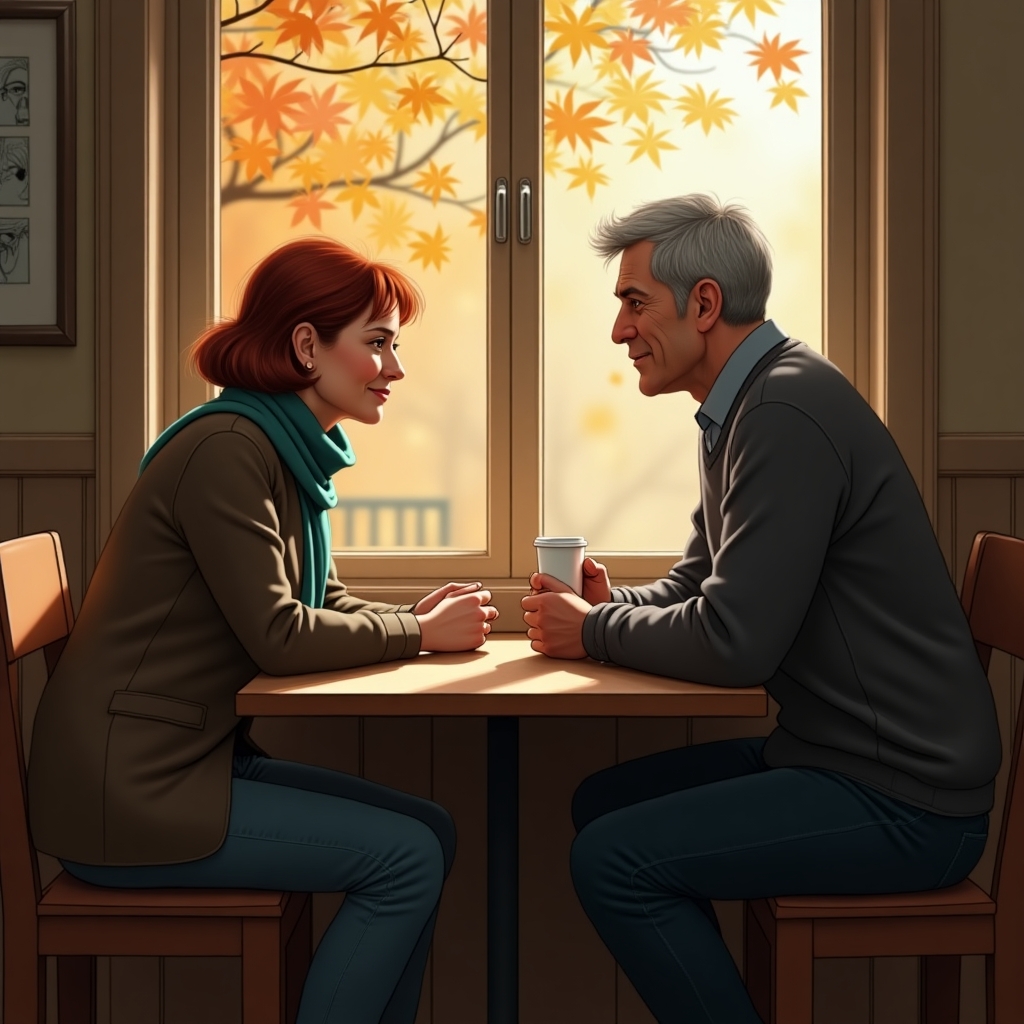
“Elara,” Adela began, her voice soft yet firm, “I’ve sensed a restlessness in you. More than the ocean calling your name.”
Elara paused, her heart skipping with the fear of revelation. “I… I love painting, mother,” she confessed quietly, the words finally finding the courage to escape her lips.
Adela’s eyes, so like Elara’s own, held a mixture of surprise and understanding. “Painting is beautiful,” she said, picking up a brush from the nearby shelf, “but you know the importance of our craft.”
“I do,” Elara replied, her voice trembling slightly. “But I feel alive when I paint, as though I’m telling my own story.”
Adela nodded slowly, the lines of her face softening. “Your great-grandmother, she once told me that the soul’s song cannot be silenced. Perhaps you are meant to add to our legacy, to bring something new to our story.”
The quiet acceptance in her mother’s words washed over Elara like the sea breeze, filling her with a profound sense of clarity. In that moment, she realized that her love for painting did not diminish her connection to her family but enriched it.
Over the following months, Elara began to weave her paintings with pottery, creating unique works that spoke of both tradition and innovation. Her family, witnessing her passion, gradually embraced her new path, understanding that Elara’s heart was expanding the legacy they cherished.
In the end, Elara learned that honoring one’s heritage did not mean forsaking one’s individuality. It meant embracing the whispers of the past while daring to sing one’s own song.
Her journey was a testament to the power of quiet determination, the courage to bridge generations, and the healing that comes from embracing both the heart’s desires and familial roots.