Anna stood at the edge of her grandparents’ garden, where the scent of freshly tilled earth mingled with the subtle sweetness of blooming jasmine. The sun was setting, casting long shadows over the neat rows of vegetables, each plant a testament to the painstaking care her grandfather had devoted to this patch of land. On any other day, she might have found solace here, amidst the quiet hum of nature. Today, however, the air was thick with an unspoken tension that crept into her chest and settled heavily, refusing to be ignored.
For as long as she could remember, Anna’s life had been an intricate dance between her desires and the expectations woven through the fabric of her family. Her parents, immigrants who had left everything behind to build a life in a new country, had always emphasized the importance of hard work, stability, and maintaining familial traditions. “Family is everything,” her mother often reminded her, her voice carrying the weight of a history Anna had only partially lived.
Yet, there was a discord in Anna’s heart, a quiet rebellion against the roles she was expected to play. She yearned for a different kind of life — one filled with creativity and exploration, far removed from the predictable path laid out before her. She had always loved painting, the way colors flowed and blended under her brush, each stroke a whisper of her inner world. But whenever she mentioned pursuing art as a career, her father would shift uncomfortably, his brows knitting together in disapproval.
“It’s not practical,” he would say. “Art won’t pay the bills. You need a real job, Anna. Something secure.”
Anna understood his concerns. As a child of sacrifice, she knew how deeply her parents’ choices were rooted in love and fear. They only wanted her to have a life free from the struggles they had faced. But understanding did little to quell the growing ache inside her, the feeling that she was living a life chosen for her, not by her.
She glanced back at the house, its silhouette framed against the fading light. Inside, her family was gathered around the dinner table, voices murmuring in a comforting rhythm of familiar conversation. Her heart ached with the pull of belonging and the desire for individual freedom. It felt like standing on a precipice, unsure of which direction would lead her to peace.
The decision would have been easier if she didn’t care, if she could stride forward without looking back. But she did care — deeply. The thought of disappointing her family, of severing the invisible ties that connected her to them, was a wound she couldn’t bear to inflict.
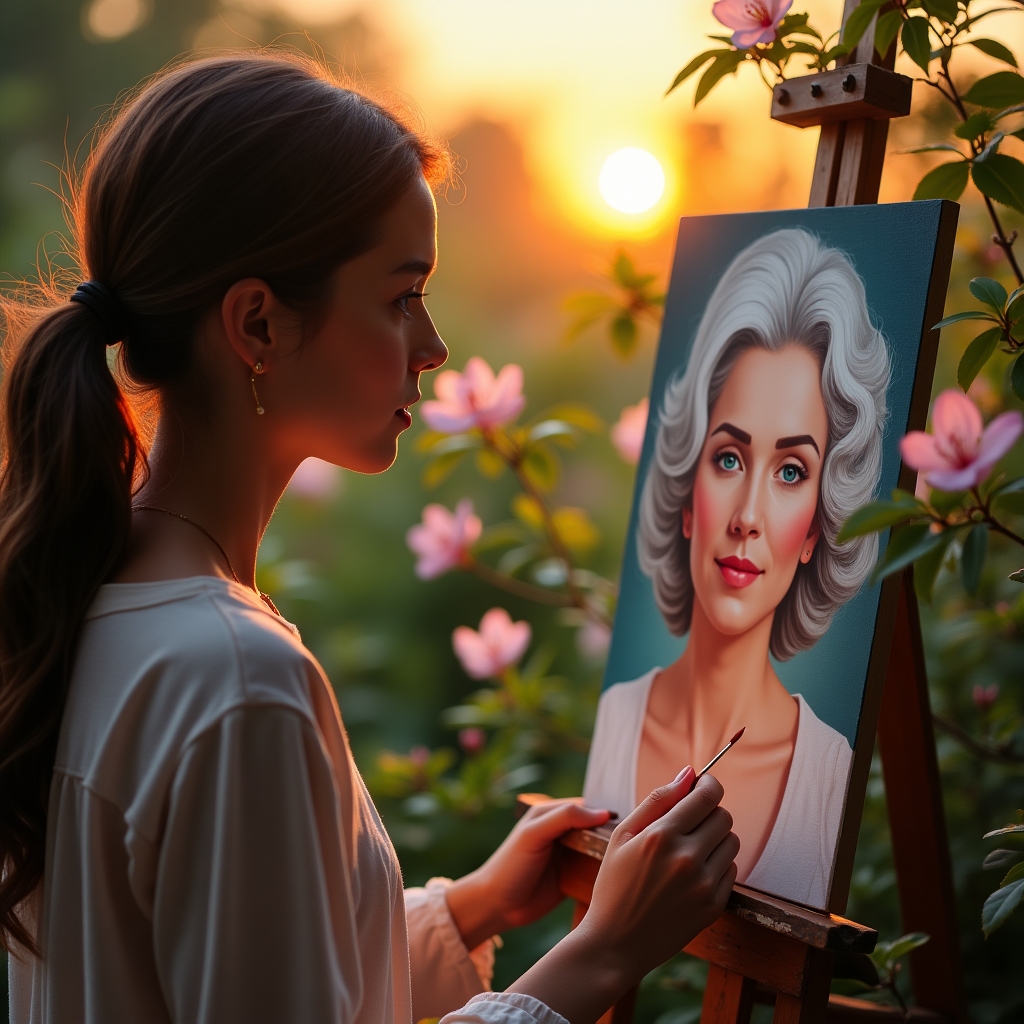
The turning point came on an evening much like this. Anna found herself back in the garden, the air cool against her skin as she painted under the fading twilight. Her brush moved instinctively, guided by an internal compass she didn’t fully understand. She lost herself in the process, the act of creation transcending the boundaries of time and space.
And then, she painted her grandmother’s face, each line and shadow capturing the depth of wisdom and warmth that had cradled her through life. Her grandmother had always been a quiet force, a gentle presence who supported Anna in her own unassuming way. As she painted, she felt her grandmother’s spirit speak to her, a whisper carried on the evening breeze.
She realized in that moment that her art was not separate from her family. It was an extension of it, a narrative woven with the threads of her heritage and personal truth. Her brushstrokes became a language, one that could express all she struggled to articulate.
A soft voice broke through her reverie. “Anna, your talent is a gift,” her grandmother said, stepping beside her. “Do not fear to walk your own path.”
Tears welled in Anna’s eyes, not from sadness but from the profound relief of understanding. Here, in the garden, under the watchful gaze of those who had come before her, she found the courage to reconcile her desires with her heritage. Her art was not a departure from her family; it was a continuation of their story, painted in her own colors.
As the realization settled within her, she turned to her grandmother. “Thank you,” she whispered, her voice steady now. “I think I’m ready to tell them.”
And she did. That night, after dinner, she spoke to her parents. She shared her dreams and fears, her need to forge her own path while honoring the roots that had nurtured her. It was not an easy conversation, but as she spoke, she felt the tendrils of tension unwind, replaced by a tentative understanding.
Her parents listened, their faces etched with a mixture of apprehension and pride. They did not understand everything, but they saw the conviction in her eyes, the resolve that shone through her words. And slowly, they began to see the harmony in what she was trying to achieve. They recognized that Anna’s art was both her journey and a tribute to the journey they had taken together as a family.
In the days that followed, the garden remained a sanctuary for Anna. She painted with renewed vigor, her heart lighter than it had been in years. With each portrait and landscape, she whispered stories of love, sacrifice, and hope. Her family was her muse, her heritage a wellspring of inspiration.
And in this quiet rebellion, Anna found freedom. She had not chosen between her family and her dreams; she had woven them together into a tapestry uniquely her own.