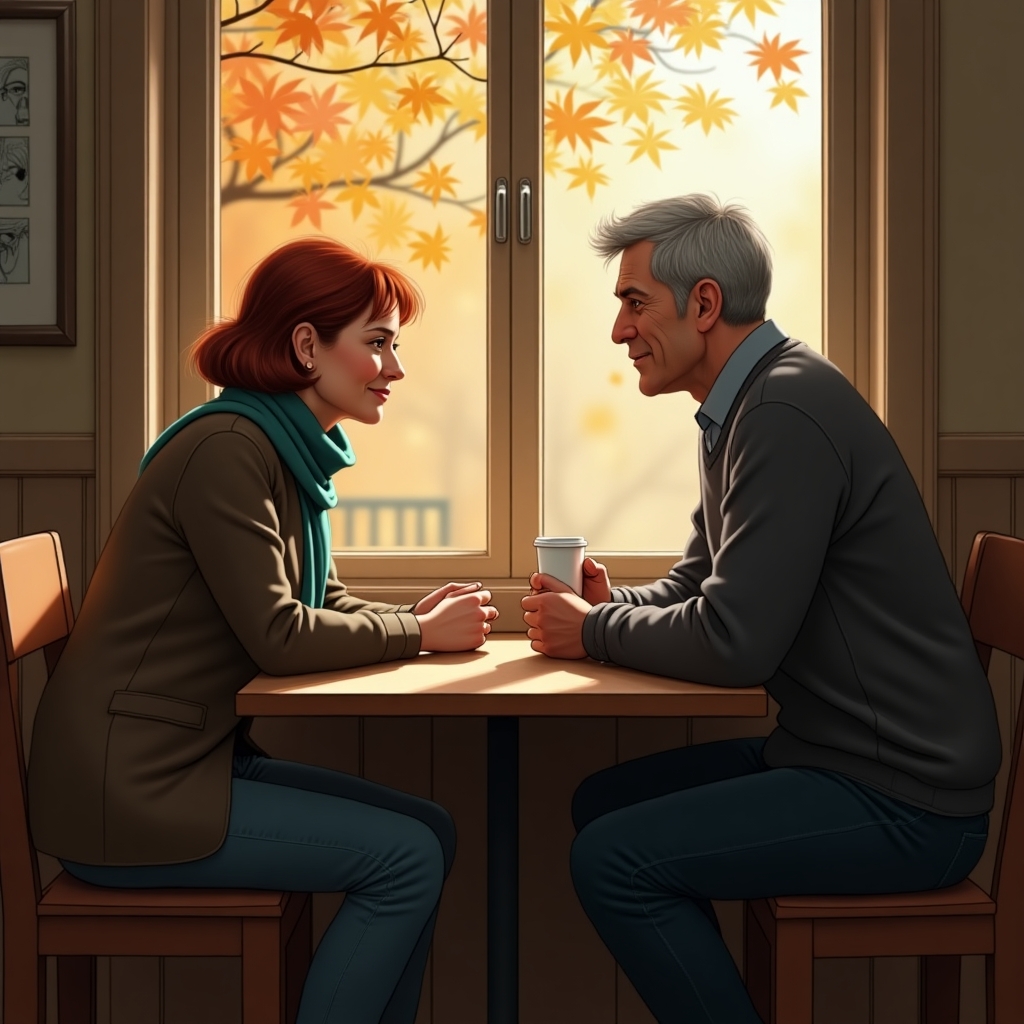




The sun dipped below the horizon, casting a warm, golden hue over the old streets of Lisbon. In the fading light, the city whispered its age-old tales, a symphony of history that clung to the air. Amidst these winding alleys stood Isabel Mendes, a young woman of twenty-three, caught in the delicate web of tradition and desire.
Growing up in a family where every generation had played a part in the vibrant tapestry of Portuguese customs, Isabel’s life was steeped in the values her parents and grandparents held dear. Her father, João, had been a respected craftsman, fashioning intricate azulejos that adorned the city’s oldest cathedrals. Her mother, Rosa, had kept the family’s legacy alive through stories passed down from her own mother, tales of resilience and identity.
Isabel loved her family deeply, feeling the weight of their sacrifices and aspirations. They envisioned her stepping into a role that honored their legacy—a role she admired yet felt increasingly distant from. Inside her heart, a quiet yearning pulsed—a desire to forge her own path, one that diverged from the cobblestone roads tread by her ancestors.
Her passion lay in storytelling, a gift she had nurtured through writing. Words allowed Isabel to explore worlds beyond her own, to question and to dream. But in her family’s eyes, the arts were a risky venture, one without the certainty that tradition promised. To pursue it was seen as a departure from the values they held.
It was during family dinners that the subtle tensions would surface. The conversations flowed, rich with laughter and reminiscences, until the topic of Isabel’s future inevitably arose. João’s eyes, usually twinkling with warmth, would take on a serious cast. “Isabel,” he would say, “the world is unpredictable. The family trade gives you something solid to stand on.”
Rosa would nod, her gaze searching Isabel’s face for agreement, for reassurance. “Remember your grandfather, how he built this with his hands. It’s in our blood, querida.”
Isabel’s heart would tighten. These moments left a lingering ache, a reminder of the chasm between her dreams and her family’s expectations. Yet, she didn’t dare to voice her doubts; the fear of disappointing them weighed her down, suffocating the whispers of her silent heart.
Weeks turned into months, each passing day drawing Isabel closer to a decision that felt both inevitable and impossible. Her notebook, filled with stories, remained a secret refuge where her true self could breathe freely. But she knew that living in two worlds was unsustainable.
One evening, as she sat by the window watching the city lights flicker into life, an unexpected message arrived—a letter from a prominent literary magazine, accepting one of her stories for publication. Isabel’s heart soared, a rush of exhilaration mixed with trepidation. Here was a sign, an acknowledgment of her talent, yet the reality of sharing this with her family felt daunting.
The night stretched on, and Isabel found herself walking along the waterfront, the cool breeze carrying with it the distant hum of the city. Alone in the darkness, she allowed herself to face her deepest fears—the fear of causing her parents pain, of stepping into unfamiliar territory without their blessing.
It was there, under the moon’s gentle glow, that clarity descended upon her, a moment so serene and profound it felt almost sacred. Isabel realized that honoring her truth didn’t mean abandoning her family’s life work; it meant weaving her own thread into the tapestry they had created.
Returning home, Isabel found her parents in the living room, their faces soft in the lamplight. She sat down, her heart drumming a steady rhythm of resolve. “Mama, Papa,” she began, her voice steady yet tender, “I’ve been accepted for publication. It’s a small step, but it’s a part of who I am.”
João’s brow furrowed, his mind processing the news, while Rosa remained silent, her expression unreadable. Isabel continued, “I love our family’s history, and I want to honor it. But I also need to find my own way, to tell stories that resonate with others.”
The room was quiet, the air heavy with unspoken words. Finally, João spoke, his voice a mix of pride and uncertainty. “You have always had a gift with words. If this is your path, then walk it with the same strength our family has always shown.”
Rosa took Isabel’s hand, squeezing it softly. “Your stories carry our spirit, querida. We’re proud of you.”
In that moment, generations stood together, not in opposition but in understanding. Isabel felt a release, the quiet tension that had shadowed her for so long dissolving into acceptance.
From that day forward, Isabel wrote with a lighter heart, her words infused with the love and courage that her family’s support had inspired. She had found a way to honor both her heritage and her dreams, a delicate balance that allowed her to truly belong to herself.