




Amara stood at the edge of the forest, her heart beating a rhythm only she seemed to understand. The leaves whispered secrets overhead, swaying gently in the afternoon breeze as if conspiring with the birds to relay a message she longed to decipher. It was a path she had walked a hundred times, each step marking a moment of contemplation and quiet rebellion against the expectations that clung to her like an unseen garment.
Born into a family whose roots ran deep within tradition, Amara often felt like an anomaly. Her parents, stalwart advocates of their cultural heritage, had woven their dreams for her life with threads of their own experiences and beliefs. Yet, beneath the surface of their loving intentions, simmered an unspoken tension—a push-and-pull between the values she was taught and the individuality she yearned to embrace.
Each Sunday dinner unfolded as a tapestry of unvoiced words. Her parents recounted tales of perseverance, of family honor and duty, painting a picture of a life Amara both admired and silently questioned. Her father’s stories of the old country were rich with nostalgia, and her mother’s songs were laced with a deep, unwavering faith. They spoke of collective strength and unity, values Amara respected but found increasingly at odds with her own burgeoning sense of self.
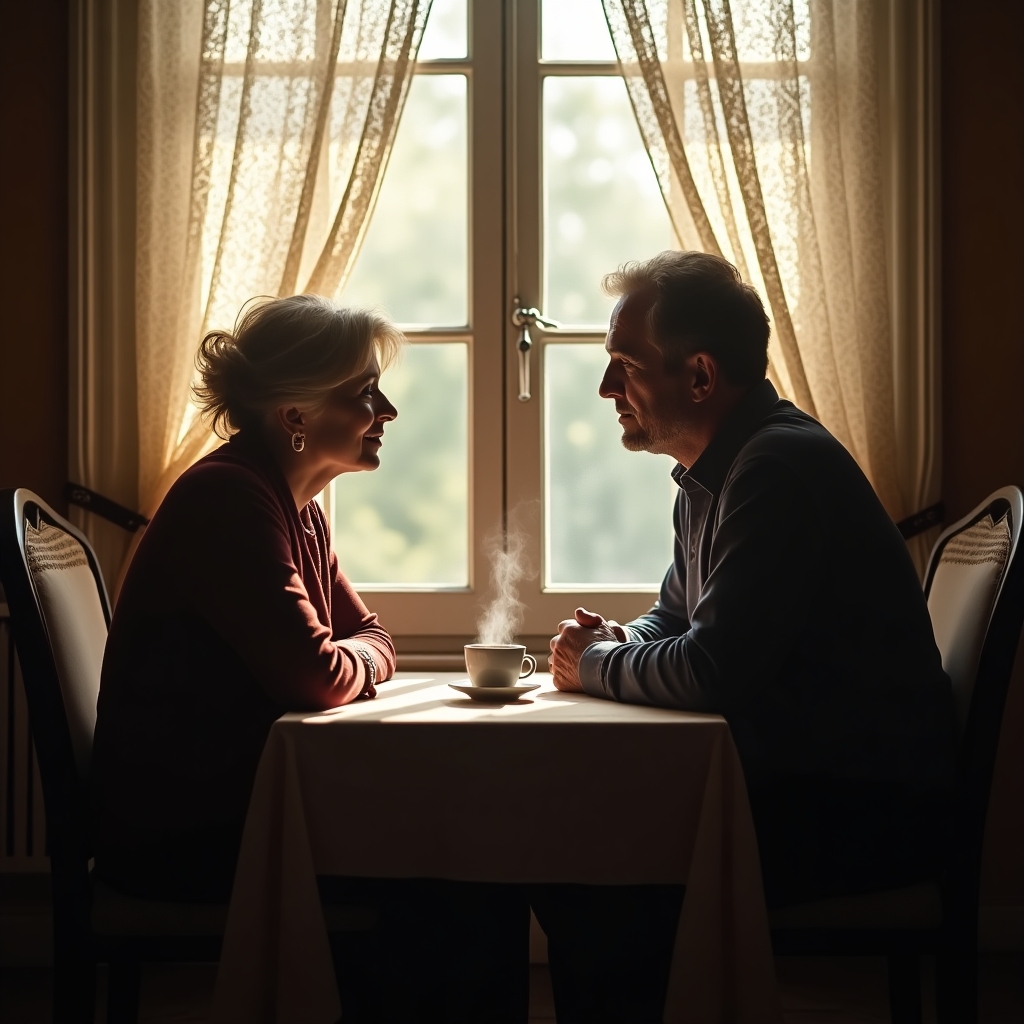
It was during one particular evening, as the autumn leaves began to turn, that the weight of these expectations pressed against her chest with more insistence than ever before. Her mother had set the table with care, the aroma of seasoned lamb wafting through the house, a scent that always tugged at Amara’s heartstrings. Yet, as the meal unfolded, so did a conversation about her future—a future that, in her parents’ eyes, was intricately mapped out.
“You will make us proud, Amara,” her father said, his voice a blend of affection and certainty. “Your studies, your career—it’s all coming together. We always knew you’d follow in our footsteps.”
Amara’s response was slow to form, caught in the web of her thoughts. She smiled, a reflex honed over years of pleasing others. “Of course,” she murmured, but her heart whispered a different truth.
After dinner, Amara sought solace in her room, the moonlight casting soft shadows on her walls. She opened her journal, a trusted confidante, and poured her heart onto its pages. Here, she let her fears and desires flow freely, a river of emotion that rippled against the boundaries she sensed closing in.
The tension crescendoed quietly, until one day in late November, a moment of emotional clarity arrived like a gentle breeze, reshaping her world. Her grandmother, a woman whose silence often spoke volumes, had come to visit. As they sat together in the garden, her grandmother reached for Amara’s hand, her eyes filled with understanding born from years of quiet endurance.
“Child,” she began, her voice a tender melody, “I have seen many seasons, and with them, many changes. Our family is like this garden, rooted deep, yet each plant grows towards the sun in its own way.”
Amara listened, her heart swelling with an ache she had not realized lay dormant. “But how do I honor the roots without losing myself?” she asked, her words barely a whisper.
Her grandmother’s fingers brushed through Amara’s hair with the gentleness of a summer rain. “You are the bridge, my dear,” she replied softly. “You carry us forward by being true to yourself. Balance is your strength, love is your guide.”
In that moment, the clarity Amara sought unfurled within her, like a flower opening to the light. She realized that asserting her truth did not mean severing ties with her family’s past. Rather, it was about weaving her own thread into their shared tapestry.
That evening, as she stood once more at the forest’s edge, Amara felt the subtle psychological tension begin to ease. The whispers of the leaves no longer held secrets but echoes of a truth she was ready to embrace. With newfound emotional courage, she returned home, ready to share her heart with her parents—not with defiance, but with the hope of understanding.
As Amara spoke, her words wove a bridge between generations, a testament to the healing power of honest conversation and the quiet strength it took to be truly seen. And though the journey was far from over, she knew she had taken the first steps towards a future where her values and her heritage could coexist, a fusion of past and present, honor and authenticity.