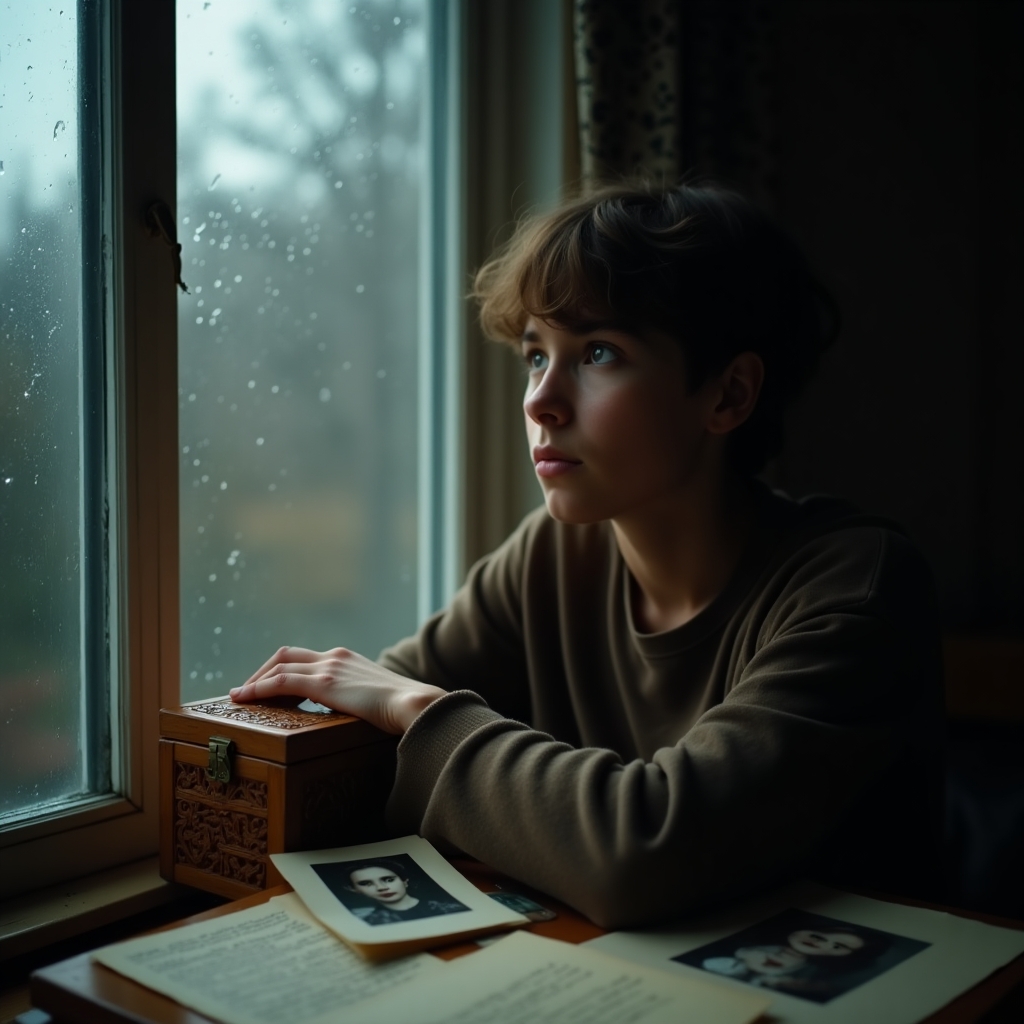




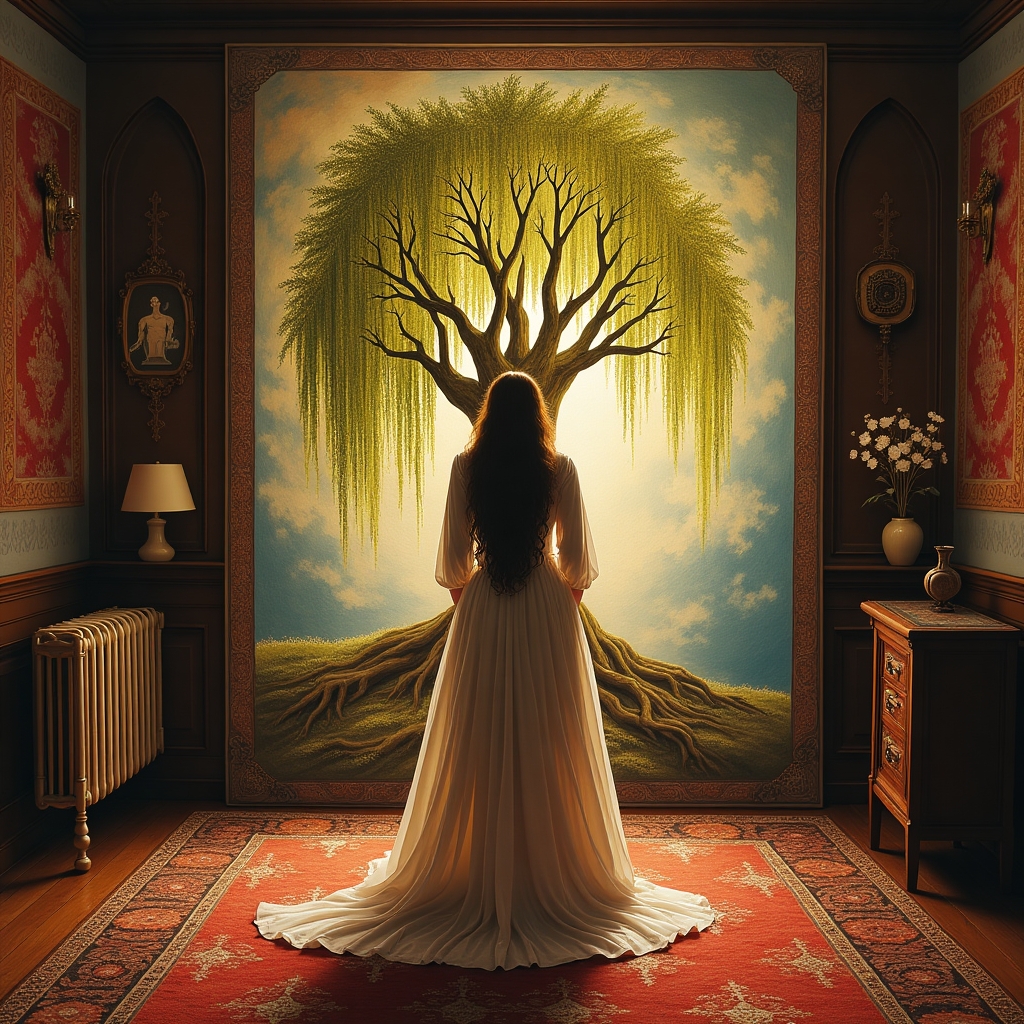
In a small, sun-dappled town nestled between gentle hills and the endless horizon of sky, there lived a young woman named Priya. Her family home, a haven of deep-rooted tradition, had walls adorned with vibrant tapestries and shelves filled with ancestral artifacts. Each item seemed to whisper the tales of those who came before her, their voices woven into the fabric of her everyday life.
Priya, with her dark, thoughtful eyes and a heart that teetered between duty and desire, was adored by her family. Her parents, first-generation immigrants, held tightly to the cultural legacy they feared losing in their adopted country. They spoke in tongues of duty and honor, weaving stories of their homeland’s vibrant past into the fabric of Priya’s upbringing.
From an early age, Priya was taught the art of balance—the delicate dance between respecting her heritage and navigating the Western world she was growing up in. It was a dance she executed with such grace that her parents often marveled at her ability to juggle both worlds with apparent ease.
Yet, beneath the polished exterior, Priya felt an unsettling disquiet. It was a whisper back then, barely perceptible beneath the day’s bustling noise—a quiet voice questioning if the path laid out for her was truly her own.
Her life was a carefully curated collection of expectations. Education was paramount; a career in medicine was the family’s dream for her. Priya found solace in the notes of her studies, yet biology’s intricacies did not stir her soul like the strokes of her paintbrush did. Art was the solitary world where her heart leaped free, unbound by the constraints of expectation.
But such passion was considered frivolous, a hobby to indulge in the sidelines of a ‘real’ career. The unspoken tension simmered silently as Priya painted in solitude, her room a sanctuary where colors spoke her unvoiced dreams.
Living in this quiet struggle, Priya learned the art of concealment. She painted at night, her canvas awash with moonlit dreams, while studying by daylight. To her family, she was dutiful and focused, yet within, a cacophony of colors and emotions vied for space in her world.
The seasons changed, and Priya’s quiet turmoil grew louder. One day, while walking through the town’s old botanical garden, she stumbled upon a wilting willow tree. Its branches, once a symbol of resilience and grace, now drooped under the weight of its own expectations of grandeur. In that tree, Priya saw a reflection of her soul—an unspoken acknowledgment of her struggle.
Standing before the willow, Priya’s mind wandered to her grandmother’s stories about the tree’s symbolism—flexibility, strength, and healing. As a child, she loved these tales, but now they resonated with a newfound depth. Perhaps, she mused, like the willow, she could bend without breaking.
That thought planted a seed of possibility. She began to wonder if she could intertwine her family’s expectations with her dreams. Could she honor her heritage while still reaching for her own stars?
The answer eluded her until a simple day in autumn. The air cradled a sense of change, leaves rustling in a tender farewell to summer. Priya’s room was filled with the warm, golden light of the setting sun as she sat by her easel, contemplating the blank canvas before her.
In that moment, the quiet struggle reached its pinnacle, a crescendo of unvoiced dreams. Her heart ached with the weight of unshed tears, the burden of inauthenticity pressing heavily on her soul.
And then, she painted. With every brushstroke, she released the tension of years—the struggle between duty and desire, family and self. Her hand moved with a gentle fervor, creating before her eyes a landscape of her dreams and realities intertwined.
The painting was more than art; it was her truth unfurling like the willow’s branches, a depiction of flexibility and strength in harmonious balance. The layers of color conveyed the complexity of her heritage, each hue a tribute to a different facet of her identity.
As she stepped back to view her work, the clarity washed over her—a silent, profound epiphany. Priya realized that she could hold her truth without forsaking her family’s dreams. She could be the bridge between generations, her art a dialogue between past and present.
In that realization, Priya found her voice—not in defiance but in gentle assertion. She could honor her family’s sacrifices while nurturing her soul’s calling. In the quiet of her room, surrounded by the whispers of her ancestors, she felt a profound sense of peace, an unyielding resolve to live authentically.
The journey of self-discovery would be ongoing, a lifelong dance of balance. But now, with courage rooted in clarity, Priya was ready to dance to the rhythm of her own heart.
Her painting, a testament to her newfound resolve, stood as a beacon of her truth—the first of many she would create in this new chapter of her life.