



Amelia Nguyen lived in the quiet pulse between the crashing waves of her traditional Vietnamese upbringing and the vibrant rhythm of her adopted American life. Her family’s modest home in Southern California, a sanctuary of jade plants and ancestral portraits, was a space where the gentle hum of her mother’s prayers blended with the modern American hustle visible just outside their windows.
In her heart, Amelia carried the dual weight of her parents’ expectations and her own burgeoning aspirations. Her parents, immigrants who had sacrificed everything for the promise of prosperity in a new land, envisioned a future for Amelia that reflected their dreams—a stable, respectable career as a doctor or an engineer, roles that promised both security and status.
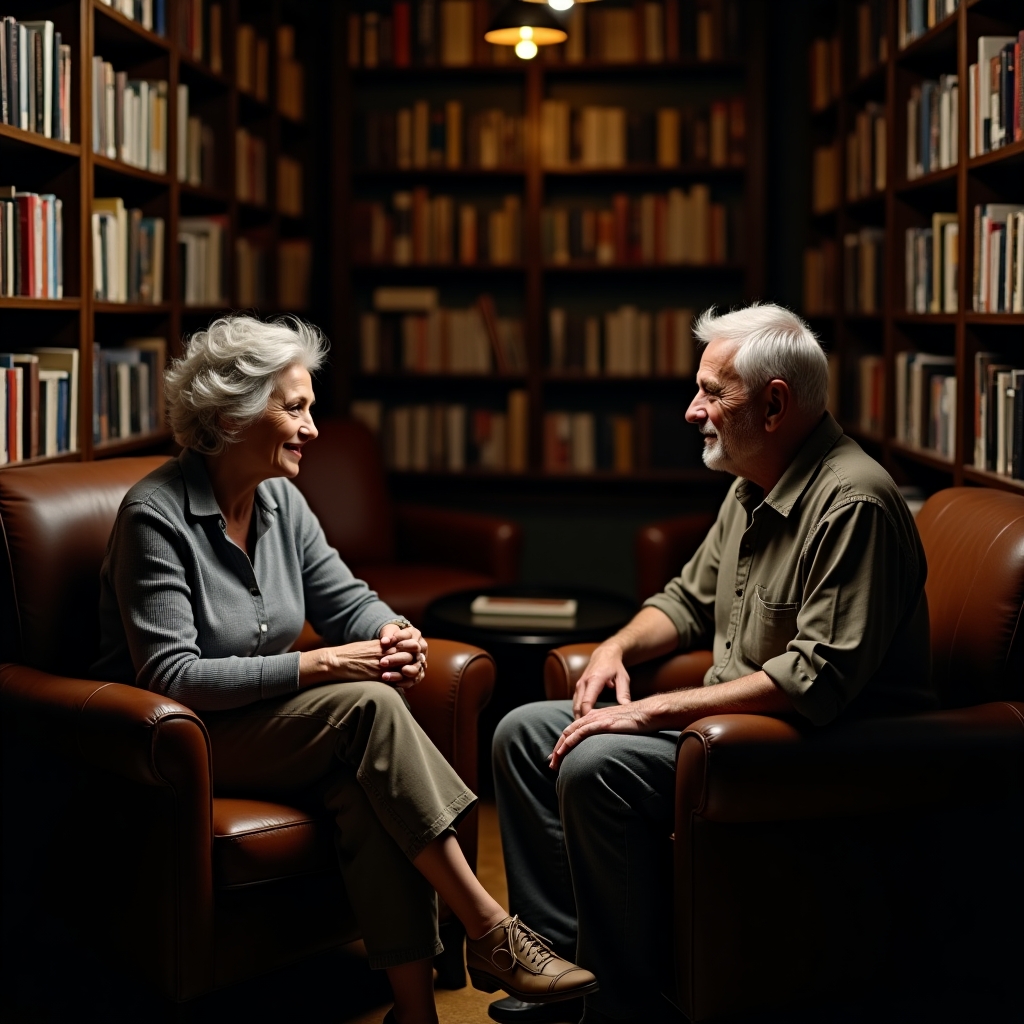
Yet, Amelia found herself drawn to literature, to the stories that spoke of untold worlds and the power of the human spirit. She spent hours in libraries, her fingers tracing the spines of books that whispered to her soul, words that felt like home in a way that nothing else did. To her parents, these pursuits were seen as hobbies rather than a viable future.
The tension within Amelia grew silently, like water seeping through a crack in a dam. She dutifully attended her biology classes and excelled in her studies, all while scribbling poetry in the margins of her notebooks and dreaming of a life filled with the written word. She feared the thought of disappointing her parents, of shattering the legacy they envisioned for her.
The struggle was subtle but omnipresent. At family gatherings, where her aunts boasted about their children’s achievements in medicine and technology, Amelia would smile politely, her heart aching with the weight of her unspoken truth. Her nights were filled with a quiet yearning, a conversation between her desires and her duties, a dialogue that left her sleepless and restless.
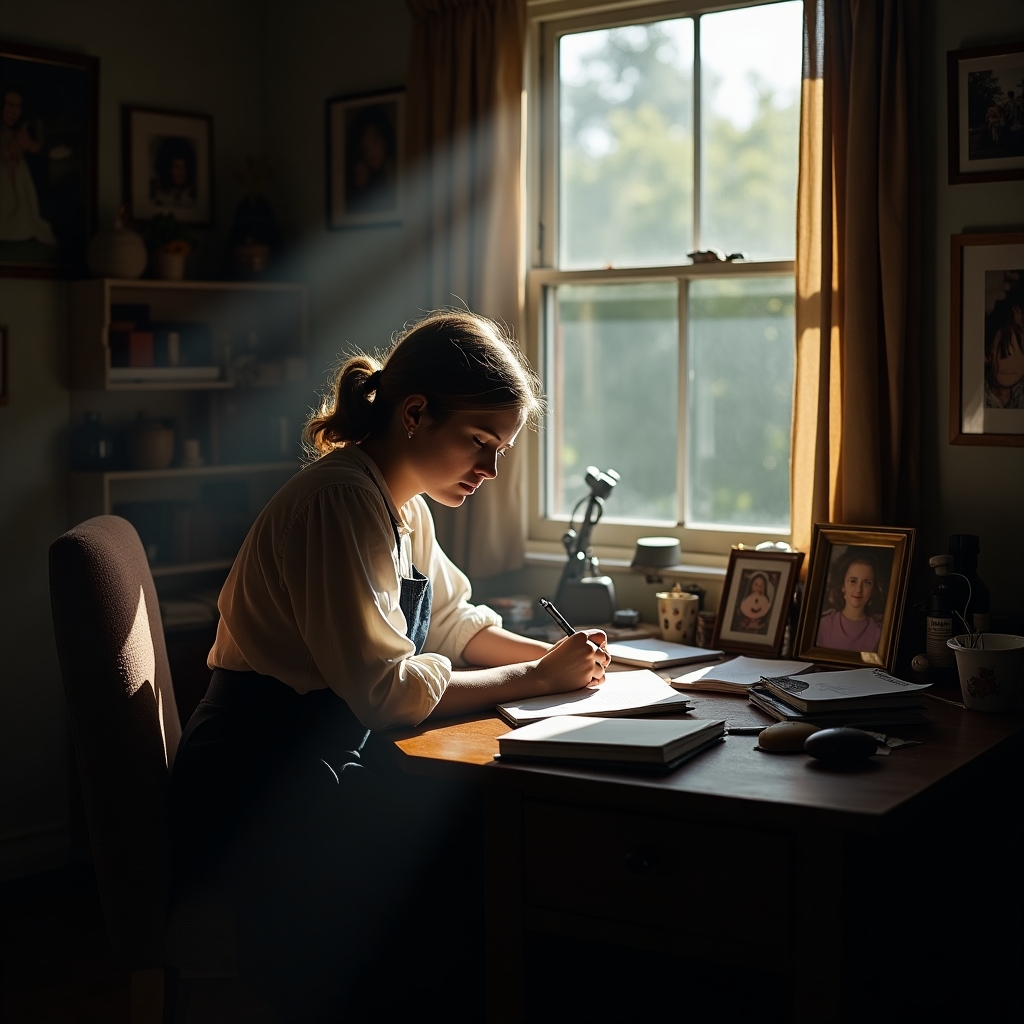
One evening, as the sun dipped below the horizon, casting a warm glow through her bedroom window, Amelia sat at her desk, a blank page before her. Her parents’ voices drifted from the kitchen, discussing the future with hopeful tones. She felt a pang of guilt, knowing the secret she kept from them.
Her hand hovered over the paper, and she began to write. Words flowed from her heart, capturing the essence of her conflict—the pull between her identity and her heritage, the longing for acceptance and understanding. With each line, she felt a little lighter, as if the ink carried away her burdens.
As the moon bathed her room in its silver light, Amelia stopped writing and read over what she had written. Her heart thundered in her chest, but amidst the fear, she discovered a flicker of clarity, a realization that her truth was not a betrayal but a different kind of honor to her family’s sacrifices.
The next morning, Amelia approached her parents, her written words in hand. Her voice trembled as she shared her heart with them, explaining her love for literature, her dreams of becoming a writer. There was silence, a thick, palpable pause that seemed to stretch forever.
To her surprise, her mother spoke first, her voice gentle and understanding. “Amelia, we want you to be happy. We may not fully understand your dreams, but we trust you.”
Her father’s nod was hesitant, but his eyes held the promise of acceptance. “You are our daughter. Your happiness is what matters most.”
In that moment, Amelia felt a rush of relief, a tide of emotions crashing over her. Her truth, once hidden in the shadows of her fears, had found its light. She realized that while the journey to self-discovery was her own, it was also intertwined with her family’s journey, a path of mutual growth and understanding.
From that day forward, Amelia embraced both her heritage and her individuality, weaving them together into a tapestry that honored her past and welcomed her future. The psychological tension that once gripped her heart had softened, replaced by the warmth of familial love and the courage to pursue her dreams.
Amelia’s story is a reminder of the quiet battles we face within ourselves, the intricate dance between personal values and generational expectations. It speaks to the power of emotional courage and the healing that can blossom when we trust ourselves enough to reveal our true selves to those we love.