



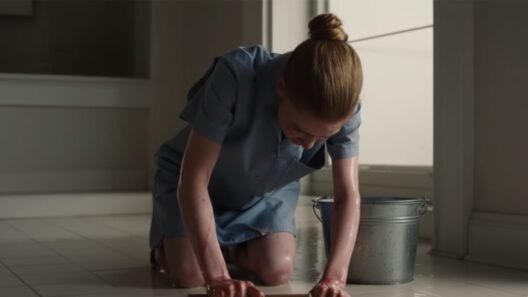

The morning light filtered through the thin curtains, casting soft patterns across the bedroom floor where Emma lay, wrapped in the cocoon of her quilt. She stared at the ceiling, tracing the cracks that seemed to have formed overnight, mirroring the thoughts crisscrossing through her mind. For years, her world was neatly folded into the expectations of others — the family dinners where she smiled on cue, the errands run without a word of dissent — a life meticulously curated by those around her.
Her husband, David, snored lightly beside her, oblivious to the storm churning within. He had always been well-meaning, his intentions cloaked in care, but his actions often shadowed by assumptions. “Why don’t you stay home today?” he would say, not as a suggestion but as a directive. Emma would nod, her voice swallowed by the weight of complacency.
Today, something felt different. There was a restlessness in her bones, an itch in her skin that couldn’t be ignored. She slipped out of bed, careful not to wake David, and padded into the kitchen. The aroma of freshly brewed coffee filled the air, a ritual she had embraced, the only solace in her routine.
The kitchen was her sanctuary, a space where she could create and destroy without judgment. As she sipped her coffee, the warmth spreading through her, Emma reflected on the dreams she had once harbored — the art classes she had abandoned, the traveling she had postponed. All set aside for a life that felt like wearing someone else’s skin.
The quiet of the house was interrupted by a soft knock on the door. It was her mother, as predictably as the rising sun. “Morning, dear,” her mother chimed, entering with the brisk efficiency of someone with a purpose.
“Hi, Mom,” Emma replied, placing her mug on the counter.
Her mother surveyed the room, her critical gaze settling on Emma. “You look tired, Emma. Are you eating well?”
Emma’s eyes met hers, a flicker of defiance sparking within. “I’m fine, Mom,” she said, the words feeling foreign on her tongue, heavier than usual.
“You should rest more. Let David handle things,” her mother continued, oblivious to the small rebellion brewing within her daughter.
Emma nodded, the practiced response, but something inside her shifted. As her mother droned on about the importance of maintaining a harmonious household, Emma’s thoughts drifted to the easel buried in the attic, the paints she hadn’t touched in years.
The day unraveled with its usual cadence — breakfast, chores, another hushed conversation with David about plans for the weekend that excluded her desires. But the shift within Emma grew, a quiet revolution nurtured by years of unspoken dreams.
That evening, as the sky blushed into dusk and the house settled into its rhythm, Emma found herself standing at the foot of the attic stairs. Her heart beat a steady cadence, a drum heralding change. She ascended slowly, careful not to alert David.
The attic was a time capsule, filled with the remnants of forgotten aspirations. Emma reached for the dusty easel, pulling it into the light. Her fingers trembled as she unrolled a canvas, its pristine surface an invitation, a challenge.
As she sat down, brush in hand, Emma felt a thrill, an unfamiliar sense of self rising within her. The first stroke was hesitant, a mere whisper of color, but with each sweep, her confidence grew.
In that attic, surrounded by the echoes of her own silence, Emma painted — the colors translating her unspoken words, every brushstroke a reclamation of her autonomy. She painted until the moon rose high above, her heart lightened with each stroke, her spirit unfurling.
The next morning, David found her there, asleep beside the painting. The expression on her face was one he hadn’t seen before — serene, yet resolute. He paused, unsure of the change that had settled over her.
“Emma,” he called softly, touching her shoulder.
She stirred, blinking up at him. “I’m going out today,” she said, her voice steady, as if speaking from a newfound place of truth.
David opened his mouth to respond, to question, but something in her eyes stopped him. He nodded, slowly. “Okay.”
As Emma descended the stairs, the painting tucked under her arm, she felt an unfamiliar lightness. Each step away from the attic was a step back to herself, a journey she longed to continue.
The street outside was vibrant, the world was alive, and for the first time in years, she felt like she was a part of it — herself, unbound.