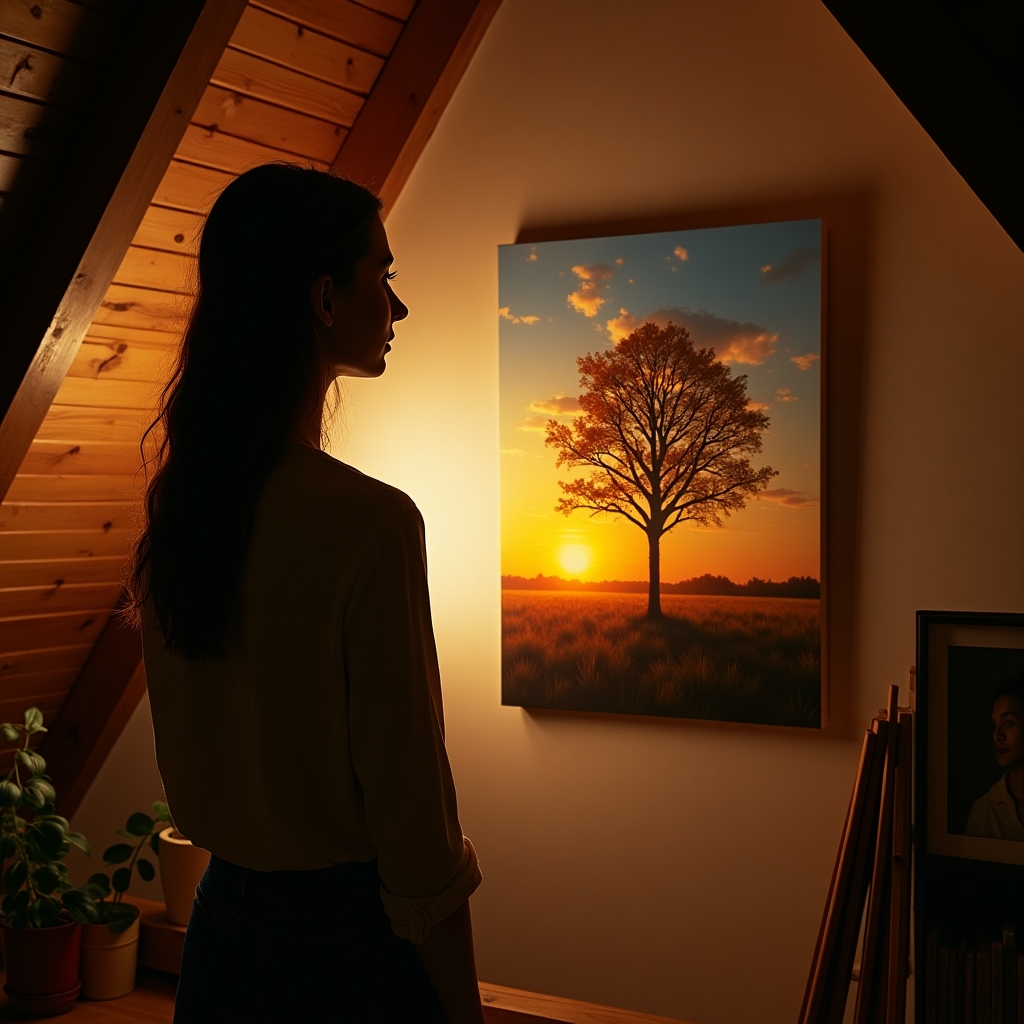


I never thought that something as simple as cleaning out my mother’s attic would unravel the tightly wound ball of misconceptions I’d carried my entire life. It wasn’t the cobwebs that clung to my fingertips or the chests of forgotten memories that triggered my introspection. It was an old, weathered scarf, its colors fading like a sunset in reverse, that caught my attention.
I found the scarf tucked away inside a box labeled ‘Winter Clothes.’ The label was in my mother’s familiar handwriting, looping and elegant, as if she were writing cursive on the air. But it was the scarf that spoke to me—it was her favorite, a constant presence around her neck in all those childhood photos, and then suddenly absent in the ones we took those last few winters she was alive. I wrapped it around my fingers, feeling the softness against my skin, and it was like I was touching a part of her I never understood.
The scarf had always been a part of my mother’s daily ensemble. I remember as a child, wondering why she wore it even on mild days, and how she would smile but never explain. I had dismissed it as one of her quirks, like her love for old jazz records or the way she always added a dash of nutmeg to her coffee.
As I pulled the scarf from its resting place, something else fell from the box—a small, folded piece of paper, yellowed with age. My heart skipped a beat as I picked it up, and I felt a strange kinship with that fragile remnant of a life I thought I knew so well.
The note was a simple letter, addressed to me. The words danced on the page, a waltz of ink and emotion:
“My dearest Emily,
If you’re reading this, it means you’ve found my scarf. By now, I hope you’re a grown woman and able to understand what I couldn’t explain when you were just a little girl.
This scarf is more than just a piece of clothing. It belonged to your grandmother, the only piece of her I had after she passed. She was a woman of few words, but she taught me lessons about strength, resilience, and love. When she died, unexpectedly, I was given this scarf, and I wore it every day to keep her close.
But there are things about her I didn’t want you to know until you could understand. She was a flawed woman, whose decisions were sometimes clouded by her own pain and anger. She left us for a time when I was young, and I never fully understood why.
I wore this scarf because I wanted to keep the memory of the good parts of her alive, not to shun the past but to learn from it. I hope that you, too, will find strength in knowing the full measure of a person’s life—the good and the bad. It’s a lesson we all need to learn.
Love, always,
Mom”
I sat in the dusty attic, tears soaking into the fibers of that old scarf. The paper trembled in my hands as I realized that the mother I adored and idolized had been wrestling with shadows of her own.
The scarf had been worn to keep her mother close, yet it had also been a silent testament to the unresolved grief and a reminder of the imperfections we all carry. It was a tangible, everyday reminder of the complexities she had lived through and chosen to embrace.
As I sat there, piecing together the threads of my mother’s past, I felt a shift within me. The discovery wasn’t just about my grandmother. It was about understanding that people, even those we hold dear, are more than just the sum of their actions or the roles they play in our lives.
I whispered into the attic air, “Thank you, Mom.”
This quiet revelation, born of ordinary objects—a scarf, a letter—offered me a new lens through which to view my family history. I felt an expanse open within my heart, making room for the fullness of my mother’s humanity, and by extension, my own. The scars, the failures, the love, the resilience—every strand of it was woven into the fabric of who she was, and now who I am.
Carefully, I folded both the scarf and the note, placing them back in their box. I closed the lid, not to hide them away again, but to preserve them with respect and understanding. As I descended the attic stairs, I felt lighter, as if some long-overdue reconciliation had taken place.
I know now that life is a tapestry of experiences, some vibrant, some shadowed, but all necessary. And as I step forward, I do so with a new acceptance, ready to weave my own stories into the fabric of my family’s legacy.