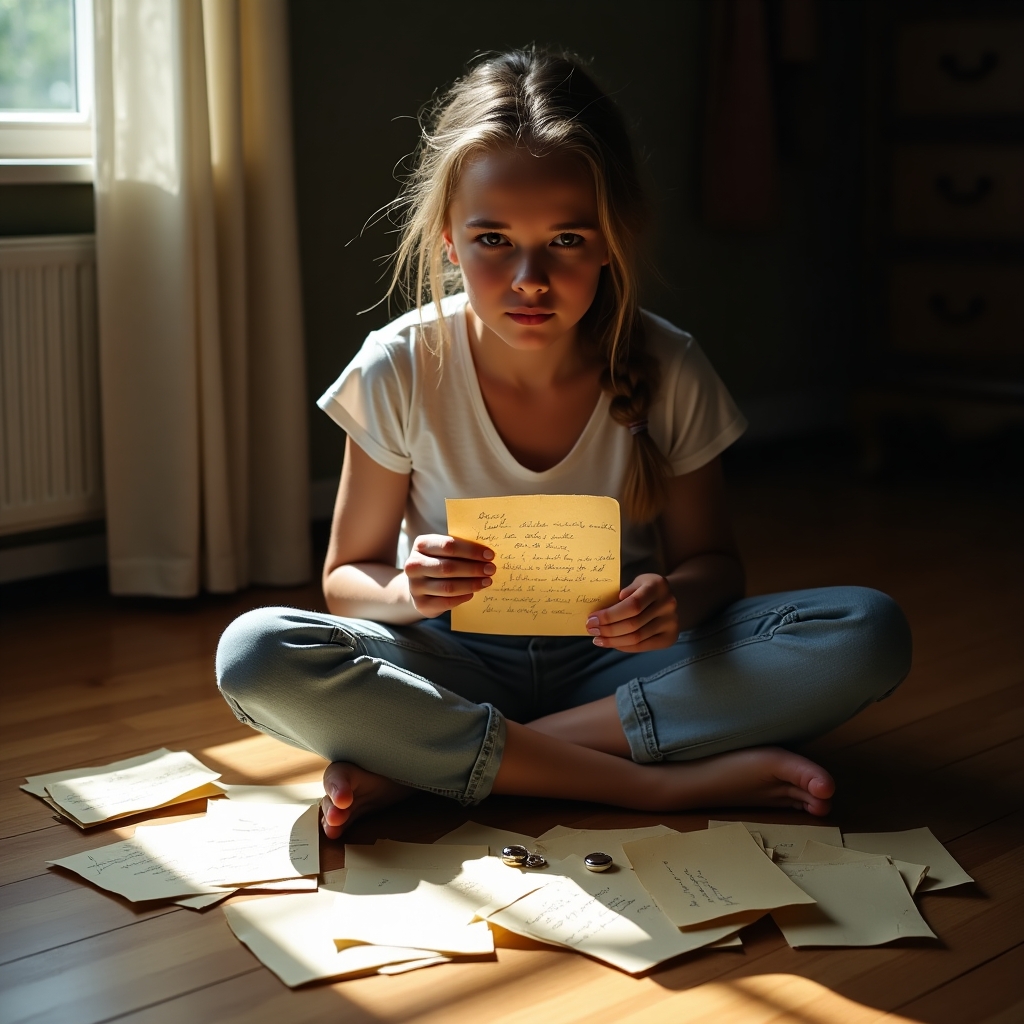


The small town of Willow Creek had always been home for Elara Morales. In its cobbled streets and familiar faces, life breathed an ease that seemed almost eternal. Yet, for Elara, the air was thick with an unspoken expectation threaded through her life like a persistent song.
The Morales family were known for their legacy. Generations of artisans, artisans who molded wood, clay, and metal into art that reflected the soul of their heritage. Elara’s mother, Camila, was a master woodworker, each piece she crafted telling a story of their ancestors. From a young age, Elara had been intertwined with these stories, learning the craft from her mother, her small hands shaping tiny figures with the same love and precision as those who had come before her.
However, as Elara stepped into adulthood, the weight of this legacy began to press upon her shoulders in ways she never anticipated. As much as she cherished the tradition, an internal yearning for something different gnawed at her insides. She had discovered a love for digital art, a realm where she felt a freedom and creativity that the tangible world of wood and clay couldn’t contain.
Camila, with her knowing eyes, often watched Elara’s struggle in silence. The quiet symphony of their workshop was occasionally interrupted by gentle, probing questions, “How is your art coming along, Elara?” These questions, though framed with care, bore the weight of generations expecting her to follow a path she no longer felt was entirely hers.
In this quiet tension, Elara found herself at a crossroads; her love for her family and their craft tangled with her desire to forge an individual path. The conflict was subtle, an undercurrent that ran through daily life, erupting in small waves of anxiety and guilt rather than dramatic confrontations.
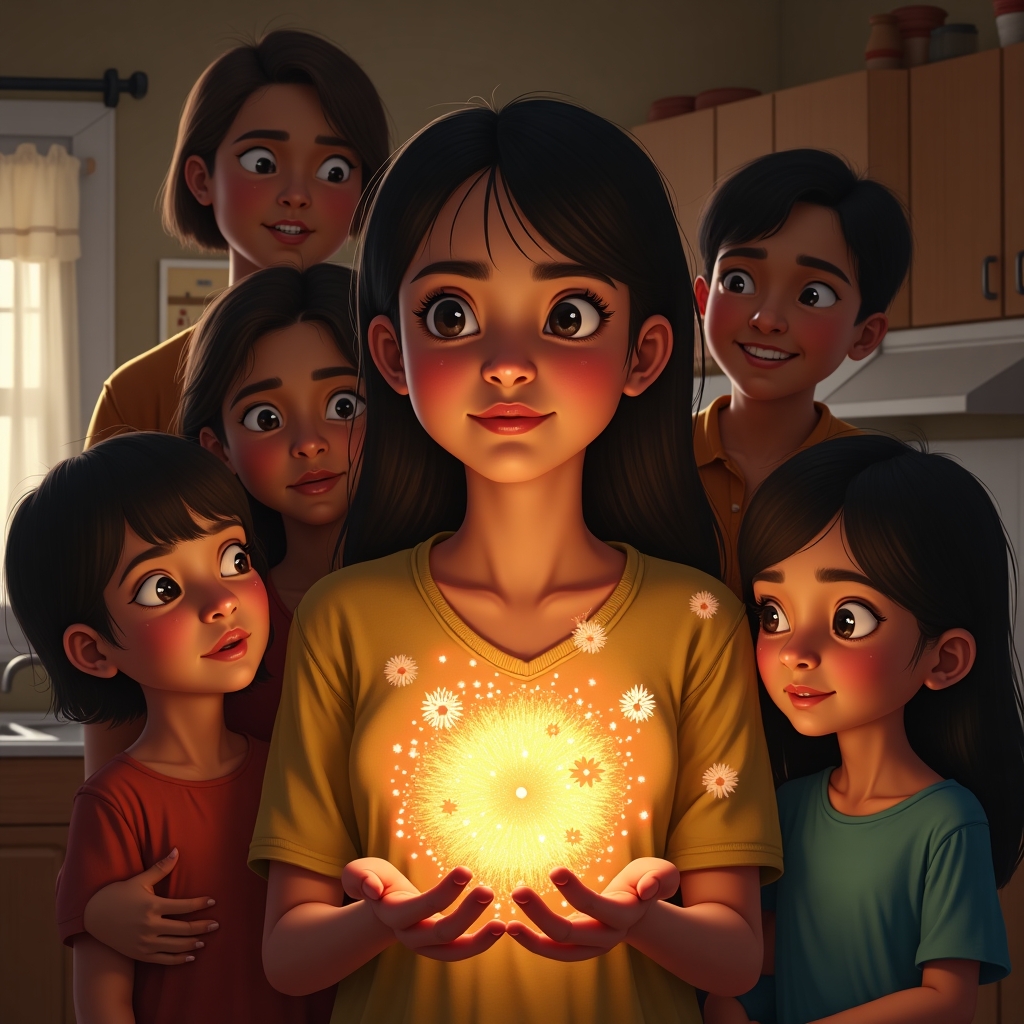
On Sundays, the family gathered for dinner in the heart of their home, the kitchen. The room, filled with the aroma of spices and laughter, was a sanctuary of sorts. Yet, in the warmth, Elara felt the chill of her indecision. Her grandmother, Abuela Esperanza, spoke of the family’s history, tales of perseverance and artistry, reminding Elara of the legacy she was to inherit. Elara listened, her heart a tumult of loyalty and rebellion.
It was during one such Sunday dinner, amidst the clinking of plates and familial chatter, that Elara found herself gazing at a digital artwork she had created. It was a piece that represented the fusion of her worlds—a vibrant digital landscape interwoven with textures reminiscent of traditional materials. Her family, engrossed in conversation, hadn’t noticed it yet.
In that moment, Elara’s heart experienced a pivotal shift. She realized her inner turmoil stemmed not from rejecting her heritage, but from the belief that she had to choose between her family’s craft and her own aspirations. Her realization dawned quietly, like the first light of dawn breaking through the night.
The room blurred slightly as tears pricked her eyes, not from sadness, but a profound clarity. She could honor her family’s legacy by integrating it into her future, creating something uniquely hers. Her art was a bridge—a testament to both her ancestry and her individuality.
With newfound resolve, Elara cleared her throat, drawing the attention of her family. She spoke with a voice steady yet filled with emotion, “I want to show you something. It’s a piece I’ve been working on. It means a lot to me… and I think it might mean a lot to us.”
Her family gathered around, curiosity in their eyes as they looked at the artwork. Silence settled in the room, deeper than any Elara had known. It was Camila who spoke first, her voice a whisper, “It’s beautiful, mija. It’s… it’s all of us.”
Abuela Esperanza nodded, tears glistening, “You have our touch, and your own. It’s a new tradition, Elara.”
That evening, Elara found peace within herself, realizing that honoring her values did not mean forsaking her roots. She learned that one could be loyal to family and self, that the future and the past could coexist in harmony. Her art became a testament to generational healing—a symbol of the strength it took to weave personal truth into the fabric of familial legacy.
The quiet struggle had found its voice, and Elara was ready to carry forth her family’s name, her own way.