
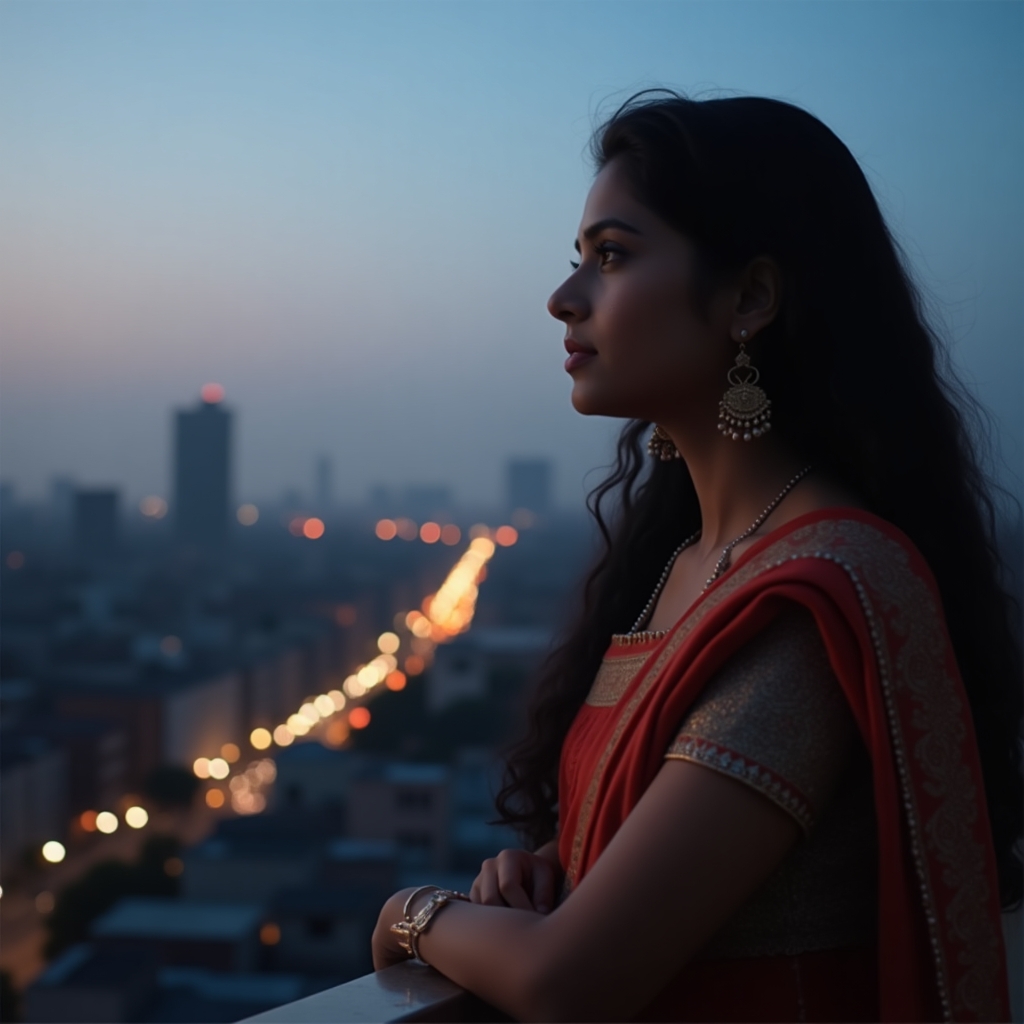
Maya stood on the balcony, gazing at the sprawling city below—a mosaic of light and shadow. Her heart was a tapestry woven with the vibrant threads of her Indian heritage and the more muted hues of her personal aspirations. At twenty-four, Maya was on the verge of completing her master’s degree in art history, a field she cherished deeply but one that her family viewed as impractical.
Her parents were immigrants who had sacrificed everything for a new life in America, bringing with them the hopes and dreams of generations. To them, success was measured in stability, not colors on a canvas or the pages of a thesis. Her father often spoke of his dreams—dreams that Maya had inherited whether she wanted them or not.
“An engineer, a lawyer, a doctor,” he would say, listing careers like items on a checklist. “These are professions with a future.”
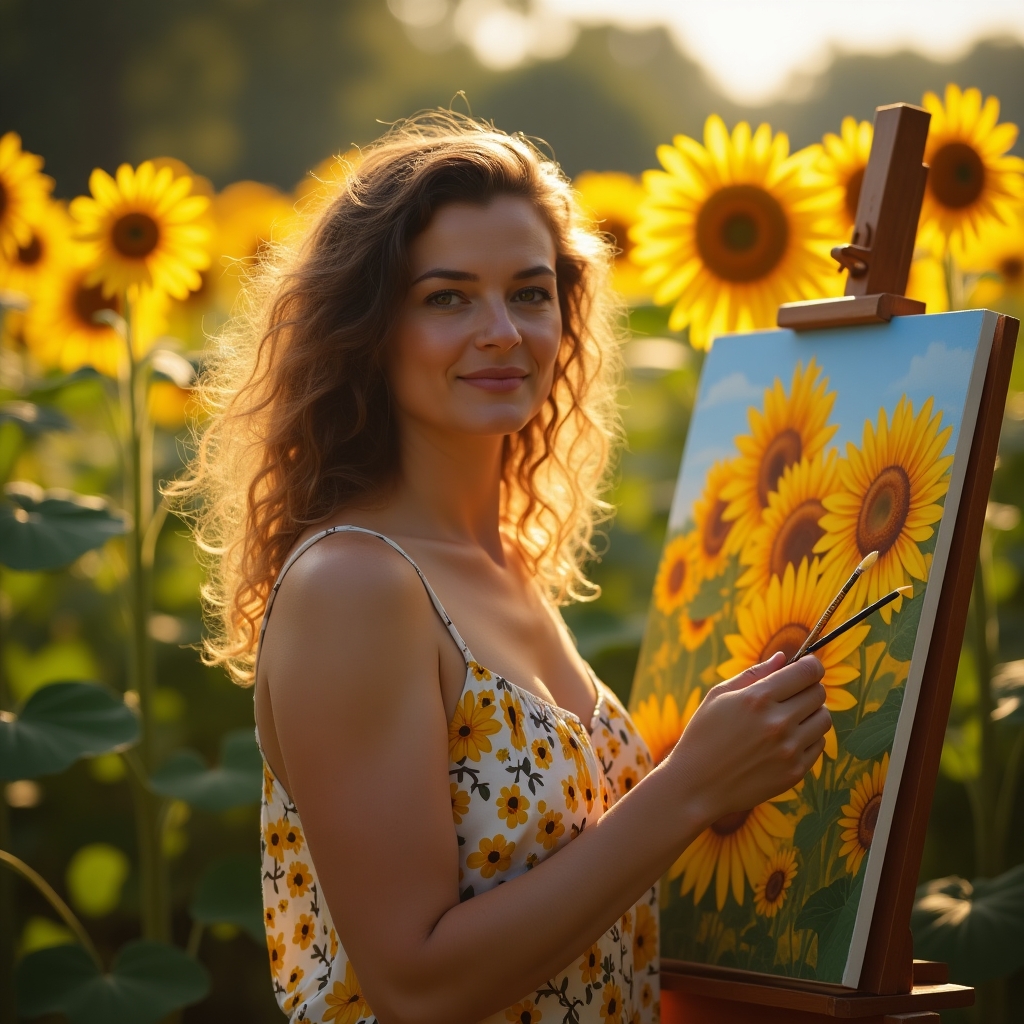
Maya loved her parents, felt the weight of their sacrifices each time she saw her mother’s worn hands or her father’s tired eyes. Yet, her passion lay in the stories captured within the frames of ancient paintings, tales whispered from one generation to another, much like her own.
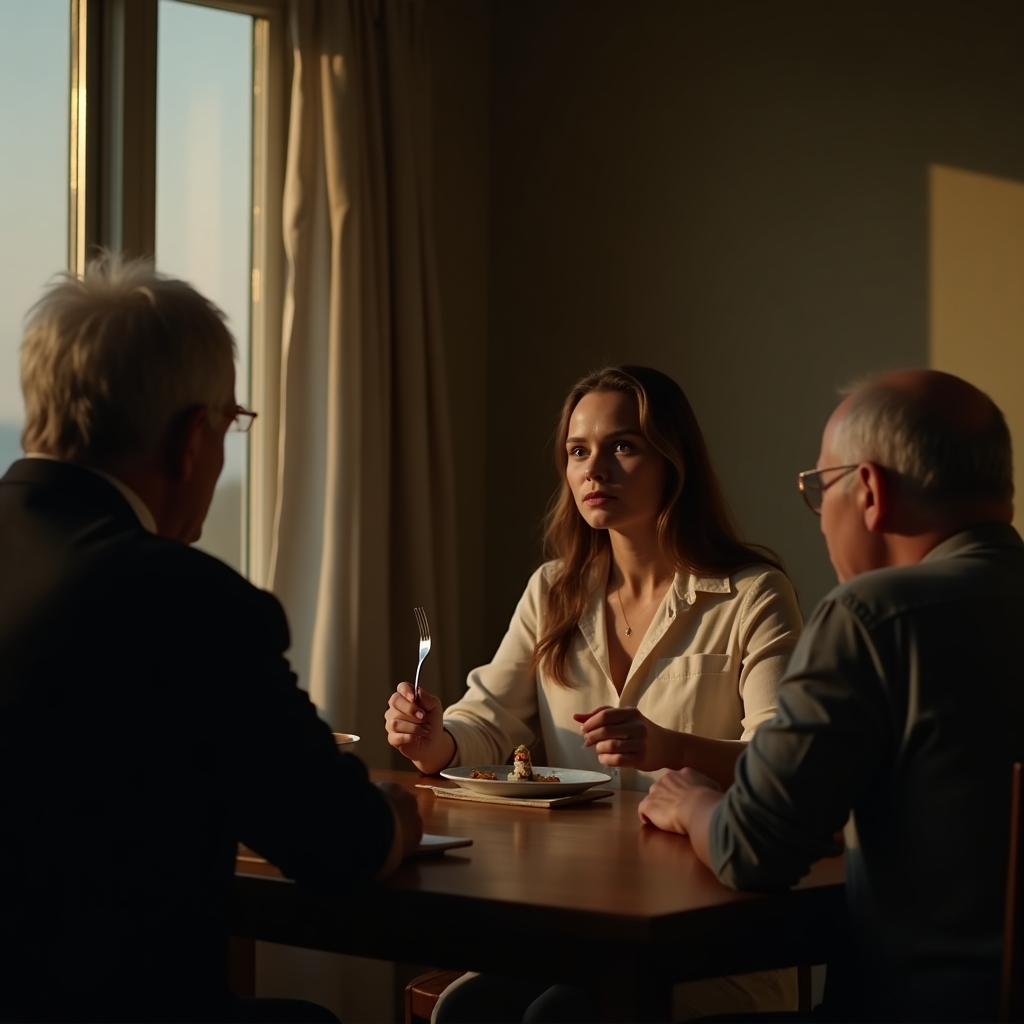
The tug-of-war between duty and desire manifested itself in small, quiet moments: during family dinners with her parents’ silent disapproval as she spoke of her studies; in her mother’s soft sighs upon finding Maya lost in books about artists long gone; in the unspoken yet palpable expectations ever-present in the family home.
This evening, as the city below seemed to breathe with its own life, Maya recalled a conversation she had had with her grandmother during a visit to India. The elderly woman, wrapped in saris faded with age but vibrant with history, had taken Maya’s hands in her own, tracing lines that seemed to map out both known and unknown futures.
“In our blood lies the strength of many women, Maya,” her grandmother had said in a voice as warm and nurturing as she. “But the balance is yours to find.”
Maya had held onto those words, turning them over like a pebble in her pocket. Yet, standing here tonight, they felt heavier than ever before. Was it selfish to pursue her dreams? To define her success by her standards rather than the contours of familial expectations?
Her phone buzzed, breaking the solitude. A message from her younger brother, Arjun. “Hey, can we talk?” it read.
She found him in his room, surrounded by posters of futuristic cars and architectural designs. Arjun was the embodiment of their parents’ expectations, studying to be an architect with a passion as fiery as Maya’s for art.
“I found this,” he said, holding out a book. “It’s about merging traditional and modern design. Thought it might help with your thesis.”
Maya took the book, surprised. “Thanks,” she said softly.
Arjun settled into his chair, thoughtful. “You know, Mom and Dad just want what they think is best. But I think you might be happier doing what you love.”
The simplicity of his words struck her. In Arjun’s quiet support, Maya recognized the freedom to choose—a freedom perhaps not fully realized by their parents but understood by a new generation.
A week passed, and Maya found herself sitting at her thesis presentation. Her research explored the fusion of Western and Eastern artistic sensibilities, an homage to her dual identity. As she spoke, the anxiety of familial expectations tightened around her like a vise, but she pushed on, fueled by passion and determination.
Later that evening, back on the balcony, Maya was joined by her father. The two of them stood in silence, the city breathing around them.
“Maya,” he began, his voice a mixture of pride and reluctance.
“Dad, I love you and Mom so much,” Maya said, her voice steady. “But I need to follow my own path. You taught us to be proud of who we are, and this is who I am.”
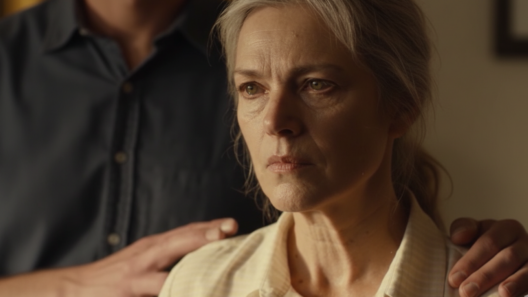
Her father’s gaze lingered over the cityscape before settling on her. “Just remember,” he said slowly, “we are always here, no matter what.”
In that moment, the threads of expectation loosened, and Maya felt a clarity she had long yearned for. The path ahead was still uncertain, but it belonged to her.
Maya smiled, feeling the gentle tug of her grandmother’s words once more—a reminder that strength, like art, often comes from the blending of old and new.