


Maya sat on the edge of her bed, rifling through the layers of silken sarees her mother had laid out. Each garment, a vivid burst of color and embroidery, carried with it the silent weight of her family’s expectations. They rustled softly, a chorus of whispers echoing the voices of her ancestors. To her mother, and indeed her entire family, these sarees were more than just clothing; they were tradition, identity, and continuity, a seamless thread connecting past to present, and stretching into the future.
Yet to Maya, they represented a stifling inevitability. Raised in a household where Indian culture was both a sanctuary and a shackle, Maya had navigated her world with a deep sense of duality. At home, she was the dutiful daughter, attentive and respectful, absorbing her parents’ teachings and traditions. Outside, she was a budding artist, captivated by the contemporary and the unconventional, yearning to create her own identity in a world her parents could scarcely comprehend.
Her father was a gentle man, with hands worn from years of work in the family-owned grocery store, his eyes always kind yet shadowed by unwavering beliefs. Her mother, a woman of grace and resilience, held the family history like an unyielding flame. She often spoke of her own childhood in India, weaving tales that painted their ancestral home in vivid hues. Maya cherished these stories, but they also served as reminders of the life expected of her—a life she felt tugging her away from the person she was trying to become.
As she fingered the soft threads of a crimson saree, Maya felt a familiar knot tightening in her chest. Tomorrow was her cousin’s wedding, an event that promised a reunion of family and tradition. It would also be the first time her extended family would meet Ravi, the young man Maya had been seeing—a man her parents hoped she would marry.
Ravi was everything her family desired: polite, well-educated, and Indian. Yet, he had been a part of Maya’s life that had been chosen for her rather than by her. She respected him, even cared for him, but there was no spark, no shared passion for the art and freedom she secretly craved. The thought of a future with him felt like a slow suffocation, the encroaching walls of a life meticulously planned by everyone but her.
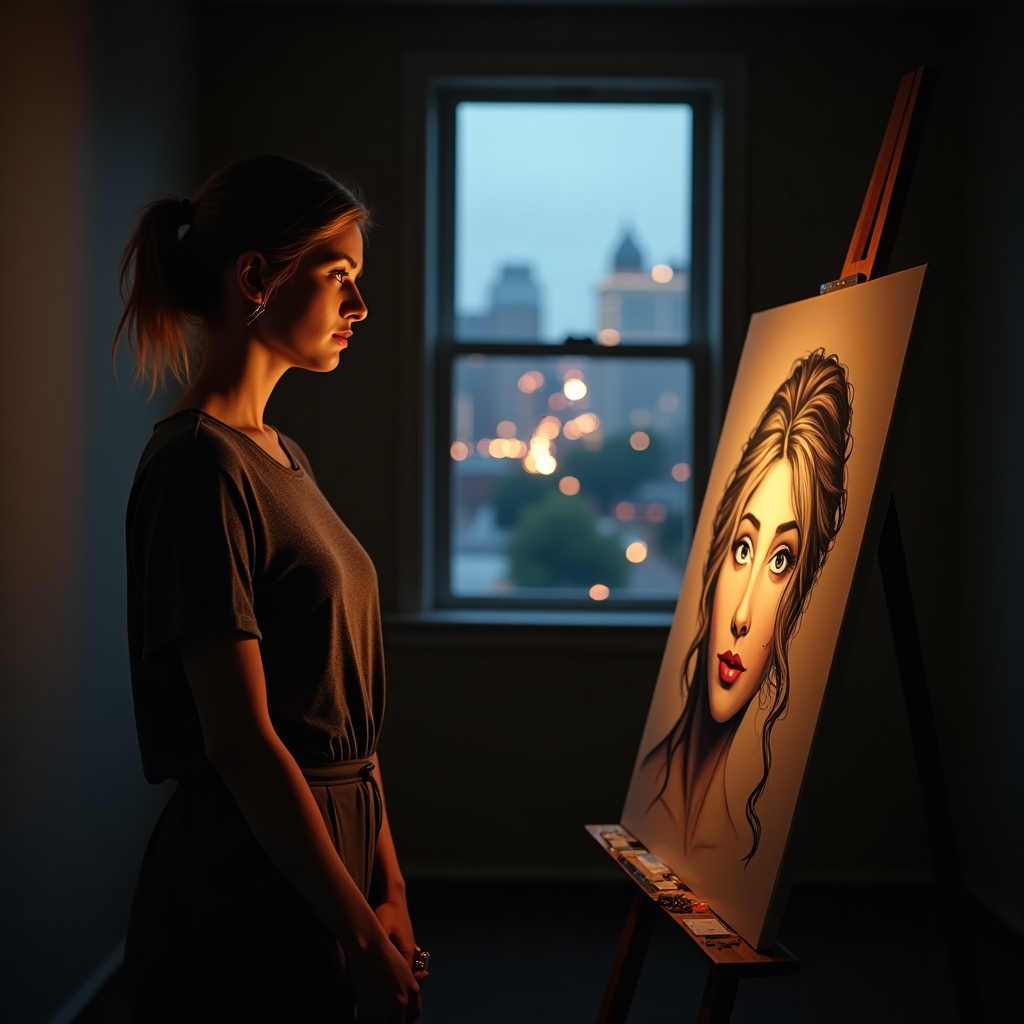
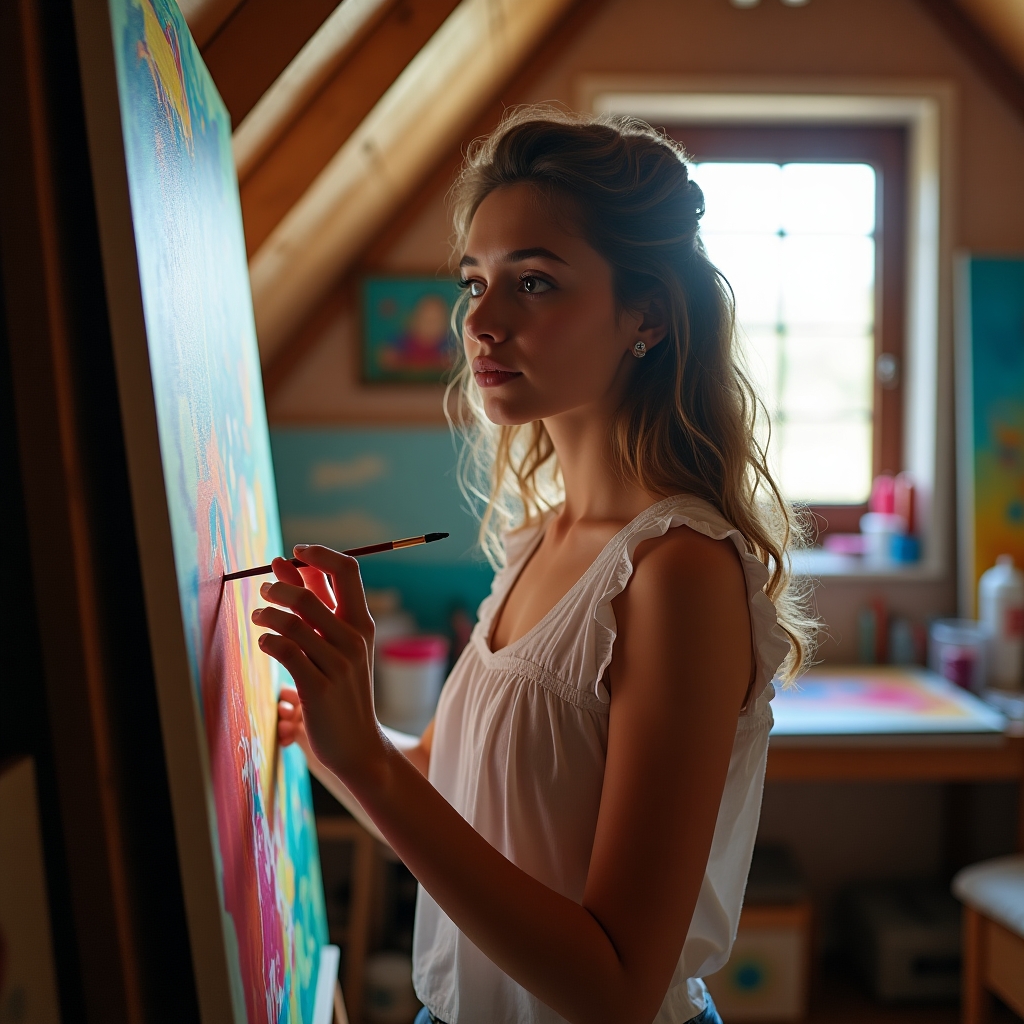
In the quiet hours of the night, Maya often found solace in her art studio, a small space she had carved out in the attic. Here, she painted in silence, her brush dancing across canvas, translating her turmoil into color and form. It was here she confronted her fears, expressing without words the struggle between duty and desire.
The morning of the wedding dawned bright and bustling, the house filled with the aroma of spices and the hum of conversations. Maya moved through the preparations like a ghost, present but detached, her mind a swirl of emotions she could barely articulate.
As the ceremony unfolded, Maya watched the rituals with a mixture of awe and alienation. The precision and the beauty of it all was undeniable, yet it felt like she was watching through a pane of glass—a separation of what was expected and what was true in her heart.
After the ceremony, she slipped away from the celebrations, her feet finding their way to her attic sanctuary. She locked the door behind her, her heart pounding like a drum. As she stared at the blank canvas before her, a floodgate of emotions burst forth. Her brush moved with a furious energy, each stroke capturing her longing for freedom, her battle with tradition, and her ultimate desire to honor herself.
It was then, amidst the whirlwind of color and chaos, that Maya found her moment of clarity. It came not as a bolt of lightning, but as a gentle, pervasive light, washing over her with an undeniable warmth. She realized with a quiet certainty that she could honor her heritage while pursuing her own path. The two were not mutually exclusive. Her lineage was a strength, a rich tapestry from which she could draw inspiration, not an immutable destiny.
The decision to speak her truth to her parents filled her with an unexpected calm. She would not do so in defiance, but with love. She would paint her future as she had painted the canvas before her—boldly, authentically, and with respect for the palette of her past.
When she descended the attic stairs, there was a new resolve in her step. The sound of laughter and music drifted through the hallway, but Maya felt no need to rush back. She would join the celebration soon, but first, she would find her parents. They deserved to know the true artist she had become and the life she wished to paint.
In the quiet corner of the garden, beneath the gentle sway of the mango trees, Maya shared her heart. Her parents listened, their faces a tapestry of surprise, confusion, and, finally, understanding. The conversation was not easy, but it was necessary—a first step towards bridging the gap between tradition and individual truth.
Maya returned to the wedding, the weight of unspoken words finally lifted. As she looked around at her family, she saw not the binding cords of expectation, but the delicate threads of love and support that would allow her to weave her own story—a story deeply rooted in the strength of her heritage, yet open to the winds of change.