

In the quaint town of Eldridge, nestled between sloping hills and expansive skies, life unfurled at a deliberate pace. Here, every family had a role to play, and every individual was a part of an intricate tapestry woven with tradition and expectation. Among these threads, Lucia Torre found herself a quiet knot of tension, caught between her own desires and the unyielding expectations of her family.
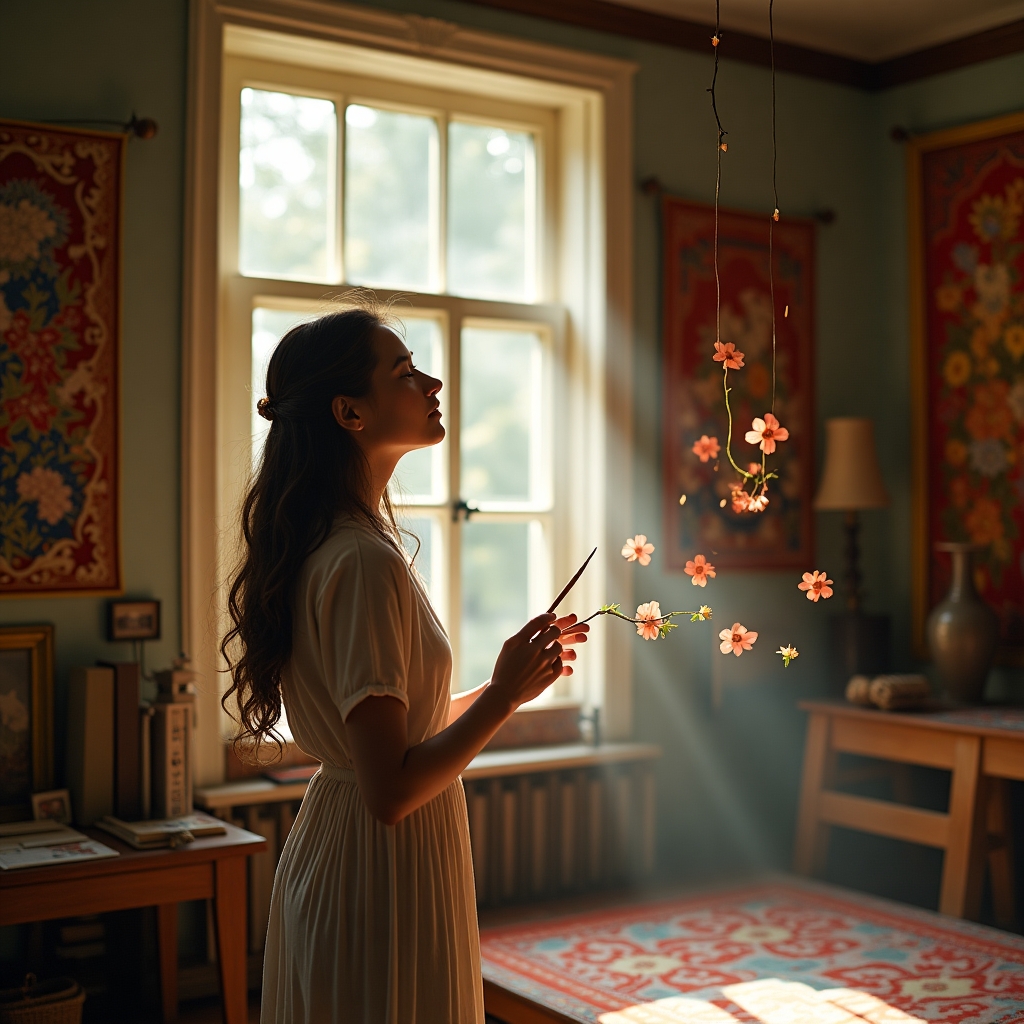
The Torre family had long been the unofficial custodians of Eldridge’s cultural heritage. Lucia’s mother, Alma, was renowned for her eloquent storytelling, breathing life into the town’s myths at every festival. Her father, Marco, was a master craftsman whose creations adorned town squares and family homes alike. Growing up, Lucia was steeped in this rich legacy, her life a dance of colors and stories, of whispered legends and familial responsibilities.
But as she approached her twenties, Lucia felt an incongruous pull, a yearning she could neither articulate nor fully understand. It was as if her heart sang in a different key, a quiet tune that played beneath the louder, insistent melody of her family’s expectations.
Lucia had always loved painting. From the moment she first grasped a brush, the act of creating felt sacred. The world around her was a tapestry of hues and textures she longed to capture. But art, as Lucia envisioned it, bore little resemblance to the carved wood and woven tapestries her family revered. It was this divergence, this silent rebellion against tradition, that left Lucia feeling tethered and torn.
Her parents, although kind and loving, had unspoken dreams for Lucia. She was expected to carry forward their legacy, to embrace the stories and craft that defined the Torre family. And while Lucia cherished her heritage, the weight of these expectations often sat heavily on her shoulders.
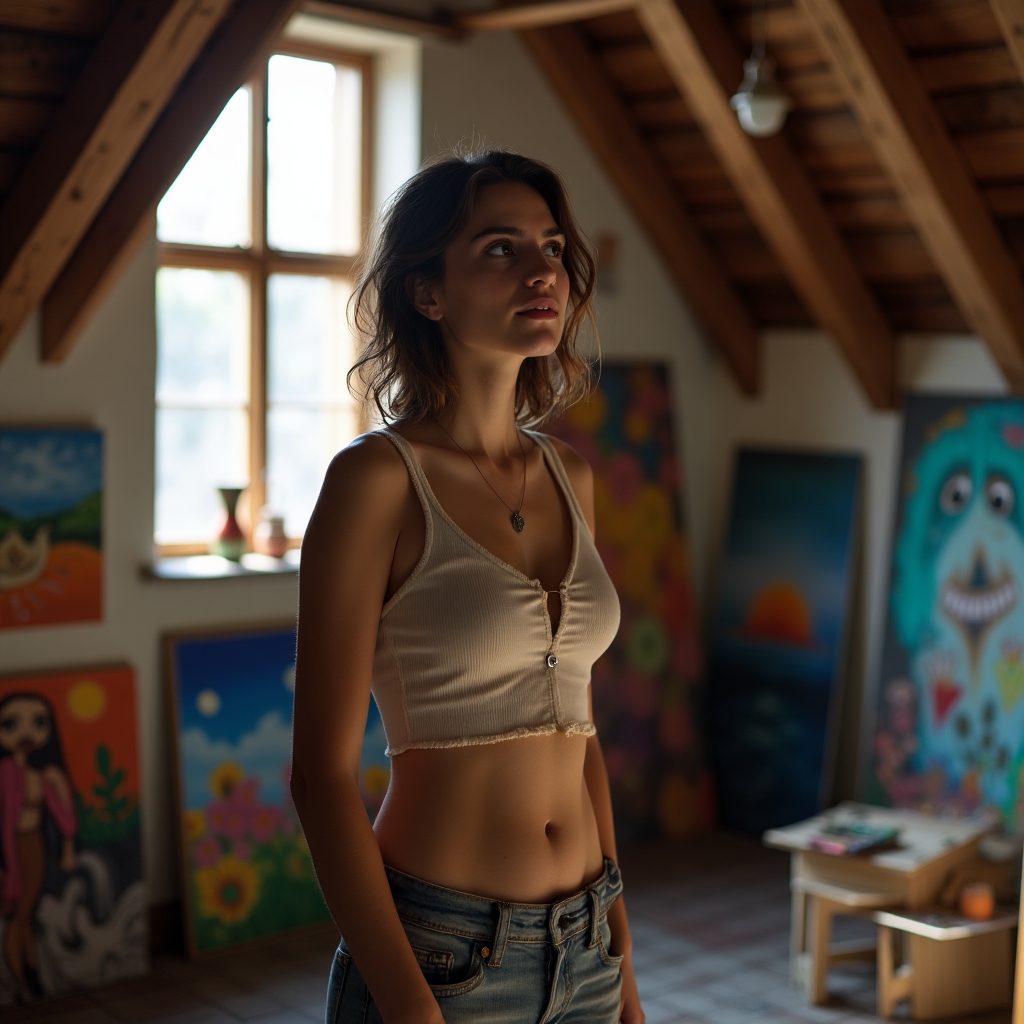
Lucia spent her days assisting her father in his workshop, her nights listening to her mother’s stories, and her heart longing for the studio she had set up in the attic—a sanctuary of solitude and expression. It was there, under the slanted roof, where she found solace in the strokes of her brush and the play of light on canvas.
As the months passed, Lucia’s internal struggle grew more pronounced. The attic began to feel like both a refuge and a prison, a place where her dreams flourished but could not escape. Her art, vibrant and alive, was a secret rebellion she dared not share.
One evening, as autumn painted the world in amber and gold, Lucia sat with her parents on the porch. The air was crisp, laden with the scent of fallen leaves and distant woodsmoke. Her mother recounted a tale of their ancestors, weaving a rich tapestry of words that held the past close to the present.
Lucia listened, her heart caught in a dance of admiration and yearning. She knew the story by heart, yet it felt like a life she was not meant to lead. Her eyes drifted to the horizon, where the sun set in a radiant blaze, as if the world itself was a canvas waiting for her touch.
“Lucia?” Her mother’s voice gently interrupted her reverie.
“Yes, Mama?” she replied, tearing her gaze from the horizon.
“You seemed lost, dear,” Alma said, her eyes searching Lucia’s for answers she could not give. “What’s on your mind?”
Lucia hesitated, the familiar fear of disappointment constricting her chest. Yet, in that moment, beneath the fading light, something shifted within her. Perhaps it was the grace of the evening, or the weight of countless unspoken moments. She took a deep breath, feeling a fragile, stubborn courage unfurl.
“Mama, Papa,” she began, her voice steady yet tinged with vulnerability, “I love our family’s stories and traditions. They are a part of me, just as much as you are. But there’s something else I love too—painting. It’s… it’s my way of telling stories.”
The words hung in the air, a delicate bridge spanning the gap between her parents and herself. Her heart pounded in the silence that followed, a symphony of hope and fear.
Marco was the first to speak, his voice thoughtful and deliberate. “Painting is a part of you, Lucia. We see it in your eyes, in the way you look at the world.”
Alma reached for Lucia’s hand, her touch both a comfort and a connection. “We only want you to be happy, to find your own path. Perhaps there is a way to weave your art into our story, to add a new thread to our family tapestry.”
It was in this moment Lucia realized that her struggle, though quiet, had not been in vain. Her parents’ acceptance was an unanticipated gift, a lightness that filled her with a profound sense of relief and belonging. They saw her not as a deviation from tradition, but as an evolution of it.
In the following days, conversations around the Torre household shifted subtly. Lucia’s art became a part of family discussions, her paintings hung proudly among her father’s crafts. The attic transformed from a refuge of isolation to a studio open to the world, a place where her two loves—her heritage and her art—could coexist.
The story of Lucia Torre resonated through Eldridge, a testament to the power of quiet courage and the possibility of harmonizing personal truth with familial legacy. In embracing her passion, Lucia not only found her voice but also enriched the tapestry of her family’s history with new colors and textures.
And so, the town of Eldridge continued to thrive, its traditions evolving yet enduring, each generation adding their own unique thread to its story.