

Elaine stood at the edge of her family’s garden, a place that had always felt like a sanctuary and a prison all at once. The early evening light filtered through the dense canopy of oak leaves, casting intricate patterns of shadow and light on the manicured grass. It was a scene imbued with nostalgia and expectation, a silent witness to her internal struggle.
Raised in a family where tradition was the cornerstone of identity, every path seemed paved with the echoes of her ancestors. The Chens had always been a family of engineers, practical and precise, with an unspoken expectation that Elaine would follow suit. Her parents, particularly her father, had never been harsh or overtly demanding; their expectations were woven into every conversation, every look of approval, and every subtle nod.
Elaine had excelled in her studies, earned a scholarship to one of the top engineering schools, and had been lauded for her achievements. Yet, beneath the accolades, she harbored a quiet yearning for something different, something less tangible but more profoundly stirring. Art had always been her secret refuge, her means of expression in a world that valued precision over creativity. Her sketchbook was filled with images that told stories, depicting not just landscapes and people but the emotions she couldn’t voice.
Her dilemma was not one of rebellion but of subtle dissonance — a note out of harmony in the symphony of her life. The Chens prized unity and cohesion, often equating these with loyalty and respect. To divert from this path felt like a betrayal, not just of her parents’ hopes but of the rich history they represented. Yet, there was a part of Elaine that longed for authenticity, a voice that was hers alone.
The internal conflict played out as a quiet dance within her, each step measured and deliberate. She had perfected the art of maintaining appearances; her smile never wavered, and her words never hinted at discord. To the casual observer, Elaine was the epitome of filial devotion. Yet, in the solitude of her room, she allowed herself to dream in colors her family would never recognize.
As she approached the final year of her degree, the pressure only intensified. Her father would speak of her future as if it were a given — a career in engineering, a life of stability. Even her mother, who sometimes sensed Elaine’s unease, remained silent, bound by her own cultural conditioning.
It was during one of these conversations, at a family dinner, when the subtle psychological tension reached its zenith. Her father was recounting his own career successes, his pride evident as he spoke of the legacy he hoped to pass on. Elaine listened, her face an unreadable canvas as her heart whispered things she dared not voice.
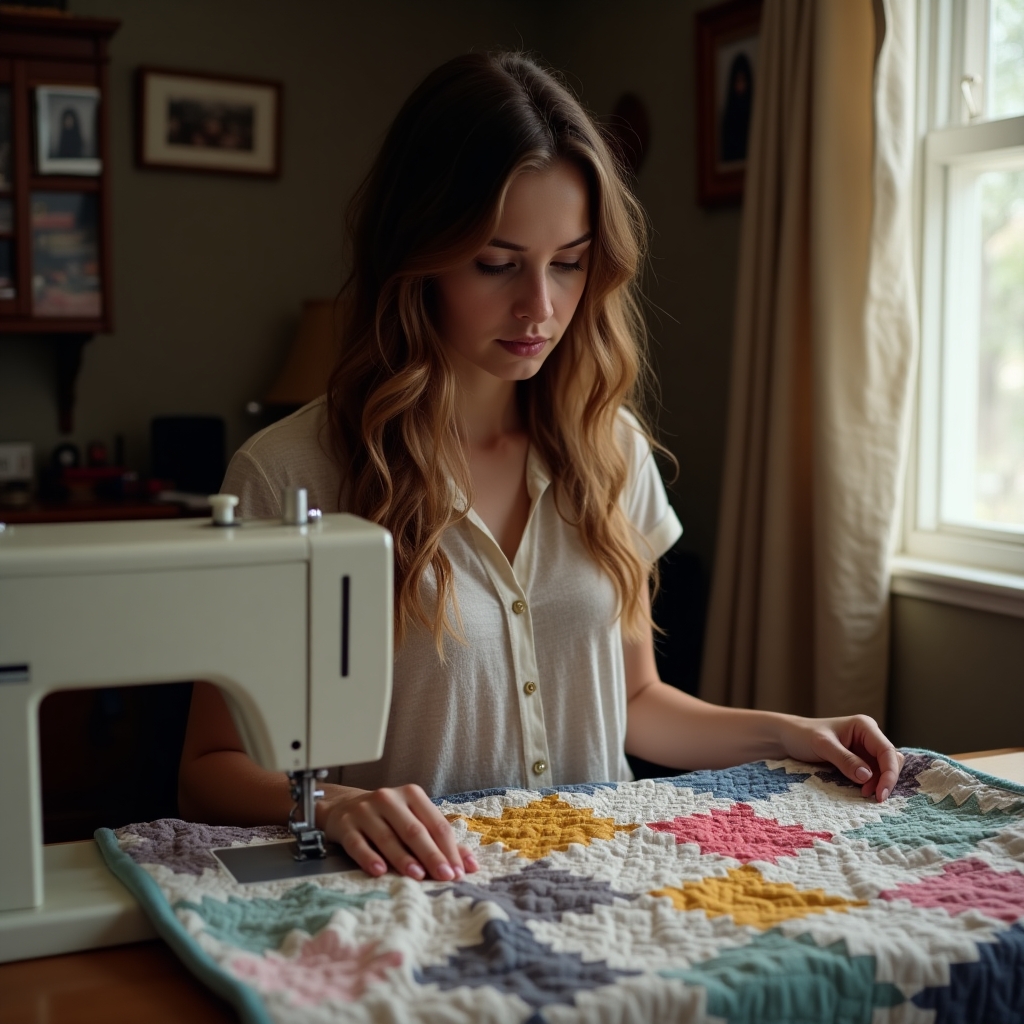
After dinner, as the house settled into its evening rhythm, Elaine found herself drawn to her mother’s sewing room. It was a space Elaine had rarely entered, yet something compelled her to seek it out. She found her mother there, piecing together a quilt that told its own story of family and resilience. The room was filled with the gentle hum of the sewing machine, a sound as comforting as a lullaby.
“Mom,” Elaine began, her voice barely above a whisper. “How did you choose this life?”
Her mother paused, the question hanging in the air like a delicate thread. “It chose me,” she replied simply, her hands still working with practiced ease. “There is comfort in following a path that is known.”
Elaine nodded, understanding more than she wished to admit. “But do you ever wonder about other paths? Ones that might have been?”
Her mother met her eyes, her gaze soft yet penetrating. “Every stitch tells a story, Elaine. Some stories are ours to create, even if they are not the ones we expected.”
In that moment, Elaine felt a quiet shift within her, like a thread pulled taut finally easing into place. It wasn’t a dramatic revelation but a gentle realization that the path of personal truth could coexist with love and loyalty. Her mother’s words, simple yet profound, gave her the courage to envision a future where her art was not a betrayal but an extension of her legacy.
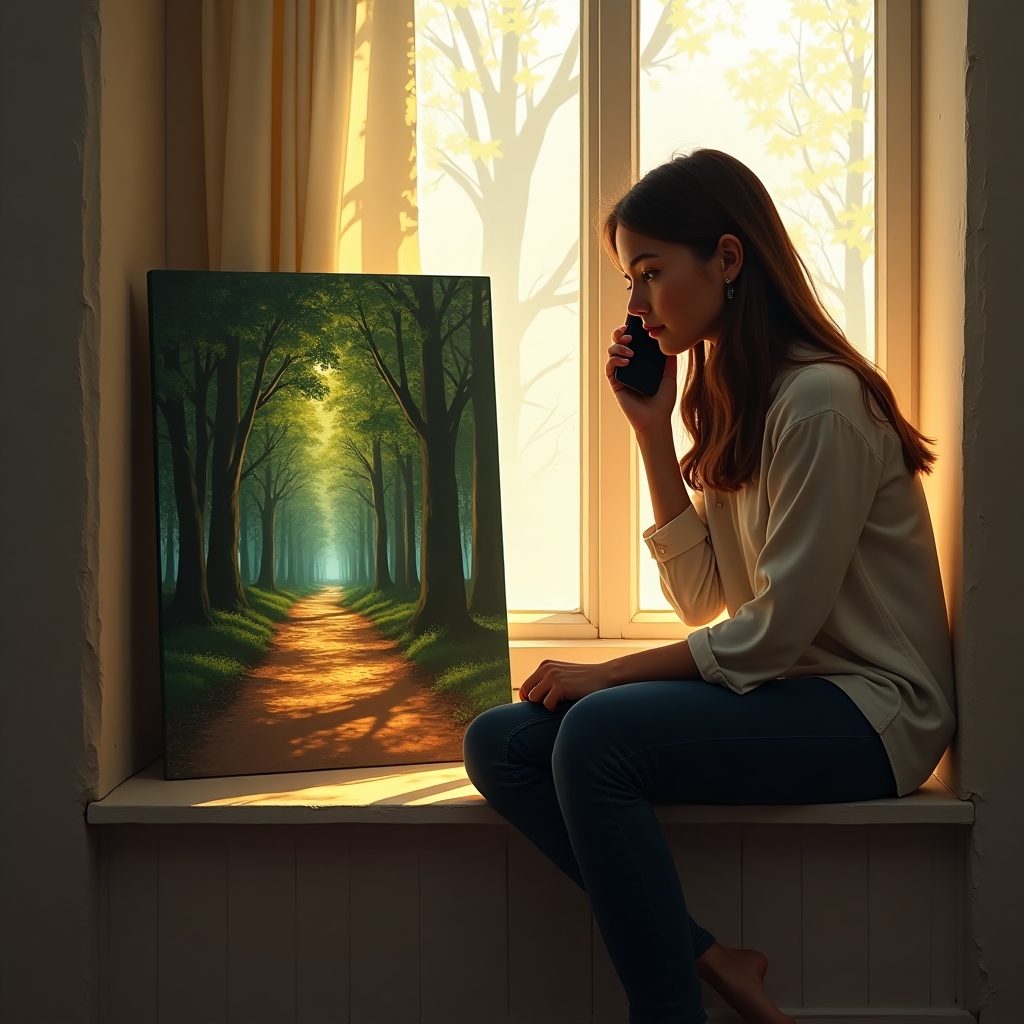
Elaine returned to her room that night, her heart lighter. She sat by her window, the moon casting a gentle glow over her sketchbook. For the first time, she picked up her pencil not as a refuge from expectation but as a bridge towards understanding.
The emotional clarity she had gained was not an end but a beginning. The courage to assert her truth would be a journey in itself, one that required patience and resilience. Yet, she felt ready to begin, knowing that the threads of silence had been rewoven into a tapestry of quiet strength.
As she sketched late into the night, Elaine recognized that the garden, her sanctuary and prison, would forever be a part of her. But now, it was also a place where she could plant seeds of her own choosing, bringing forth a harmony that was uniquely hers.