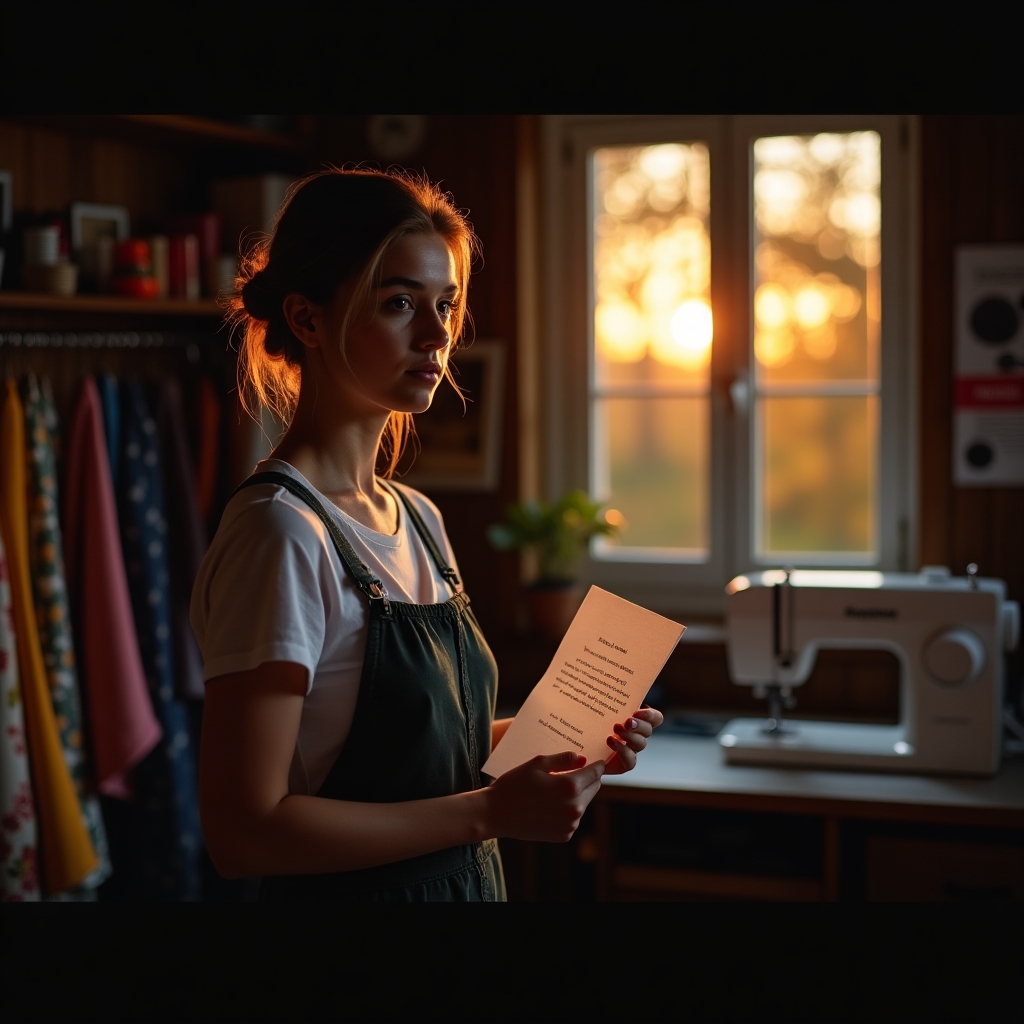




The morning sun filtered softly through the lace curtains, casting delicate patterns on the wooden floor of Aisha’s room. She sat cross-legged on the bed, the weight of the envelope in her hands feeling almost unbearable. It was thin, just a single piece of paper inside, yet it seemed to hold the entirety of her past and future.
Aisha had always been the dutiful daughter, the one who silently absorbed the hopes and dreams her parents had carried across oceans. Her family, having emigrated from Pakistan to a small town in Canada, held close to their traditions like a lifeline. The values of hard work, respect, and familial duty were sewn into the fabric of Aisha’s upbringing, each thread a whispered reminder of where she came from and who she was expected to be.
Her parents had never said it explicitly, but Aisha knew they wanted her to pursue medicine. It was a profession that commanded respect, provided stability, and in her parents’ eyes, it was the ultimate symbol of their sacrifices bearing fruit. She had enrolled in the pre-med program at the local university without question, her desire to make them proud a silent motivation that pushed her through long nights of study.
But each day, the lectures felt like an echo in an empty room, words bouncing off walls that never truly reached her heart. She found herself drawn instead to the art studio, where she would lose hours shaping clay, her hands guided by an unspoken language that offered peace and fulfillment. The contrast was stark and troubling: the clarity she felt while creating versus the dull gray cloud that seemed to settle over her at the thought of a career in medicine.
The letter from the art school, offering her a place in their prestigious program, lay before her like an uncharted map to a future her parents might never understand. Aisha was torn. The guilt of even considering a path different from her parents’ wishes gnawed at her conscience, and yet the idea of dismissing her true passion felt like a betrayal to herself.
The days that followed were laden with silence, a weighty tension that coated every interaction. Her parents, caught up in their daily routines, sensed her unrest but assumed it to be the stress of academia. Aisha, holding her secret close, wore a mask of normalcy, smiling at the right moments, nodding in agreement when her father spoke of the future.
Every evening, she would retreat to the solitude of her room, where the art school acceptance letter was hidden beneath her pillow. She would trace the edges of the envelope, imagining the possibilities it held, while grappling with the fear of disappointing the two people she loved the most.
One quiet afternoon, while her parents were out, Aisha sought solace in the backyard. The garden, a vivid tapestry of colors and scents, was her mother’s pride. Aisha often found refuge there, its beauty a gentle reminder of life’s simple joys. She sat on the edge of the flower bed, the earth cool and grounding beneath her.
As she idly dug her fingers into the soil, a memory resurfaced — her grandmother’s voice, telling stories of her own youthful dreams and the constraints she faced. Aisha remembered the soft lament in her grandmother’s eyes, the regret of a life lived for others. The realization struck her with clarity: the weight of generational expectations was a burden passed down, each generation struggling to balance their own desires with the hopes of the past.
With this new understanding, Aisha felt a stirring of resolve. She rose and returned to the house, the acceptance letter clutched firmly in her hand. She knew the conversation would be difficult, that it would challenge the foundation of her relationship with her parents. But she also knew that healing the generational wounds required truth and courage, qualities she had inherited and now needed to embody.
That evening, as the family gathered for dinner, Aisha took a deep breath and spoke. Her voice, though trembling, was filled with a quiet determination as she shared her dreams. Her parents listened, their expressions shifting from confusion to hurt. Silence settled over the room like a heavy fog.
Yet, in that silence, Aisha felt the bonds of her own expectations loosen. She had spoken her truth, and in doing so, opened the door to understanding and healing. Her parents, torn between their dreams for her and her own desires, began to see the importance of her happiness, the value of allowing their daughter to forge her own path.
Their journey to acceptance would not be immediate, but it was a beginning. In finding her voice, Aisha hoped to inspire not only herself but perhaps also her parents to reflect on their own dreams and the layers of their own silent sacrifices. It was a step towards breaking the cycle of quiet acquiescence, towards a future where each generation could stand in their own light, carrying forward the best of what came before without being bound by it.