



Leah sat at her small mahogany desk, the late afternoon light filtering through the sheer curtains to cast intricate shadows across the room. The air was thick with the scent of jasmine tea, a fragrance that transported her back to the bustling kitchen of her childhood home. Though miles away from her family, the echoes of their expectations resonated in every corner of her mind.
Growing up in a household where tradition reigned supreme, Leah learned to tread carefully between two worlds: the vibrant tapestry of her family’s Chinese heritage and the fast-paced, ever-evolving Western culture she navigated daily. Her parents, both immigrants, had worked tirelessly to provide her with opportunities they never had, weaving a narrative of sacrifice and duty that subtly bound Leah to their vision of success.
Yet, within her, a quiet rebellion simmered. Leah had always been drawn to the arts, a passion that her parents viewed as a hobby at best, a frivolous distraction at worst. They envisioned a future for her paved with stability and status—a career in medicine or law, roles that spoke of security and pride. But Leah’s soul yearned for the freedom found in brush strokes on canvas, the sense of clarity she experienced when colors bled beautifully into one another, creating something uniquely her own.
Though she hadn’t yet voiced it, Leah had already chosen her path, accepting a scholarship to an art school in the city. The decision weighed heavily on her, a secret she cradled alongside her guilt and fear of disappointing the ones she loved most. Each day, she promised herself she would tell them, but the words dissolved each time she imagined her father’s furrowed brow or her mother’s silent tears.
The tension grew as the semester’s start loomed closer, a subtle gnawing at the edges of her consciousness. Leah busied herself with preparations, shopping for art supplies with a mix of excitement and anxiety, her mind a constant swirl of doubt and determination. She often found solace in her sketchbook, its pages filled with imagined landscapes and portraits of friends who never existed outside of her imagination.
One evening, as the autumn sky glowed a deep, dusky orange, Leah received a call from her mother. They spoke of trivial things—her father’s garden, her brother’s soccer games. But then her mother’s tone shifted, her voice softening as she asked, “Have you given any more thought to the applications? We’re so excited to see which prestigious school will recognize all your hard work.”
Leah’s heart thudded painfully in her chest. She swallowed hard, her mouth dry as she reached for her tea. “I have been thinking about it,” she replied, her voice steady despite the turmoil inside her.
“That’s good,” her mother said, a smile in her voice. “Your father and I are so proud.”
After the call ended, Leah sat in the enveloping silence of her apartment, her hands clenched into fists. The weight of her unspoken truth pressed down on her, the room closing in until it became a mirror reflecting her inner conflict.
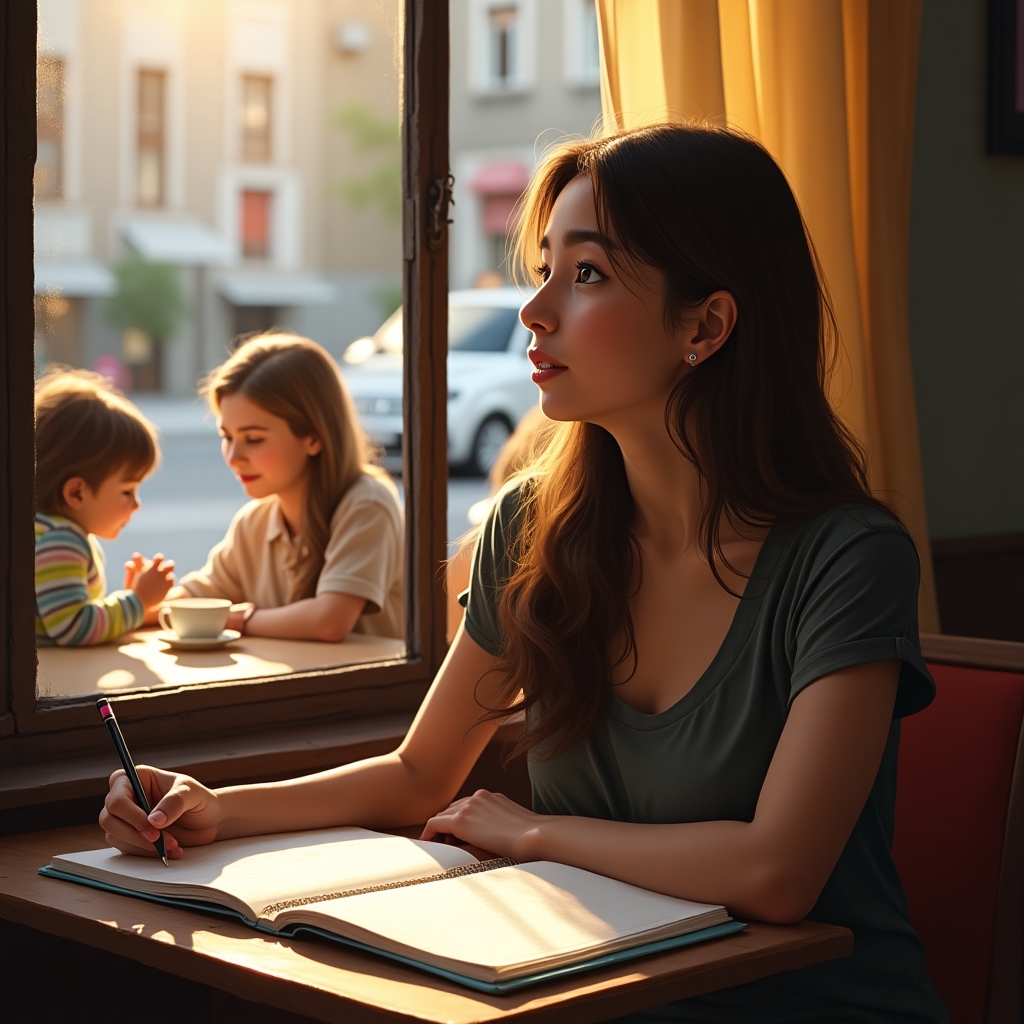
The breakthrough came quietly, unexpectedly. Days later, she sat at her favorite cafe, the air filled with the hum of conversation and clinking dishes. Her sketchbook lay open on the table, untouched. She watched as a young boy and his mother shared a moment of laughter, the simple joy piercing through the fog of her indecision.
In that instant, Leah recognized a truth she had been too afraid to fully embrace. Her love for her family was real and profound, but so was her love for herself and the life she envisioned. To deny her aspirations would be to silence a part of her that was essential and precious.
She could no longer pretend that fulfilling the expectations placed upon her would lead to happiness. Instead, she realized, with a surge of courage, that true loyalty lay in honoring her own desires as well.
That evening, with resolve as her companion, Leah dialed her parents’ number. Her voice trembled slightly as she spoke, but within it was the strength of a hundred silenced dreams. “Mom, Dad,” she began, “there’s something important I need to talk to you about.”
Her journey was only beginning, but Leah knew she had taken the first step toward weaving a life that was authentically hers, one interconnected with, yet distinct from, the legacy of those who came before her.