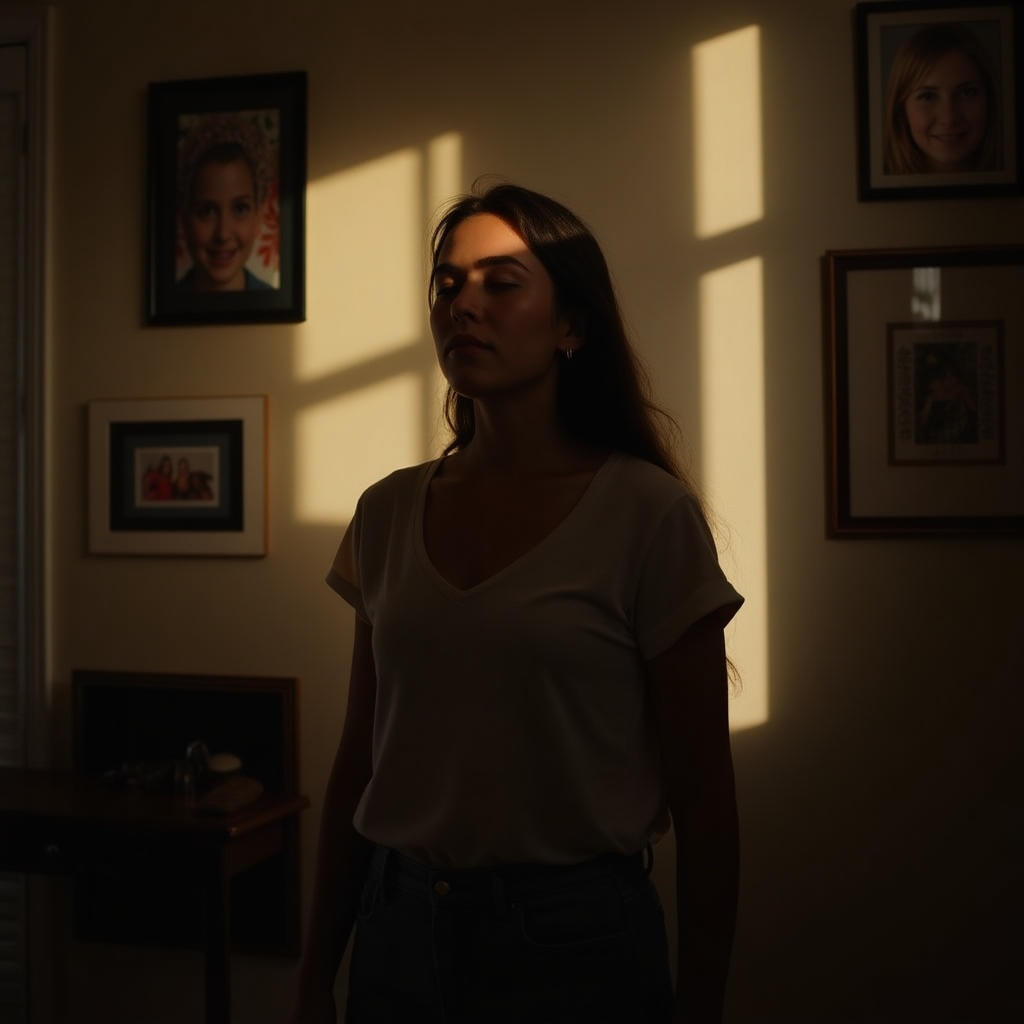




Amara had always loved mornings in her small apartment. The soft light filtering through the sheer curtains created a delicate watercolor on her walls. The gentle hum of the city below served as a comforting lullaby, the sound of life continuing regardless of her inner turmoil. Here, in her cocoon of solitude, she felt a bittersweet safety.
From the time she was a child, Amara was acutely aware of the expectations tethered to her. Her family, a close-knit group carrying the weight of generations of traditions, had instilled in her the virtues of loyalty, respect, and humility. These values were woven into the very fabric of her being, yet they often felt like chains around her soul.
Her parents, having emigrated from a distant land, had worked tirelessly to give her a life full of opportunities. Her father often spoke of the sacrifices they had made, the dreams they had shelved so that she could have a future unburdened by the struggles of their past. Amara admired them deeply and was grateful, but with that gratitude came an unspoken debt.
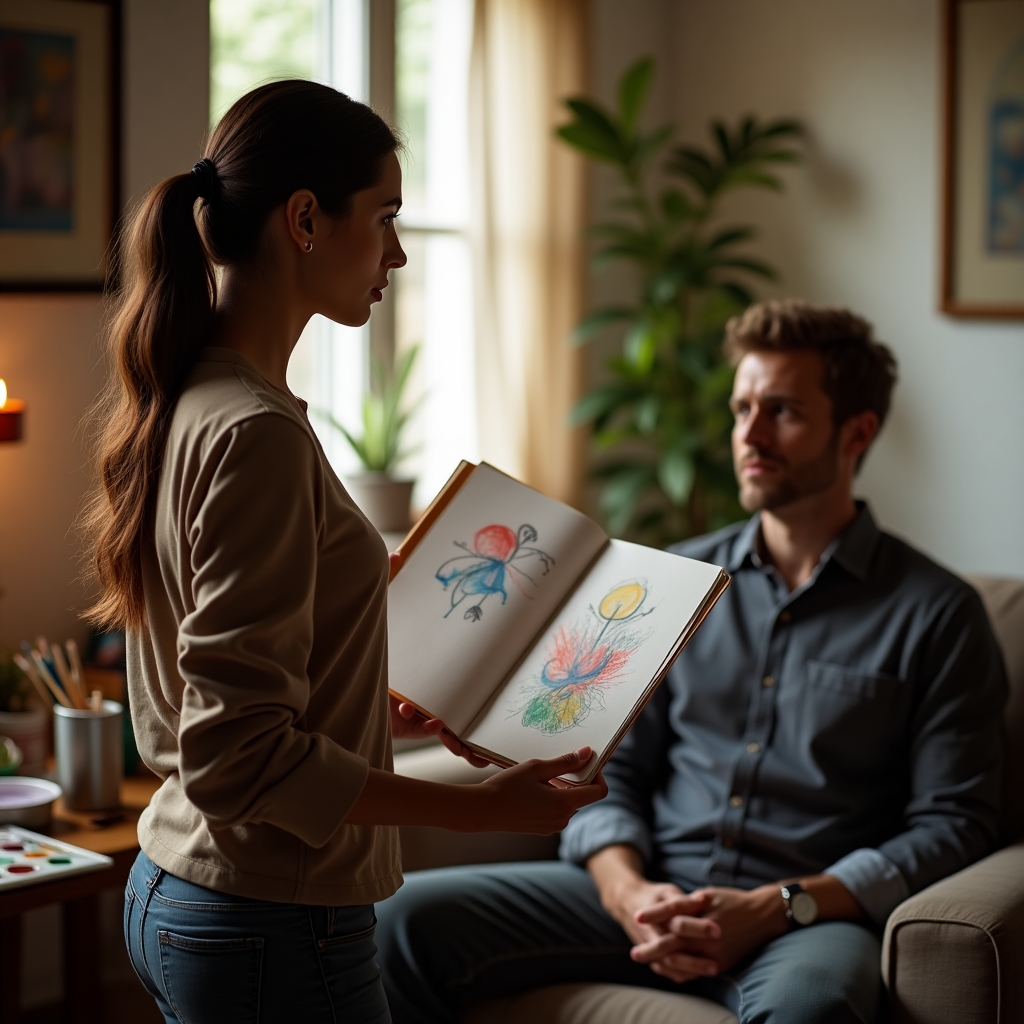
She had dreams of her own – dreams that diverged from the path her family had gently, yet persistently, nudged her towards. While they envisioned her as a successful doctor or a lawyer, Amara’s heart danced to the rhythm of creativity. She longed to pursue art, to paint the stories that whispered in her heart, the stories that words alone could not capture.
This inner conflict became her constant companion, a shadow that trailed her through the routines of her daily life. At the prestigious university where she studied biology, her sketches were tucked inside textbooks, small rebellions against a future she felt cornered into accepting. Her friends often marveled at her talent, encouraging her to pursue her passion, but they did not understand the complexities of her heart, of her heritage.
Every Sunday, she visited her parents as part of a long-standing family ritual. The air in their home was always thick with the aroma of spices, their warmth enveloping her in nostalgia and a twinge of guilt. They would gather around the dining table, stories spilling from their lips, tales of resilience and survival. These moments were sacred, a testament to their bond.
Yet, each visit also intensified Amara’s internal struggle. The pride in her parents’ eyes was a double-edged sword, filling her with love and fear in equal measure. She feared disappointing them, feared shattering the dreams they had woven around her.
One evening, as autumn painted the world outside in hues of amber and gold, Amara sat quietly in her room, sketchbook in hand. Her pencil danced across the page, capturing the essence of a memory she cherished – a simple moment of sitting by a lake with her grandmother, who had passed away years before. Her grandmother had always spoken to her about the importance of following one’s heart, of the courage it takes to forge one’s own path.
As Amara drew, something shifted within her. The image she was creating was more than a memory; it was a bridge between her past and her future, a dialogue between her heart and her heritage. In that quiet moment of creation, she found clarity.
She realized that honoring her family did not mean living solely by their expectations. She could carry their values forward in her own way, her art becoming a tribute to their legacy while being true to herself.
Amara decided that night to begin a new chapter. She would continue her studies, but she would also allow herself to fully embrace her passion. Art would no longer be confined to the edges of her life. It would become her voice, her gift to the world, and her own declaration of identity.
The next Sunday, as she sat with her parents at the dinner table, she spoke with a quiet strength she had never known. Her voice was soft but assured as she shared her decision, her hopes intertwined with gratitude and respect for all they had given her.
To her surprise, her parents listened intently. Her mother’s eyes, though glistening with unshed tears, held a depth of understanding. Her father, after a moment’s pause, nodded slowly, a gentle smile tugging at his lips. “Your grandmother would be very proud,” he said, his voice laced with emotion.
In that moment, Amara felt a profound sense of liberation. The threads of her life, tangled and frayed, were slowly weaving into a tapestry of harmony. She realized that true courage was not in defying her family’s expectations, but in finding a way to honor them while staying true to herself.
Her journey was just beginning, but standing on the precipice of her future, Amara felt a serene strength that would guide her forward. She was not alone in this journey; the love and resilience of her ancestors walked with her, their voices a guiding melody in the symphony of her life.