

I never intended to share this with the world. Still, as I sit here, staring at the culmination of what has been a life-altering month, I feel a quiet obligation to lay down this path I’ve walked. It began, as so many revelations do, not with a roar but with the soft rustle of paper.
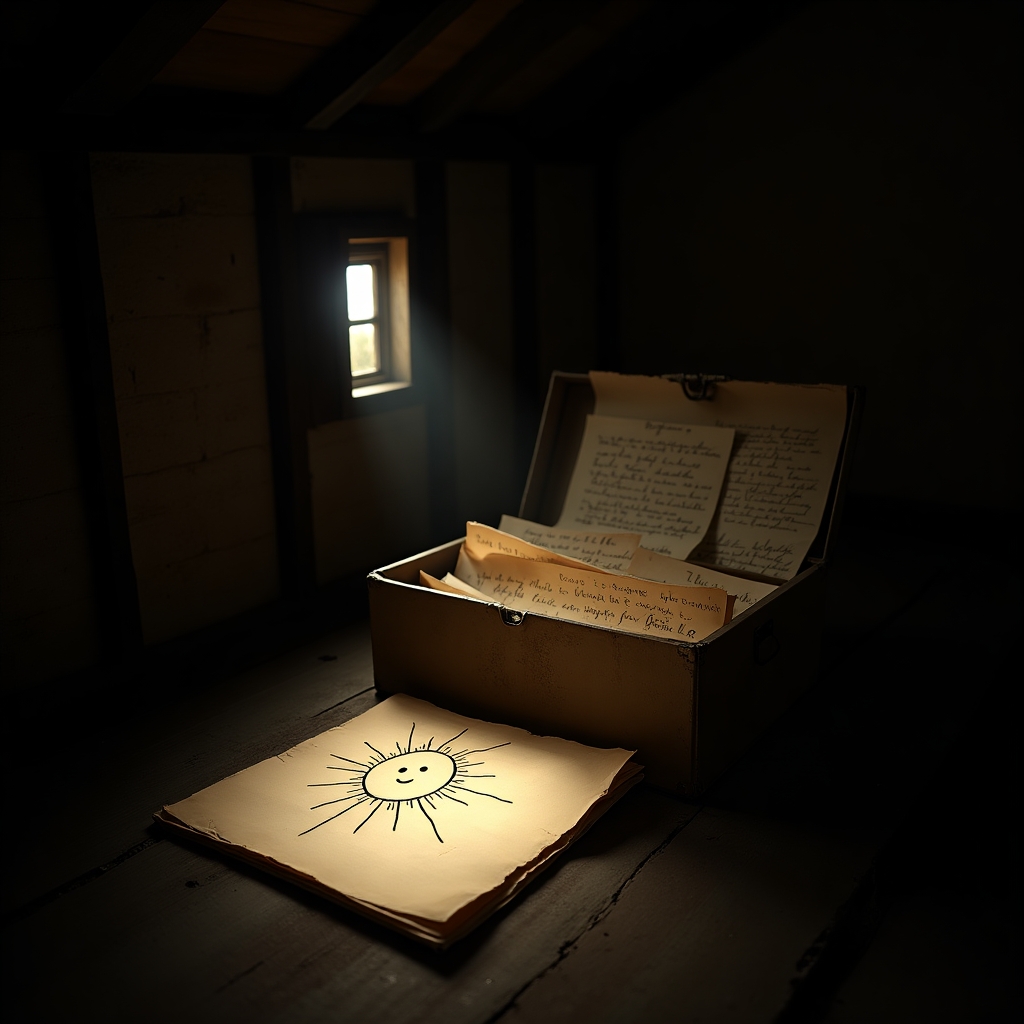
Last month, after what felt like a lifetime of avoidance, I finally confronted the chaos of my father’s attic. The attic was a place of ghosts, stuffed with forgotten pieces of our family’s past, each box a tomb of dusty memories. In the midst of cleaning, I stumbled upon a small, unassuming shoebox tucked away in a corner, sealed with duct tape.
Curiosity took the better of me. Inside, I found an assortment of old letters tied with a red ribbon, their yellowed pages speaking of years gone by. They were penned by a woman named Ellen. Her name was unfamiliar to me, but her words felt like whispers echoing in the silence. They spoke of love, promises, and a longing that seemed to transcend the boundaries of time. As I read, a chill seeped through my bones; Ellen was writing to my father.
My parents divorced when I was ten. It’s always been a silent understanding that they simply fell out of love. We never questioned it. My father, a quiet man of few words, never remarried or spoke of relationships. But Ellen’s letters painted a different picture.
I spent days in a haze, revisiting those pages, cross-referencing dates and stories, desperate to understand. The truth was a stark, glaring realization: my father had a love that did not include my mother. It was a painful truth, one that wormed its way through the tapestry of what I thought I knew about my family.
Confronting my father felt impossible, but the need for answers outweighed the fear. That evening, I found him sitting in his favorite armchair, a quiet resignation in his eyes. I handed him the letters, my hands trembling.
“Who was Ellen?” I asked, my voice barely above a whisper.
He looked at the letters, a sadness I had never seen before creeping into his eyes. “Ellen was… she was my first love. We met before your mother and I married.” His voice was steady, but I could hear the echoes of an old wound.
“Why didn’t you marry her?” The question felt sharp on my tongue.
“We were young, foolishly thinking love was enough. But life… it led us apart.” He paused, taking a breath as if gathering strength from memories. “I met your mother soon after. She was perfect on paper, and I thought… I thought I could forget Ellen.”
I nodded, trying to reconcile the image of my father — the man who raised me, who I thought I knew — with this new reality.
“I tried my best to be a good husband, a good father,” he continued, staring out the window as though seeking something far beyond the horizon. “But part of me always belonged to Ellen.”
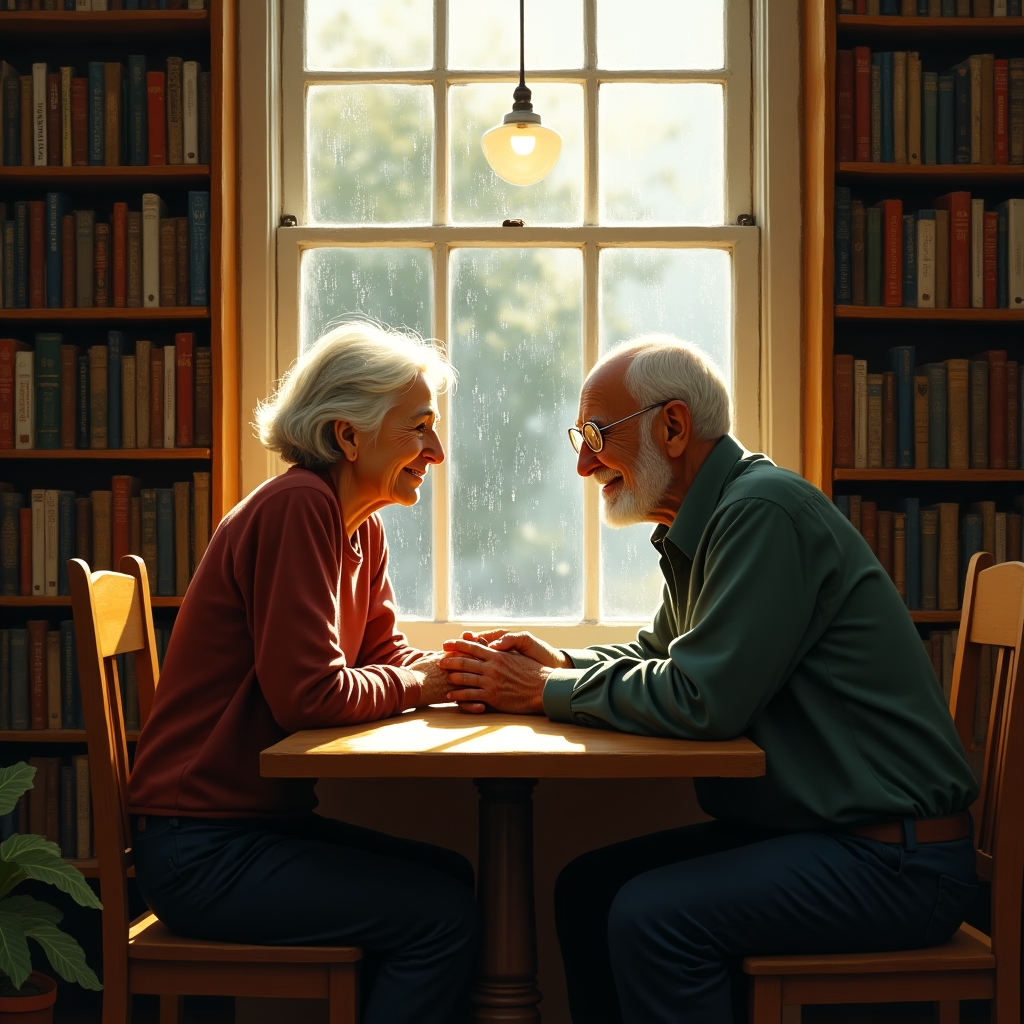
A silence settled between us, heavy with things unsaid. But it was in that silence I found understanding.
As days turned to weeks, I slowly began to see my father in a new light. His love for Ellen didn’t lessen his love for me or diminish the years he spent raising me. It was just a part of him, a hidden truth that added depth to the man I thought I knew.
In sharing this, I hope to convey the importance of the stories we hold. Our pasts are complex tapestries, often woven with threads of love and loss, truths and secrets. My father’s story is now a part of mine, each letter a whisper of the life he lived before I was ever a thought.
We never discussed Ellen again, but the understanding we reached has changed us. My father, once an enigma of stoicism, has opened up in ways I never imagined, sharing stories from his youth, tales of laughter, mischief, and now, love.
In discovering his truth, I found a new depth in our relationship, a clarity that only honesty can provide. I look at him now and see not just my father, but a man who loved and lost, who tried to do right by his choices.
If you have reached the end of this confession, thank you for reading. I hope it encourages you to unravel the hidden threads of your own life tapestry, to seek out the whispered stories that define us. Because sometimes, it’s in the discovery of our truths that we find our truest selves.