



Anya sat in the dim light of her small, cluttered bedroom, her fingers tracing the intricate patterns on the quilt her grandmother had made. The quilt was a medley of colors, each patch a story from their family’s past, sewn together with threads of expectation and tradition. From a young age, Anya had felt the quilt’s weight—not just physically, but as a symbol of her family’s hopes and dreams that often clashed with her own.
Anya, the eldest of three siblings, had always been the one her family looked to—her parents’ steadfast anchor in the undulating sea of life. Born to immigrant parents who valued education and hard work above all else, she was the embodiment of their American dream. But as she grew, Anya began to feel the spaces between who she was expected to be and who she felt herself to be widening. It was in these spaces that her quiet struggle took place, a battle not of rebellion, but of identity.
Every Sunday, after the family dinner, her father would gather everyone in the living room for their weekly ‘cultural talks.’ It was a time for him to impart stories of the old country, tales of perseverance and resilience. Anya loved these stories, yet, sometimes, they felt like invisible chains, binding her to a life path she hadn’t chosen.
“Anya, my daughter, remember where you come from,” her father would say, his eyes heavy with the burden of his journey and the unspoken expectation that Anya would carry the torch forward.
She would nod, smile, and listen, all the while her mind would drift to the stack of art magazines under her bed, her secret collection of dreams that lay far outside the realm of the family’s aspirations for her. Anya had a natural talent for visual storytelling, her heart yearning to paint the stories she saw in colors unimagined.
The tension within her grew subtly, like a low hum ever-present in the background of her life. Her parents, absorbed in ensuring the survival of their cultural legacy, couldn’t see the silent battle waging inside Anya. Her mother’s words echoed through her mind often—‘Family first, Anya—and remember, we sacrificed everything for you.’ Anya understood this, respected it deeply, but the weight of it threatened to suffocate her own voice.
One evening, as she prepared for an important meeting with her art mentor, Anya found herself standing in front of the mirror. Her reflection stared back, a collage of familial features and her own burgeoning individuality. It was then, confronting herself, she felt the first stirrings of clarity. How could she honor her family while still remaining true to herself?
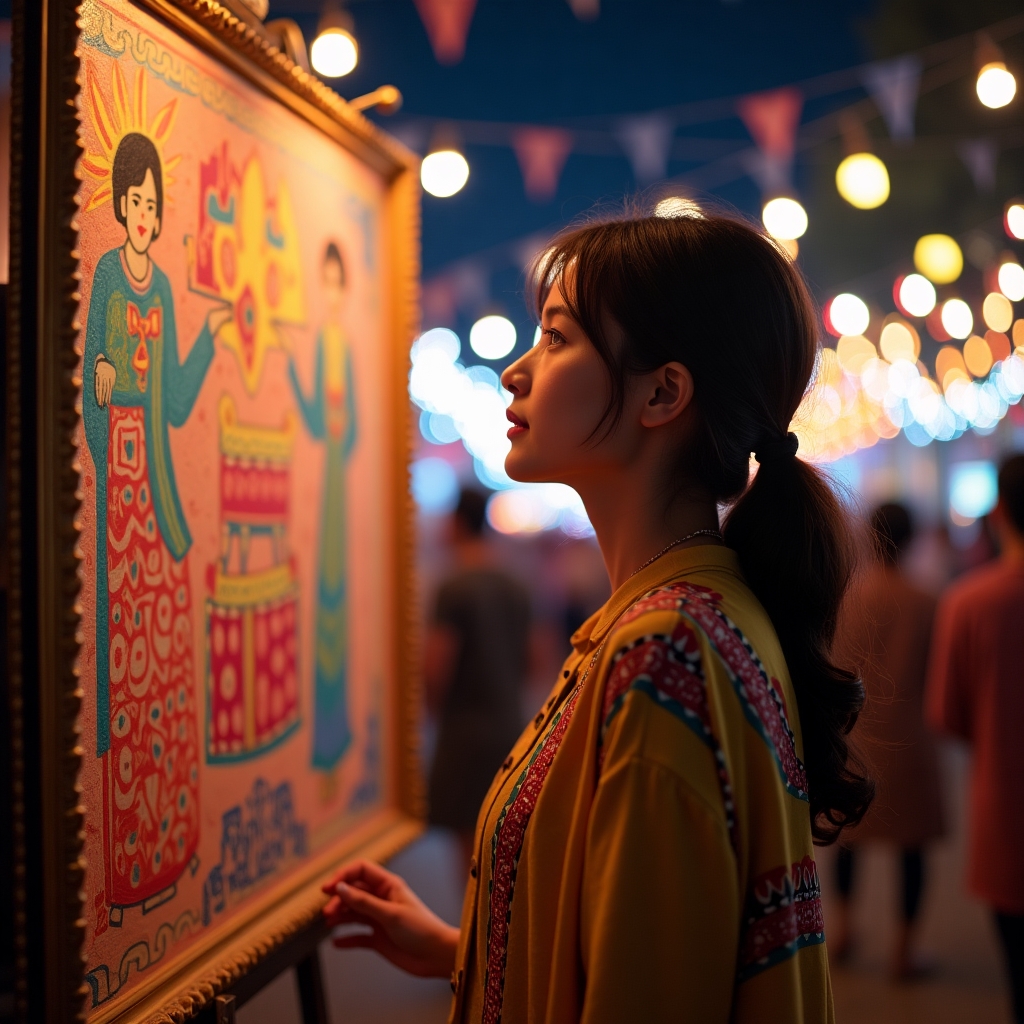
The moment of emotional clarity came unexpectedly, during a mundane family outing to the annual cultural festival. The aroma of traditional foods and the vibrant sounds of native music filled the air, a reminder of the richness of her heritage. But it was in the art tent, surrounded by paintings that depicted both the old world and new interpretations, that Anya felt something shift within her.
A painting caught her eye—one that combined the traditional styles of her ancestors with modern, abstract themes. It was as if the artist had taken the threads of the past and woven them into a tapestry of the future, creating something uniquely beautiful and new.
Standing before the artwork, Anya felt a sense of peace and resolution wash over her. It was possible to honor her heritage while forging her own path. In that moment, the threads of expectation and individual aspiration began to entwine in her mind, forming a quilt of her own making.
That night, back in her bedroom, the quilt her grandmother made felt less like a burden and more like a comforting embrace. Anya knew the path wouldn’t be easy—balancing personal desires with familial loyalty rarely was—but she was ready to face it with quiet strength.
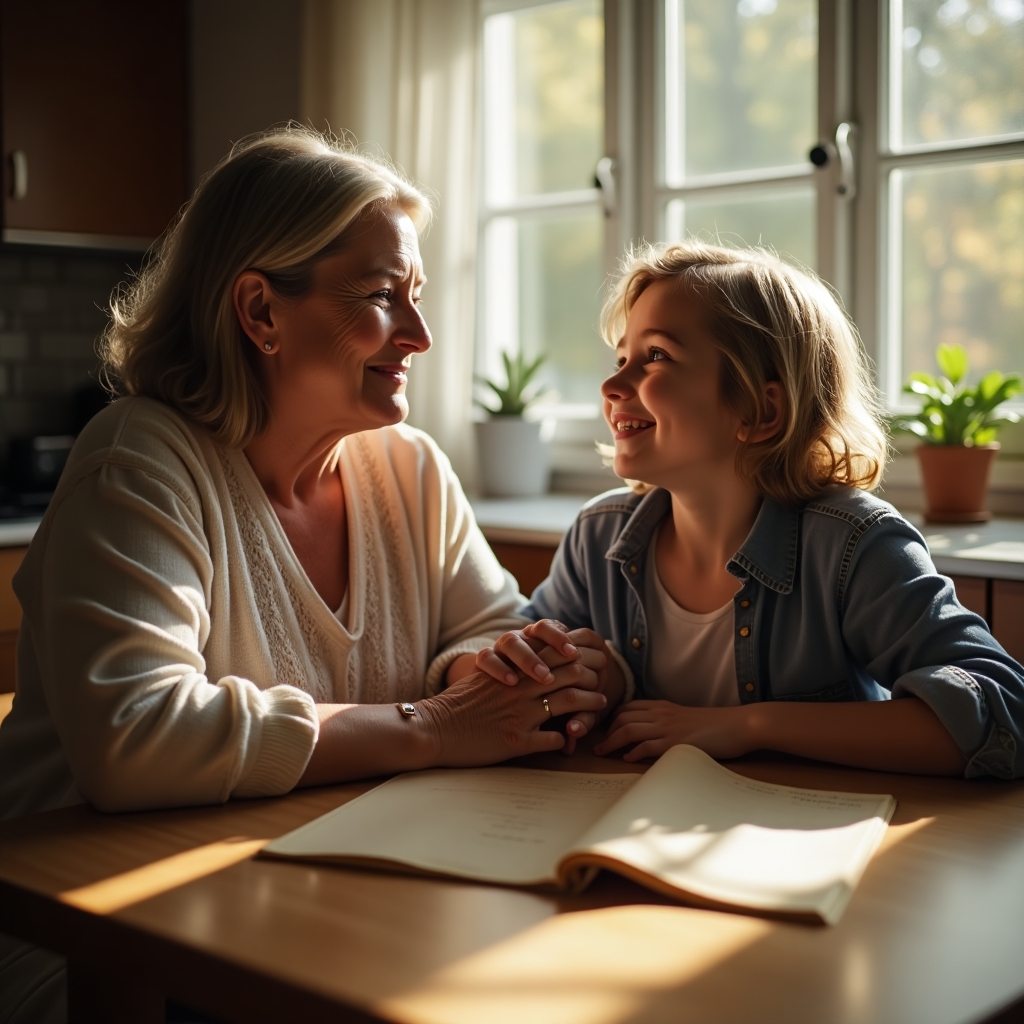
Later, as she sat with her parents at the dinner table, Anya spoke gently but firmly. She told them about her passion for art, how it was not just a hobby but a calling that intertwined her love for her family’s stories with her need to express them in her own way. Her honesty, unexpected yet respectfully delivered, opened a space for understanding.
To her surprise, her father nodded slowly, his own eyes reflecting a mixture of pride and acceptance. It was a moment of healing—between generations, between the past and future. Anya realized that sometimes, the greatest acts of courage come not from defiance, but from the quiet determination to weave one’s own tapestry from the threads provided by those who came before.
In that quiet exchange, Anya felt the weight of expectation lift, replaced by a newfound strength. She had begun the delicate dance of being true to herself while honoring her family—a balance that would take time, patience, and unwavering love.