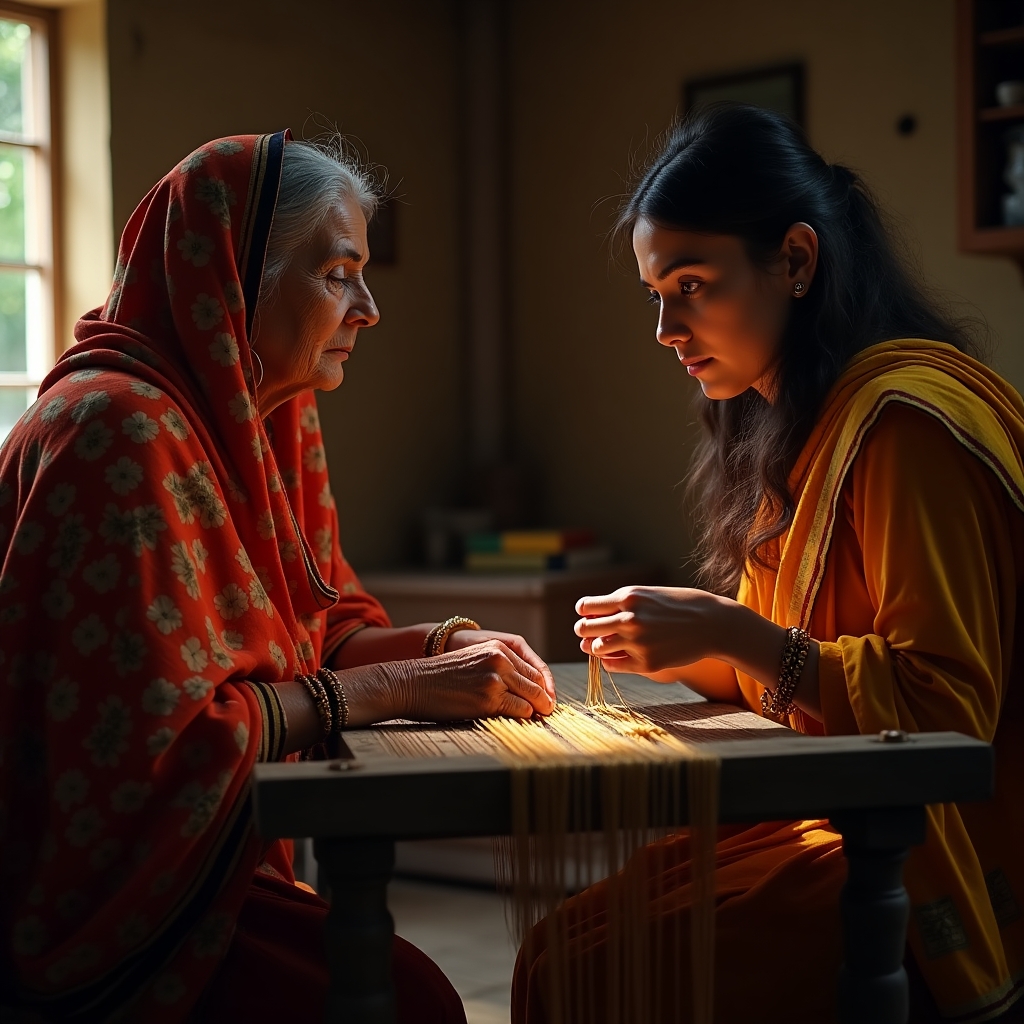




In the quaint suburb of Willow Creek, nestled between the gentle whisper of pine trees and the serene flow of the Willow River, there resided a young adult named Maya Patel. Her days were painted with the routine strokes of familiarity, yet her heart murmured a quiet dissonance that only she could hear.
Maya, at twenty-four, had the world at her feet but found herself ensnared in the tendrils of expectations. The Patels were a family deeply rooted in tradition, holding fast to the cultural heritage that had defined their identity for generations. Maya’s parents, immigrants who had arrived on foreign shores with dreams and sacrifices, bore the weight of their past with pride, hoping to pass on their cultural legacy to their daughter.
Yet, as the seasons unfolded, Maya felt an increasing dissonance between her own desires and the expectations imposed upon her. She adored her family, cherished the traditions that had woven the fabric of her upbringing, but an internal voice whispered of paths untraveled, of a self yet undiscovered.
Each day was a tapestry woven with expectation. Her parents envisioned a future for her steeped in their cultural mores — marriage within their community, a career that promised stability, and a life that mirrored their own aspirations. And while Maya respected these dreams, there lingered an unquenchable yearning within her — a longing to carve a path defined by her own heart’s desires.
The psychological tension gnawed at her subtly, like waves gradually wearing down a steadfast cliff. Maya found solace in her art, a secret passion she had nurtured since childhood. In the quiet solitude of her room, she painted — each brushstroke a silent rebellion, a dialogue with herself free from the shackles of expectation.
Maya’s paintings were vibrant, capturing the essence of her inner world. They were an expression of the duality she felt — the love for her family and culture, juxtaposed with her own dreams and aspirations. Yet, these canvases were hidden away, like secrets too tender to be exposed to the harsh light of day.
Her parents, unaware of her internal struggle, often spoke of upcoming family events, where potential suitors might be introduced, where the community would gather to celebrate their traditions. Each conversation was a gentle reminder of the path laid out for her — a path that felt like walking with shoes too tight, each step a reminder of the discomfort.
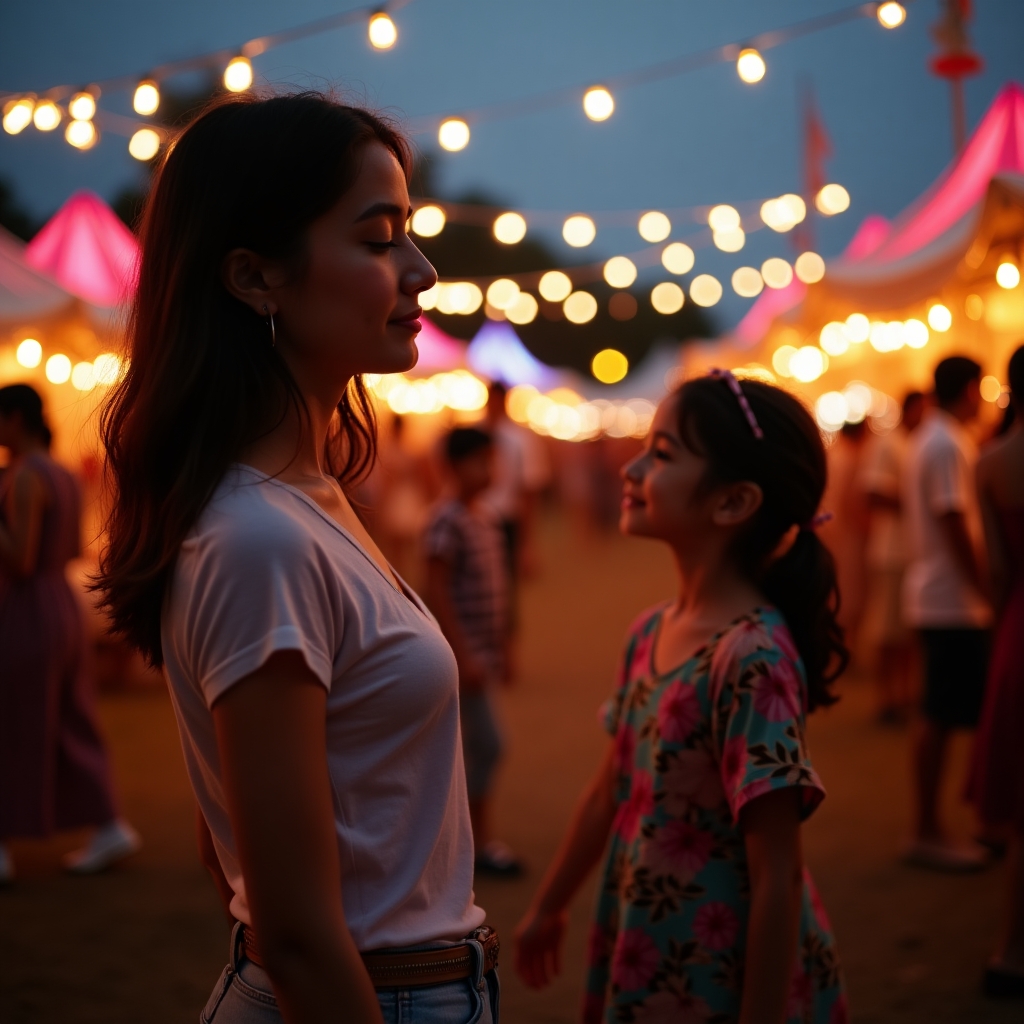
It was during one such family event, a vibrant festival filled with laughter, music, and the aroma of traditional foods, that Maya experienced a moment of emotional clarity. As she watched the colorful festivities unfold, a young child, free and unburdened by the weight of expectation, danced with abandon nearby.
Maya’s gaze softened, her heart resonating with the uninhibited joy of the child. In that moment, she understood. She realized that the child’s freedom was the embodiment of what she sought — the courage to live authentically, to embrace her truth despite the expectations that surrounded her.
After the festival, the weight of silence began to lift. Maya, fortified by her revelation, approached her parents with a quiet determination. It wasn’t defiance that propelled her, but a deep-rooted desire for honesty, for a life that intertwined her love for her family with her own aspirations.
In the gentle glow of the evening, with cicadas singing a symphony of support, Maya spoke from her heart. She shared her passion for art, her dreams of living a life defined by creativity and authenticity. She expressed her love for her heritage, but also her need to navigate her own path.
Her parents listened, their initial surprise melting into understanding. Maya’s vulnerability and courage opened a doorway to a conversation they had not known how to begin. In that space of honesty, a bridge was built — one that honored both tradition and individuality.
The days that followed were filled with conversations rich in empathy and understanding. Maya’s parents, though initially hesitant, began to see their daughter’s aspirations not as a departure from their heritage but as an evolution of it. Maya, in turn, felt a renewed sense of connection to her roots, now intertwined with her own unique identity.
Maya’s journey was not one of dramatic conflict but of subtle, profound change. She discovered that emotional courage was not about breaking away, but about weaving together the threads of her past and present into a tapestry of her own making.
Her story became one of generational healing, where the silence of expectation was replaced by the symphony of authentic connection, and where love was the bridge that spanned the chasm of difference.