



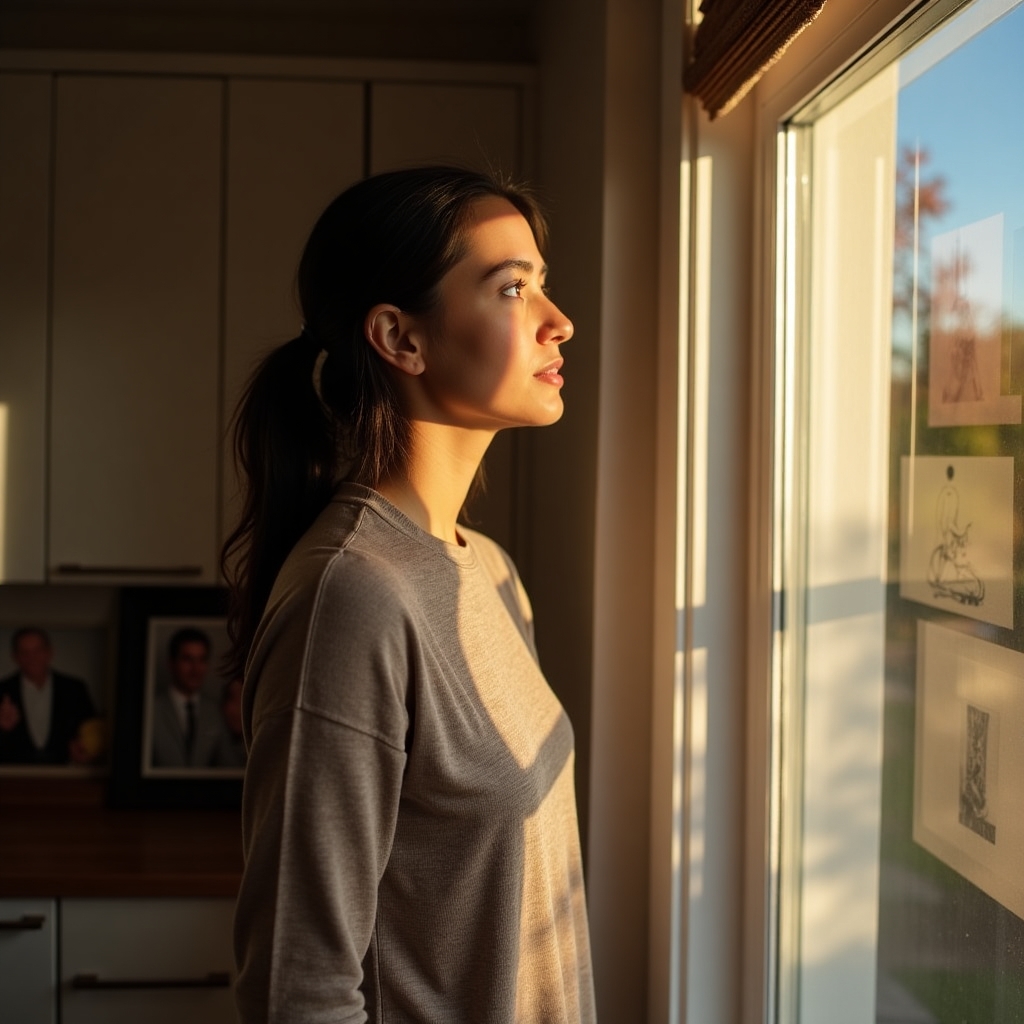
Asha stood at the kitchen window, watching the leaves of the old oak tree tremble in the gentle wind. The late afternoon sun cast a warm glow across the room, but she felt a chill in her heart. Her family’s expectations were like those deep roots of the oak, grounding her in traditions that were both comforting and suffocating. Her parents, immigrants from India, held steadfast beliefs that had carried them across oceans and through years of uncertainty in this foreign land. To them, the rituals and customs were not just tradition; they were anchors of identity.
Asha had grown up in this dual world, balancing the rich cultural heritage of her parents with the Western ideals she encountered at school. Her parents saw education as a sacred pursuit, and Asha excelled academically, driven by the desire to honor her family’s sacrifices. Yet, beneath the accolades and achievements lay an unspoken tension.
Asha felt an undeniable pull towards the arts, a world where expression was valued over examination, and creativity over conformity. She remembered the first time she had picked up a paintbrush and the sense of liberation that had surged through her. It was a secret joy, tucked away behind the lines of equations and scientific theories that dominated her studies.
The family living room was filled with photographs of Asha’s cousins, all smiling with degrees in hand or standing beside prestigious institutions. Each image whispered a silent reminder of the path she was expected to follow. Her own framed picture, taken at a regional art exhibit where she had won an award, was conspicuously absent.
Conversations at the dinner table often circled back to academic pursuits and professional achievements. Her father, a professor, spoke with pride about students who had gone on to make significant contributions to their fields. Her mother, a doctor, shared stories of lives saved and illnesses cured. When they turned to Asha, she felt the weight of their hopes and dreams pressing down on her shoulders.
“Have you thought about what you want to do after graduation, Asha?” her mother asked one evening, serving dal with loving care.
Asha hesitated, her voice barely above a whisper. “I’ve been thinking about applying to art school.”
The room paused in a profound silence, the clinking of utensils stilled. Her father cleared his throat, a gentle but firm reminder of the expectations at play.
“Art is a wonderful hobby, beta,” he said, using the affectionate Hindi term for daughter. “But you have always been so gifted in the sciences. Imagine what you could achieve.”
Asha nodded, the tension coiling tighter around her heart.
In the quiet of her bedroom, away from the conversations of duty and direction, Asha painted. On the canvas, she found clarity and color, emotions swirling into forms that expressed her inner yearnings. Here, she felt free. Yet, even in this solitude, there lingered the fear of disappointing those she loved.
Weeks passed, the struggle internal and pervasive. Asha felt like she was living between two worlds, each demanding her loyalty. Her dreams seemed to hover just out of reach, like the golden leaves of the oak tree, constantly whisked away by the slightest breeze.
The realization came unexpectedly during a family gathering. Her aunt was showing off a new intricate sari, the fabric shimmering with vibrant colors that seemed to dance in the light. Asha reached out to touch it, the patterns mesmerizing her with their complexity and beauty.
“Your great-grandmother made this,” her aunt explained, pride evident in her voice. “She was an artist too, in her own way.”
The words sank into Asha like a gentle tide. Heritage was not just about the career paths her family pursued but also the creativity and strength passed down through generations. This was a part of her too.
In that moment, she understood that embracing her art did not mean rejecting her family’s values. Instead, it was a way to honor them by living truthfully and vibrantly. Her emotional clarity crystallized, sharp and undeniable.
The next time her parents asked about her future, Asha spoke with a newfound confidence. “I want to study art, but I want to do it in a way that contributes back to our community.”
Surprise registered on her parents’ faces, but it was tempered by a softening in their eyes. Her father nodded slowly, seeing the resolve in his daughter’s gaze. Her mother reached out, a silent gesture of understanding and support.
The conversation marked the beginning of a new journey, one that intertwined Asha’s passions with her family’s heritage. It was not the path expected, but it was hers, rooted deep in both love and legacy.