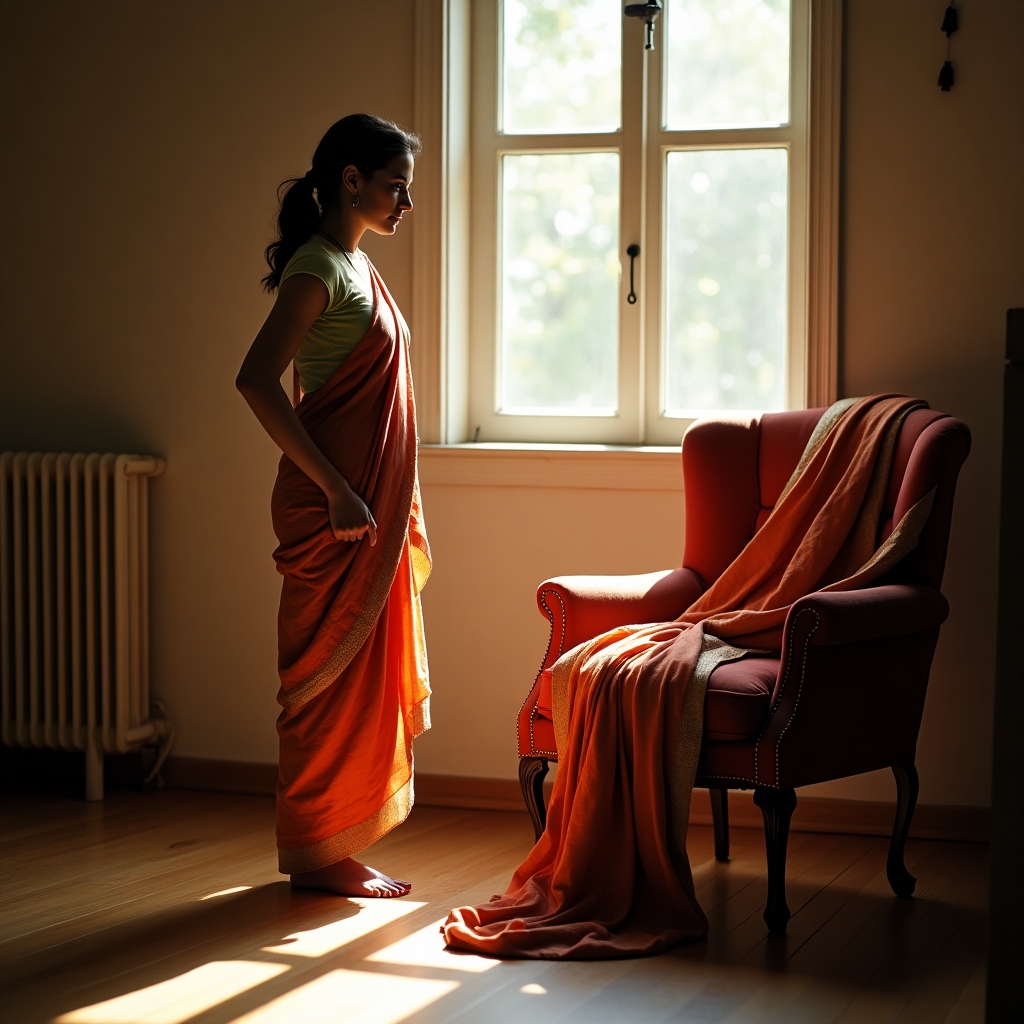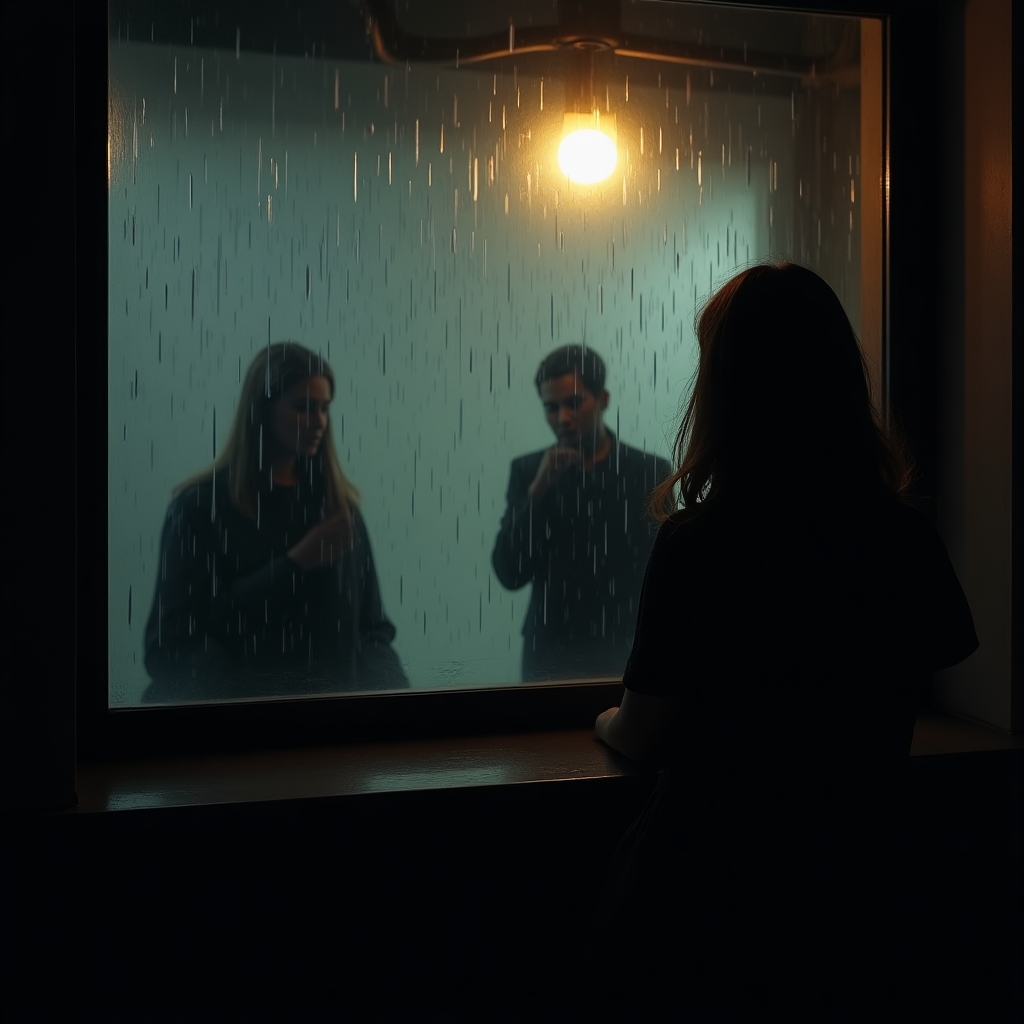




Mara stood still in the middle of the living room, her fingers lightly tracing the embroidered edge of the curtain. It was a habit she had developed over the years, trying to find grounding in a house that never quite felt like her own. This evening, as the final rays of daylight dipped behind the neighboring rooftops, a sense of quiet unease settled over her. The constant hum of expectations that had guided her life for the past decade was louder than usual.
In the kitchen, the clatter of dishes being set for dinner by her husband, Paul, filled the air. He hummed tunelessly, absorbed in his routine. It was a comforting sound once, a sign of shared life and responsibility. Now, it felt like a background noise in the monotonous soundtrack of her life.
“Mara, can you help with the salad?” Paul called out.
“In a minute,” she replied, her voice steady but lacking enthusiasm.
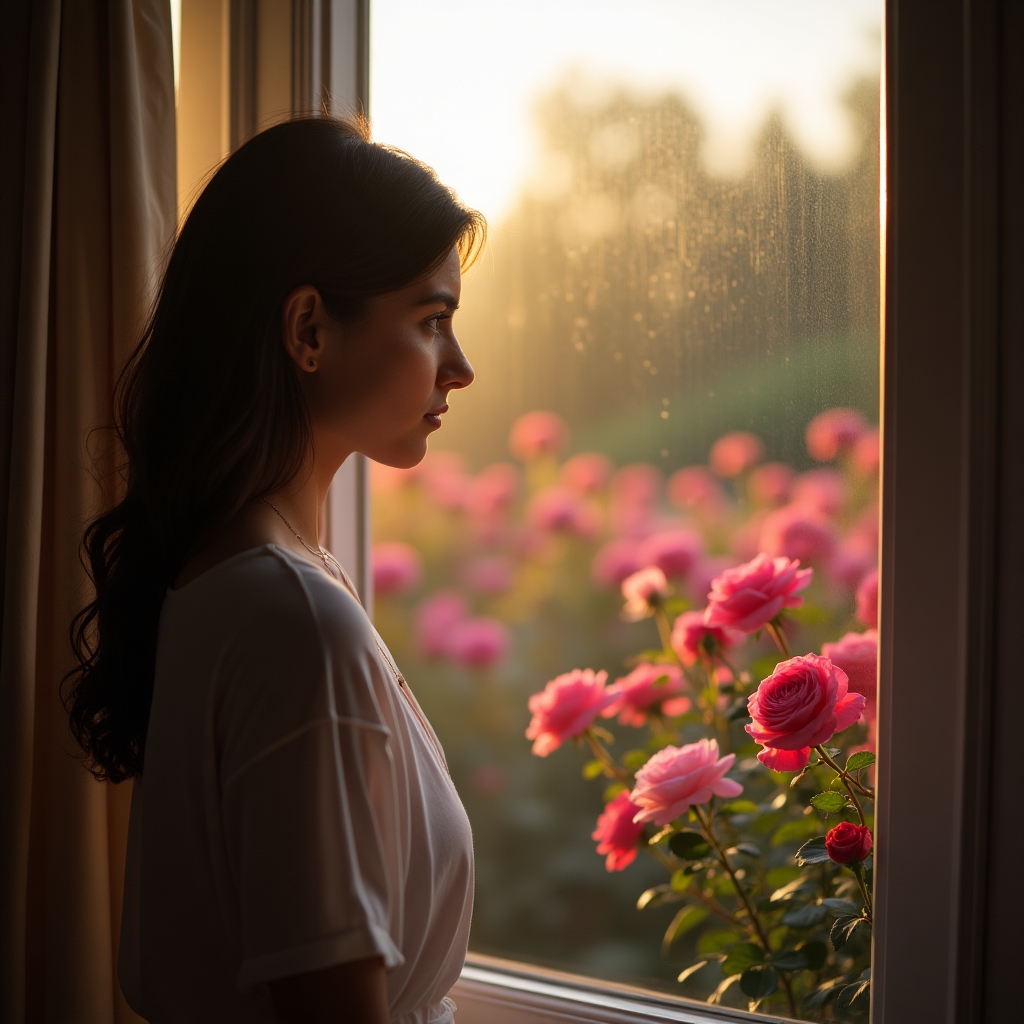
She lingered by the window, looking out at the small garden she had nurtured over the years, the one place where her choices bloomed into vibrant splashes of color. The roses were in full bloom, each petal a tapestry of reds and pinks, a testament to her unspoken resilience.
As she walked into the kitchen, Mara found Paul frowning over the lettuce, his forehead creased with concentration.
“Do you think we have enough dressing?” he asked, his voice carrying a hint of annoyance.
“I can make some more if needed,” she said, moving with practiced efficiency.
Paul nodded, seemingly satisfied. “Good, we can’t have dinner without it. You know how my parents are.”
Mara knew. She knew how his parents were, how they expected everything to be perfect, the way they subtly made comments about her cooking, her career choices, her life. Paul never seemed to notice, or perhaps he did but chose not to intervene. His silence felt like complicity.
Dinner was a polite affair, with the usual small talk and obligatory questions about work and plans for the weekend. Mara answered automatically, her mind elsewhere. She was thinking about how her life had become a series of small accommodations, each choice seemingly minor but cumulatively significant.
The following days passed in a blur of routine. Mara went to work, returned home, and repeated the cycle. Yet, an internal shift was taking root, something subtle but profound. It manifested in small ways – the way she lingered a little longer at her desk during lunch, or how she took a different route home just to have a few extra moments to herself.
One Saturday, Mara found herself alone in the house. Paul had gone golfing with his father, an activity she was never invited to. She sat at the kitchen table, her fingers wrapped around a cup of tea, and let herself truly see her surroundings. The house was immaculate, every corner reflecting the choices of others, every detail whispering of expectations unfulfilled.
On an impulse, she walked to the small bookshelf in the living room. Her eyes landed on a book – an old favorite she hadn’t touched in years. As she skimmed its pages, memories of who she used to be before she had become invisible to herself flooded back.
She picked up the phone and dialed a number she hadn’t called in a long time. “Hey, it’s Mara. Are you free for coffee later?” She listened, her heart lightening at the response. “Great, I’ll see you then.”
At the café, Mara sat across from her sister, Elise, whose life seemed so differently ordered. Elise was vibrant, her laughter drawing others in. As they talked and caught up, Mara caught a glimpse of herself in the mirrored wall. She saw a woman who was ready to reclaim her space.
“You look different,” Elise said, her voice filled with curiosity.
“I feel different,” Mara replied, and in that moment, she realized it was true. The decision to connect with her sister, to step beyond the narrow confines of her life, was an act of defiance, a quiet but significant declaration of autonomy.
When Mara returned home, Paul was waiting, a familiar question on his lips about dinner plans. Instead of the usual acquiescence, Mara found herself saying, “Why don’t we order in tonight? I spent the afternoon with Elise, and it was good to catch up.”
Paul looked surprised, but Mara saw him soften, a small smile tugging at the corners of his mouth. “That sounds nice. Maybe we should do that more often, invite her over.”
“Maybe,” Mara replied, feeling a warmth spread through her. It was a simple exchange, a routine broken, but it was hers.
In the quiet of the evening, she returned to the window, watching the garden under the moon’s gentle light. The roses swayed slightly in the breeze, and she knew, deep in her heart, that she, too, would continue to grow and bloom, nurtured by choices that were finally her own.