




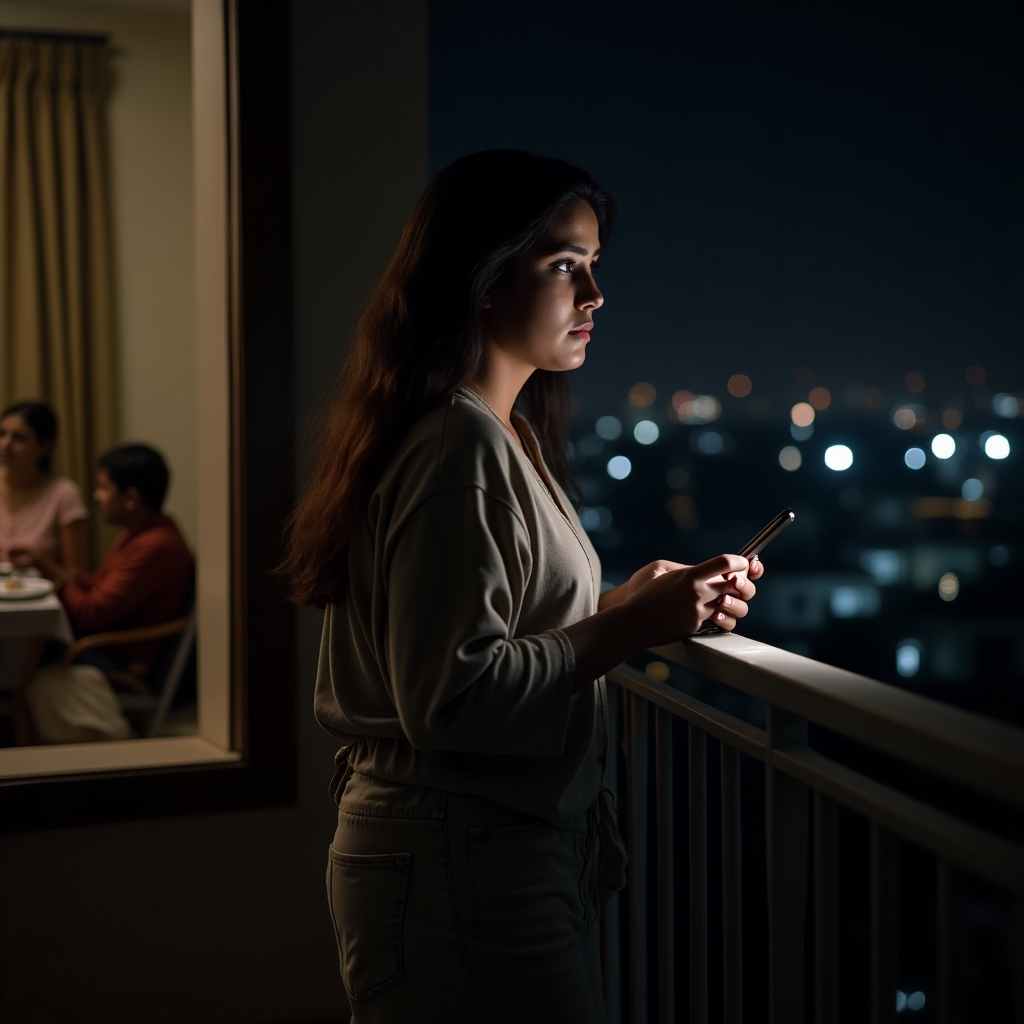
Amara stood at the precipice of two worlds, each demanding her allegiance in different ways. At twenty-seven, the expectations of her family and the modern values she cherished were colliding in a cacophony of noise that filled her mind day and night.
Born to Indian parents who had immigrated to the United States in the late eighties, Amara was the embodiment of her parents’ dreams. She had pursued a career in software engineering, graduated top of her class, and was now working for a leading tech company in Seattle. Yet, the success that her parents had always emphasized was not as fulfilling as it seemed, as it came with unspoken expectations that weighed heavily upon her.
Her parents, Nikhil and Priya, had long held the belief that cultural traditions were the backbone of their family. It was a belief steeped in their upbringing and carried across oceans. They expected Amara to marry someone from their community, settle into a life mirrored in the traditions of their ancestors, and give them the joy of grandchildren.
Amara’s modern values, however, painted a different picture. She valued independence, self-discovery, and the freedom to choose her own path. Her closest friends were a tapestry of different cultures, and she’d been dating James, a kind and thoughtful man who shared her passion for travel and innovation. Yet, his Irish descent was a point of contention in her family.
The tension came to a head during her weekly Friday dinner at her parents’ home. The evening started with delicious aromas of spices and laughter, but Amara knew what was coming.
“Beta,” her mother began, setting down a platter of samosas, “we were speaking with the Sharmas the other day. They have a son who is a doctor, good family.” Her mother’s tone was casual, but the underlying insistence was unmistakable.
Amara’s fork hovered over her plate. “Mom, I’ve told you, I’m not ready for any matchmaking. And I’m with James,” she replied, trying to keep her voice level.
Her father, a usually silent presence, chimed in, “Amara, it’s important to think about your future, your family. James is nice, but he’s not one of us.”
“What do you mean, ‘not one of us’?” She bristled, her patience wearing thin. “He’s a good person, and we’re happy together. Isn’t that what matters?”
Priya sighed, a familiar gesture that signaled disappointment. “It’s not just about happiness, beta. It’s about your duty, our traditions. You have to think of the family.”
The weight of those words settled over Amara, her appetite evaporating. The discussion continued, like an ever-repeating cycle, until she could take no more. She excused herself and left the table, retreating to the small balcony off the living room.
Under the stars, Amara breathed deeply, the cool air a balm to her frazzled nerves. “I can’t keep doing this,” she whispered to the night. Her heart ached with the knowledge that pleasing one side meant disappointing another.
The following week was a whirlwind of activity at work, and she threw herself into her projects, hoping to escape the relentless tug-of-war. But the strain was building, a constant presence around her heart.
On a particularly stressful afternoon, she called James for a lunch break at a nearby café. As they sat in the sunlit corner, James noticed her furrowed brows and tense shoulders.
“What’s going on, Amara? You seem far away lately,” he remarked gently.
The floodgates broke. “It’s just everything. My parents, they don’t understand. They want me to marry someone from our community, but I can’t just switch my feelings like that.” Her voice trembled, revealing the cracks in her fortitude.
James reached for her hand across the table. “I’m here for you, whatever you decide. But you need to speak to them, set boundaries. This is your life too, Amara.”
His words, though simple, resonated with a truth she had been avoiding. Resolving to reclaim her narrative, Amara realized that the time had come to confront her fears.
The ensuing weekend, Amara returned to her parents’ house, her resolve a shield against the doubt. As they settled into the living room after another elaborate dinner, she took a deep breath, her heart pounding in her chest.
“Mom, Dad, there’s something I need to say,” she began, her voice steady. “I love you both, and I respect our traditions, but I can’t live a life that’s not mine just to make everyone else happy. I need to make my own choices, even if they’re different from what you envisioned.”
Her parents listened in silence, the air thick with unspoken words. It was Priya who spoke first, her tone softer than Amara expected. “We only want what’s best for you, beta.”
“I know,” Amara replied, her eyes meeting her mother’s. “But what’s best for me might look different from what you think. Please trust me to find my own path.”
The conversation was the hardest she had ever had, yet as she spoke, Amara felt a lightness she hadn’t felt in years. Her parents’ acceptance wouldn’t come overnight, but she had planted a seed of understanding.
Later that evening, as Amara walked away from her childhood home, she felt a sense of freedom, the threads of tradition no longer binding her as tightly. It was a moment of quiet rebellion, an act of self-liberation. She knew she would have to revisit these conversations many times, but she was ready. The dawn of a new chapter was on the horizon, and it was written in her own words.