



**1**
At thirty-five, Nora found her life folding neatly into the lives of others, her dreams carefully pressed into the seams like fragile notes of music nobody ever played. She lived in a sturdy, albeit crumbling, brick house in the suburbs that her mother often called ‘charming’. Inside, everything felt like it was in perpetual pause—a snapshot of someone else’s now-distant dreams.
Nora’s days were a routine ballet orchestrated by her mother’s subtle expectations and her husband David’s silent, almost benign neglect. Each morning, she brewed coffee while David sat at the table, buried in his newspaper, its pages the unfurling of a wall between them.
One drizzly Tuesday, as she hovered over the French press, Nora noticed her hand trembling slightly as she poured her cup. The shadows in the kitchen seemed to lean in closer, as if curious about the woman she was yet to fully recognize.
“Leave mine black,” David said without looking up.
Nora nodded, setting his cup beside him. “Your appointment at the garage is today,” she reminded softly.
David barely acknowledged her reminder. “I’ll be back late,” he said, and that was that. His presence was like the background hum of a fridge—not intrusive, but persistent enough to fill the spaces.
**2**
Through the day, Nora worked from home in a small room lined with the remnants of her past scholarly pursuits—her English degree framed on the wall, books she’d once loved gathering dust like forgotten conversations. She was a copy-editor, a role she had taken to please her mother who had always said, “Stick to something stable”—advice now etched into the very core of her being.
Her mother called every evening, a ritual of thinly veiled judgment and love. “How are you, darling? Have you spoken to your sister lately? She’s doing so wonderfully at the new firm,” her mother would say.
“I’m fine, Mom,” Nora replied each time, her voice a carefully maintained line of neutrality.
**3**
The internal shifts began with a book—”The Awakening” by Kate Chopin, a novel she picked up during a rare garage sale excursion. It felt like opening her eyes to the shades of self she had forgotten existed.
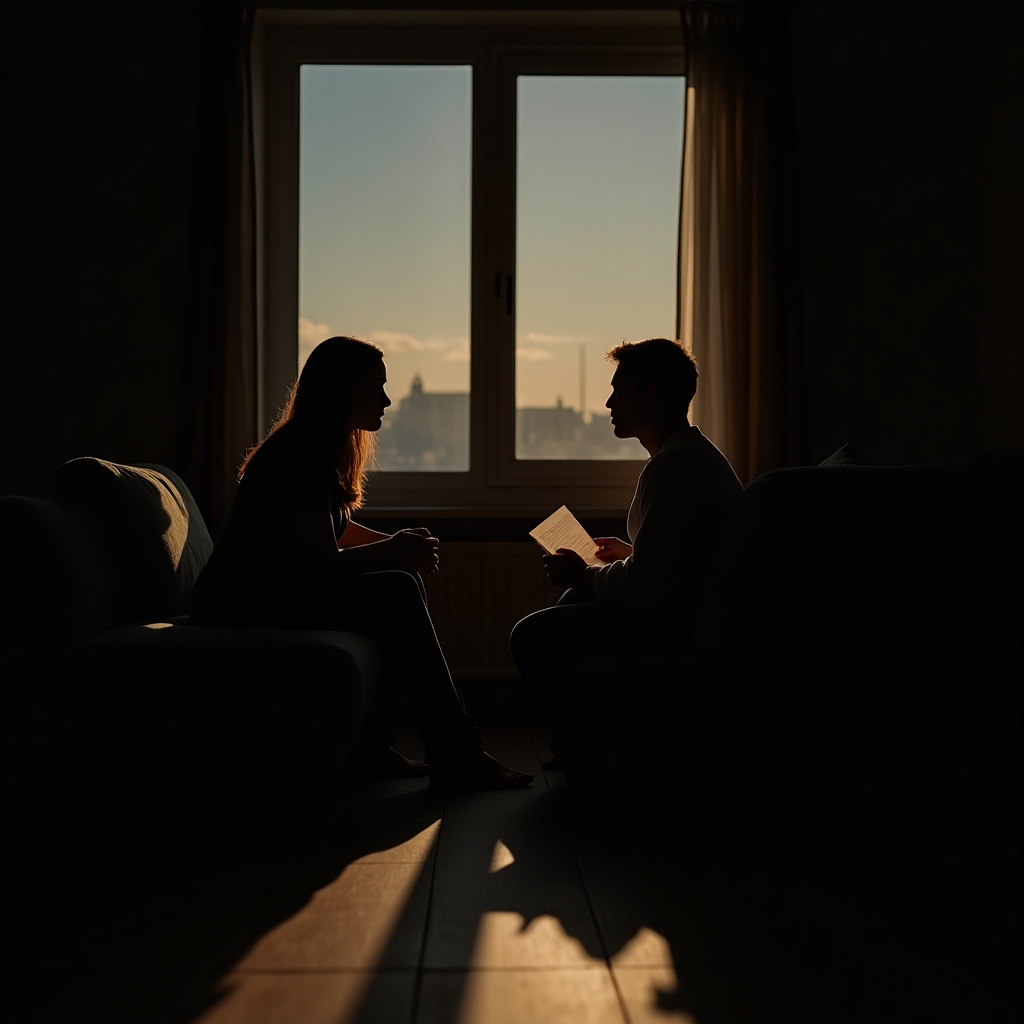
One evening, while David was out with friends, and her mother’s call had been a brief rerun of familiar scripts, Nora found herself sitting alone in their small backyard, surrounded by dusk and solitude.
As she turned a page, resonant words leapt out: *“The voice of the sea is seductive; never ceasing, whispering, clamoring, murmuring, inviting the soul to wander in abysses of solitude.”*
She closed the book slowly, feeling a stirring within her that was both terrifying and exhilarating. It was as if a part of her was stepping out from the shadows of her own life, blinking into the light.
**4**
The next morning, she left the house with a new sense of determination wrapped tightly around her chest. At a local café, she sat with her book, inhaling the chatter around her like oxygen. Her fingers drummed lightly on the table, and she decided to stay until she finished the last page.
“Are you okay, miss?” the waitress asked, noticing her empty coffee cup.
Nora blinked up, realizing she’d become lost in the words and time had slipped by. “I’m okay,” she replied, and for the first time, she truly felt it.
**5**
In the following weeks, subtle changes became evident even to the dense, unyielding atmosphere of her home. She began taking walks, registering for a poetry class—small acts, but each felt like a step toward a horizon only she could see.
Then came a familiar conversation, one she did not dread but anticipated.
“We should go to your sister’s this weekend,” David mentioned one night, eyes still on the TV.
Nora paused, the room holding its breath. “I’m sorry, I can’t. I have plans,” she said, her voice unwavering.
David looked up, surprise folding into his features. “Plans?”
“Yes,” she confirmed, a soft but firm edge to her words.
The silence that followed was dense, but not suffocating—Nora could almost hear the echoes of a boundary being drawn.
**6**
The climax came on a warm afternoon when her mother called during her poetry class.
“Nora, dear, your sister’s promotion party is next week. You’ll be there, of course,” her mother’s voice was a practiced melody of expectation.
In the comforting embrace of that small classroom, surrounded by words and possibilities, Nora took a breath, feeling the weight of years lift off her shoulders.
“I’m really proud of her, Mom,” she started, “but I have something important next week. I won’t be able to make it.”
There was a pause. Nora could almost picture her mother’s face, the slight furrow of her brow, but she held steady, fortified by the knowledge that this was her life to script.
“Well,” her mother said, voice tinged with surprise, “I suppose you know best.”
“Yes, Mom,” Nora replied, a smile spreading, “I believe I do.”
**7**
Nora left the class that day with the sun flickering through the trees, casting gentle patterns on the path ahead. The air felt different—lighter, filled with infinite potential.
It was a small change, what some might see as trivial refusals. But for Nora, these were moments that colored the canvas of her existence with hues she’d long forgotten. It was in this reclaiming of space that she began to live, truly live, for the first time.
**8**
Nora returned home that evening, carrying her new book of poems like a talisman, a testament to the journey she had just begun.
In the quiet of the kitchen, she brewed her own cup of coffee, her own way.
And with each sip, she felt the sound of silence breaking, and it was beautiful.