


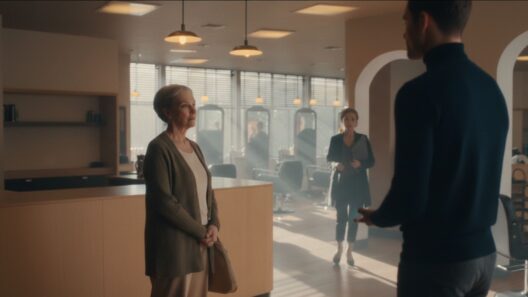


Emma Hartley always rose before sunrise. The quiet moments of dawn were the only time she felt free—when the expectations of others remained suspended in sleep, and the world was hers alone. For over a decade, she had lived in accordance with everyone’s needs but her own. Her life had become a series of invisible shackles, each forged from small acts of concession, wrapped tightly by her husband Ben’s quiet but firm expectations.
The Hartleys’ home was modest, nestled in a suburb where houses mirrored one another with military precision. Emma often thought of them as cages, each bearing families who both loved and suffocated one another. It wasn’t that Ben was a tyrant; he was charming and thoughtful, provided well for the family, and loved Emma and their two children, Lily and Max.
But love came with conditions, whispered promises of happiness that Emma never quite believed. Her days were filled with orchestrated routines, soft-spoken demands, and the constant hum of expectations that seemed impossible to ignore. Even the kitchen, her domain, bore silent testimony to Ben’s preferences—his favorite coffee, bread, the butter placed just so.
In truth, Emma had forgotten what it felt like to voice her own desires, to feel the rush of decisions that were hers alone. Instead, she had learned the art of silence, perfected it until it was as natural as breathing. To ask for more, to want differently, seemed an act of rebellion she wasn’t sure she was brave enough to commit.
Yet, as often as she pushed these thoughts away, they always returned, like a whisper on the wind. Emma found herself drawn to the idea of a pottery class at the local community center. She passed the flyer every day as she walked Max to kindergarten, a flash of color against the gray of routine.
“Mom, can we go to the park today?” Max’s small voice pulled her back to reality as they strolled home one Thursday morning.
“Sure, sweetheart,” Emma replied, ruffling his hair. She glanced back at the flyer, its bold print and vibrant images of clay creations stirring something within her.
As the weeks passed, Emma’s longing grew more insistent, an itch she couldn’t ignore. It was a small thing, this class, but it felt monumental, a wall she barely dared to scale.
One evening, as she and Ben settled into their nightly routine of TV and idle conversation, she broached the subject. “I was thinking,” she began nervously, “about maybe taking a pottery class.”
Ben looked up from the newspaper, eyebrows raised. “Pottery?” he echoed, a teasing smile on his face. “That’s new.”
“Yeah,” Emma rubbed her hands together, her voice steadier than she felt. “I saw a flyer. It starts next week.”
“Next week, huh?” Ben’s tone was still light, but Emma felt the weight of the unspoken words between them.
“Yes,” she replied, keeping her gaze steady. “It’s on Tuesdays.”
“Tuesdays are tricky,” Ben mused, his focus returning to the paper. “That’s when I have late meetings, and Lily has gymnastics.”
Emma’s heart sank, the familiar feeling of defeat washing over her. “Oh, right. Maybe another time, then.”
But even as she spoke, a part of her resisted. The pottery class became a symbol, a promise of something more, something hers. Each night she lay awake, turning the idea over in her mind, weighing it against the quiet tyranny of unspoken obligations.
The tension in Emma’s mind reached a crescendo one evening when Lily came to her, tears in her eyes, subjected to the unkindness of playground politics. Emma held her daughter close, whispering soothing words, feeling the familiar pull of duty and care bear down once more.
“Mom, why do people have to be so mean?” Lily asked, her voice muffled by Emma’s embrace.
“I don’t know, sweetheart,” Emma replied, stroking Lily’s hair. “But you must always be true to yourself, even if it’s hard.”
In the solace of her daughter’s pain, Emma saw her own reflection, the child she had been, and the woman she had become, wrapped in assumptions and unrealized dreams.
The next morning, as the sunlight began to warm their small kitchen, Emma made her decision. She prepared breakfast as usual, but there was a determination in her movements, a steady resolve that carried her through the morning.
“Ben,” she called as he grabbed his briefcase, “about the pottery class—”
He turned, surprise flickering across his features.
“I’m going to do it,” she said, her voice firm, the resolve of the night before giving her strength. “I’ll figure out the details, but I need this.”
For a moment, silence hung between them, the possibility of argument or dismissal looming large. Instead, Ben merely nodded slowly. “Okay. We’ll make it work.”
Emma blinked, a rush of relief and disbelief washing over her. This small victory, this act of self-assertion, felt monumental. In claiming this piece of herself, she had cracked open the door to a world of possibilities.
Later that day, Emma walked past the community center, her step lighter, her heart unburdened by the weight of silence she had carried for so long.
Time would tell how this shift would resonate through her life, but for now, she was content to be just Emma—no roles, no expectations, just a woman reclaiming her voice, one small step at a time.