



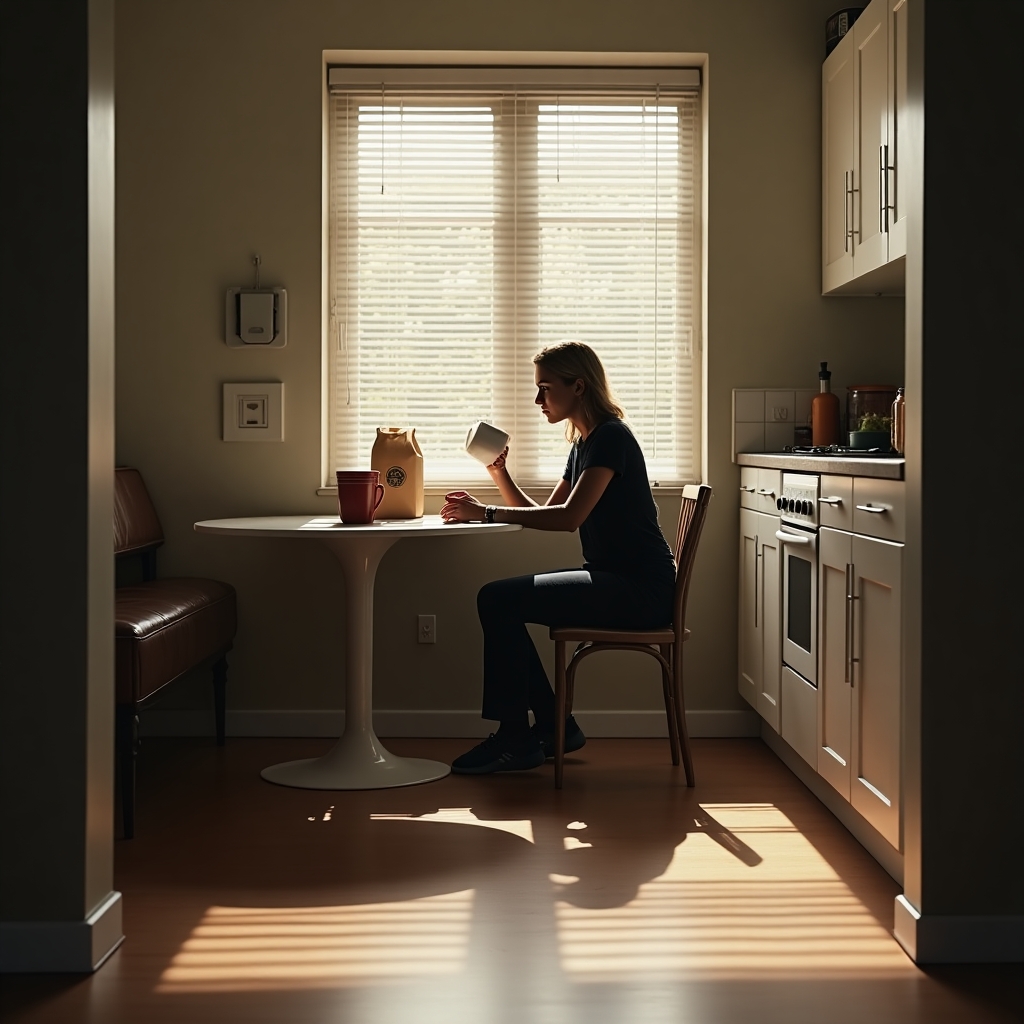
The early morning light filtered through the half-open blinds, casting thin stripes across the kitchen floor. Emma sat at the small, round table, her hands wrapped around a mug of cooling tea. She let the steam rise to her face, inhaling the subtle scent of chamomile, and tried not to think about the conversation she’d overheard the night before.
“Emma never really stood up for herself,” her sister, Laura, had said with an exasperated edge, the words bouncing off the walls of their childhood living room. “She just goes along with whatever Mom or Tom says. It’s like she’s afraid to have an opinion.”
Emma had felt each word like a stone dropping into a pond, the ripples spreading through the depths of her mind. Laura’s words were painfully true, and acknowledging her sister’s insight had been nearly as stinging as hearing it spoken aloud.
Growing up, Emma had learned early on to maintain peace by yielding to others. Her mother’s mood determined the temperature of the household, and Tom, her longtime boyfriend, often seemed to mirror that dynamic in their home. He had never explicitly told her to remain quiet or compliant, but his subtle dismissals and habit of making decisions without her input left little room for her own voice.
As Emma sat at the table, she realized her tea was now as lukewarm as her resolve had felt over the years. “I’m tired,” she whispered to herself, though there was no one else to hear. Tired of being agreeable, tired of feeling like a shadow in the room.
The sound of a car door slamming outside jolted her from her thoughts. She glanced out the window to see her mother, carrying bags of groceries, heading towards the house. Emma’s heart quickened. She felt the familiar pull to anticipate her mother’s needs, to fall into the rhythm of helping without being asked or thanked. But a new feeling pushed back; a quiet, almost imperceptible desire to resist.
The kitchen door swung open. “Emma, dear, can you help with these bags?” her mother called, not really a question but a statement with an expectation of compliance.
Emma stood, a reflex more than a decision, and met her mother at the door. She took two bags and placed them on the counter, turning back for the others. “These are heavy,” her mother remarked, implying that Emma should carry more. But as Emma reached for another bag, she paused and took a step back.
“Why don’t you sit down, Mom? Let’s go through these together,” Emma suggested, her voice as steady as she could manage.
Her mother blinked, surprised. “Aren’t you going to put them away?”
Emma shook her head gently. “I thought we could figure out where things go together.”
It was a small thing, this suggestion, yet it felt monumental. Her mother hesitated, clearly puzzled by the unexpected shift. “Well, I guess that’s alright,” she murmured, taking a seat at the table.
As they unpacked the groceries, Emma noticed a curious thing. The longer they sat together, discussing what items might be best for which meals, the more her mother seemed to relax. And with each item placed deliberately in its new home, Emma felt some of her own internal tension ease.
Later that evening, as Emma prepared dinner, Tom leaned against the doorway, tapping away on his phone. “What’s for dinner?” he asked, not looking up.
“Stir-fry,” Emma replied, chopping vegetables with practiced ease.
“Again?” he grunted, finally lifting his gaze.
Emma took a deep breath, placing the knife carefully on the cutting board. “Yes, again,” she replied, meeting his eyes for the first time with a steadiness she hadn’t known she possessed.
Tom shrugged, returning to his phone. “I suppose that’s fine.”
Emma smiled inwardly, recognizing this small victory for what it was. It wasn’t about the stir-fry or the groceries; it was about Emma choosing for herself and inviting others to adapt. She realized that reclaiming her autonomy didn’t require grand gestures or dramatic confrontations. It was the simple act of acknowledging her own preferences, of allowing her voice to fill the spaces she had previously left empty.
That night, as she sat down to eat, Emma felt something shift. It was subtle, like the first breeze of spring, but undeniably present. She had taken a small step, but it was hers, and it felt like the beginning of something important.