

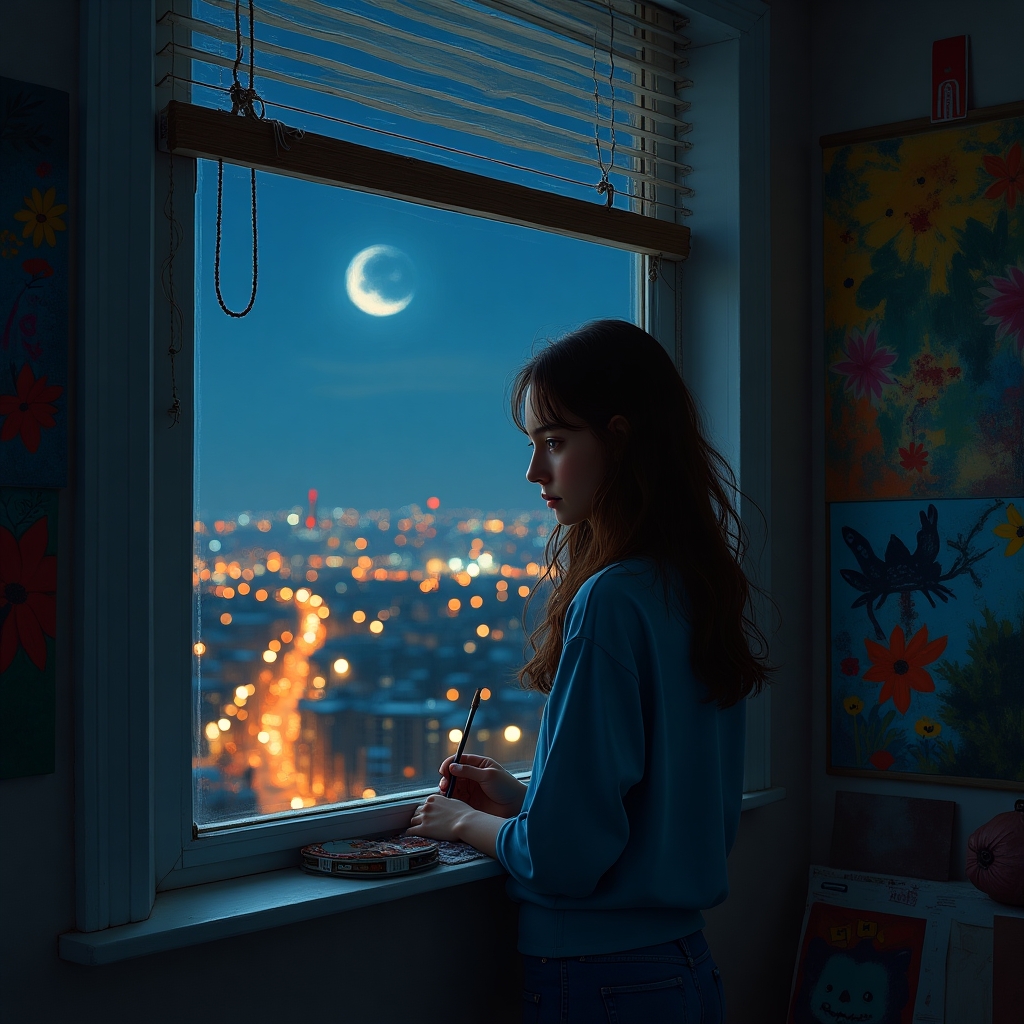
Amara Patel stood by the window of her tiny studio apartment, watching the city lights twinkle in the distance. Each light reminded her of the choices she had yet to make, the web of expectations woven around her by family tradition and personal conviction. Twenty-three and fresh out of college, she felt the weight of whispers rather than commands — the subtle hints from her parents, her aunts, her uncles, and even the community at large.
Growing up in a close-knit Indian family in the bustling heart of New Jersey, Amara was accustomed to sharing her life with her family. Every milestone, every decision was a collective affair. But as she transitioned from adolescence to adulthood, the silent tug between who she wanted to be and who she was expected to be grew stronger.
Amara excelled at balancing her public and private selves. Her parents had emigrated from Gujarat decades ago, carrying their dreams and values with them. They cherished their culture deeply, and they saw Amara as a continuation of their legacy. She was expected to pursue a career in medicine, marry within their community, and uphold the family’s reputation. But Amara had always dreamt of something different — a life filled with art and creativity, of expressions and emotions painted onto canvases as vast as her imagination.
The last time Amara visited her family home, she’d felt the pressure more keenly than ever. Her mother’s gentle prodding about prospective suitors and her father’s not-so-subtle reminders of her promising grades in biology were like weights added to a scale already tipping under the strain. She nodded politely, smiled when expected, and retreated to her old bedroom under the guise of needing rest, though she lay awake for hours, listening to the silence of the house she once found so comforting.
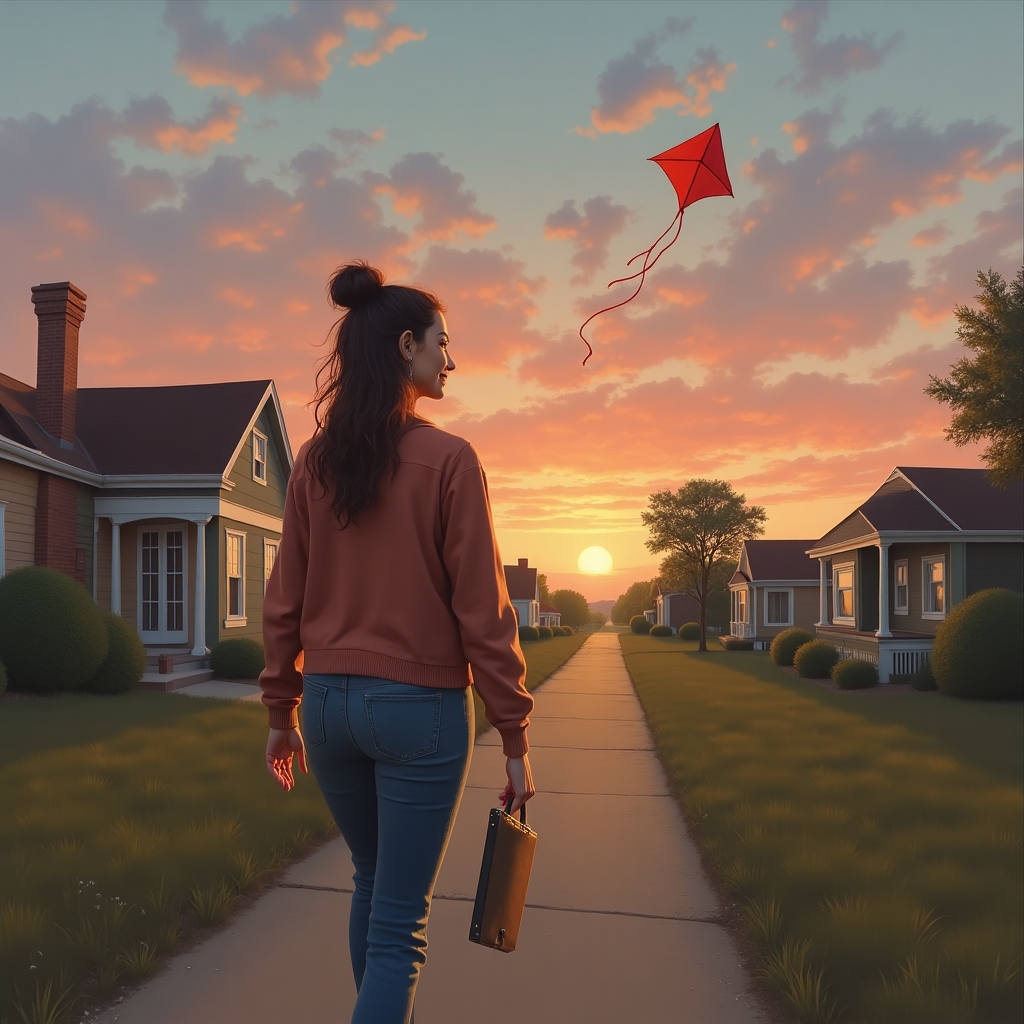
Amara’s heart tugged towards an upcoming art residency in the Pacific Northwest — a chance to explore her passion without the confines of familial expectation. But this opportunity felt forbidden, a diversion from the path her parents envisioned. The struggle within her was quiet, internal, yet persistent, like a gentle but unyielding tide.
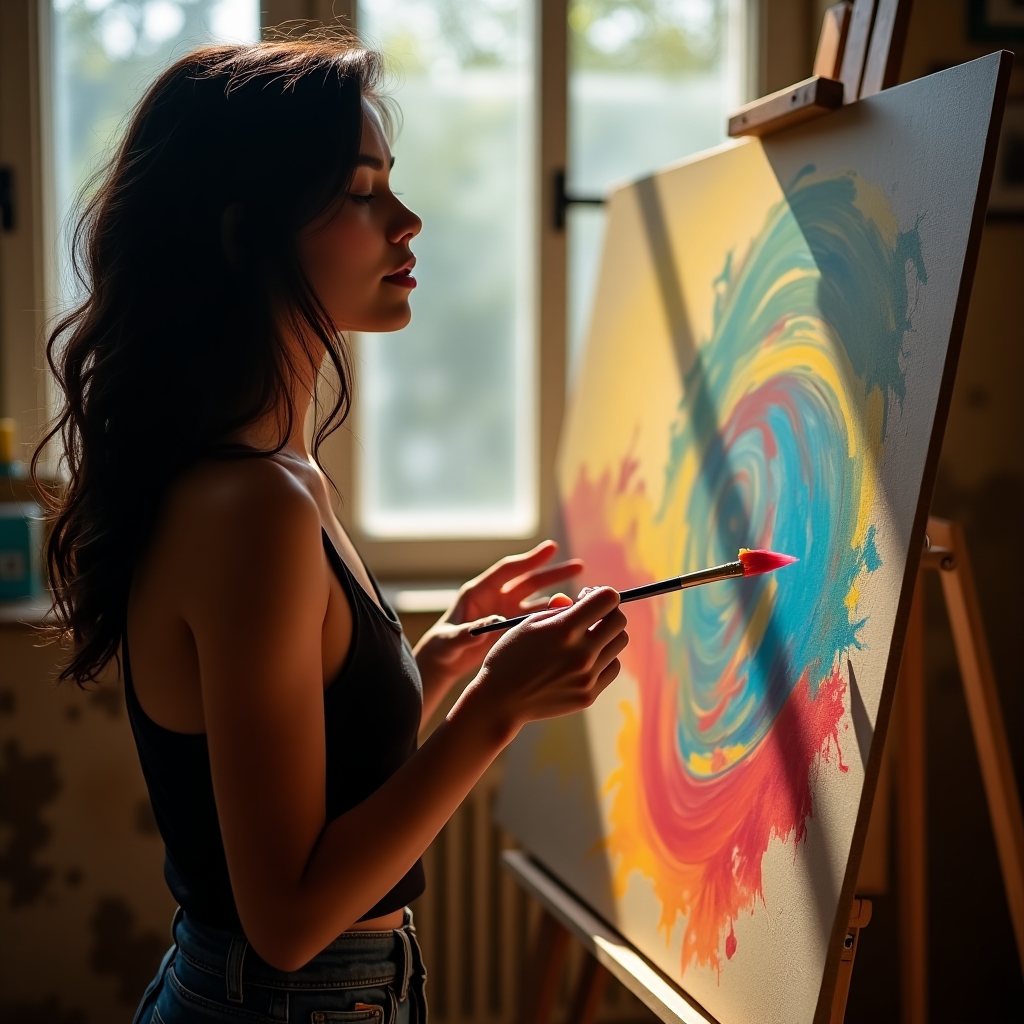
As the weeks passed, Amara drowned herself in work, filling sketchpad after sketchpad with abstract art that mirrored her inner turmoil. Her nights were spent in the studio, the moonlight her only witness as she painted her fears, her hopes, her rebellion against the predetermined path laid before her.
One crisp autumn evening, Amara attended an art gallery opening downtown. Surrounded by creations that spoke to her soul, she found herself captivated by a particular painting — a vast canvas of swirling colors and textures. It depicted a lone figure standing at the edge of a cliff, gazing into an endless horizon. The piece was titled ‘Courage in Silence’. As she stood there, something shifted within Amara. The painting resonated with a part of her she had almost forgotten — the courage to stand alone, to trust oneself amidst uncertainty.
It was here, in the quiet hum of the gallery, surrounded by strangers, that clarity dawned upon her. Amara realized her life was not a choice between family and self but a fusion of both; she could honor her cultural roots while carving out her own path.
That night, as she sat by the window once more, Amara made peace with her decision. She would attend the residency, not as an act of defiance, but as a journey of self-discovery, a testament to her family’s sacrifices and her own aspirations. The subtle tension that had long bound her heart eased, replaced by a serene determination.
The next morning, Amara called her parents. As she shared her decision, her voice trembled slightly, but it was steady enough to convey her resolve. Her mother’s silence on the other end was palpable, laced with disappointment but also understanding. Her father’s sigh carried the weight of acknowledgment. They did not argue, nor did they offer immediate support, but in the silence that followed, Amara sensed a shift — an unspoken acceptance that what mattered most was her happiness.
Weeks later, as she stood in the art studio overlooking the misty mountains of the Pacific Northwest, Amara felt a profound sense of belonging. The gentle rain tapped against the window pane, whispering assurances of new beginnings. Her brush glided effortlessly across the canvas, capturing the essence of her journey — a silent harmony between duty and self.
Amara knew that the path to generational healing was not without its challenges, but she had taken the first step. She was bridging worlds, one brushstroke at a time.