



Elena Morales had always lived in the overlap of two worlds. Growing up in a small town in New Mexico, she straddled the line between the vibrant traditions of her Mexican heritage and the more modern, individualistic culture she encountered at college in the city. Her parents, immigrants who had worked tirelessly to build a life in America, laid expectations on her shoulders shaped by years of sacrifice and their own dreams of success: becoming a lawyer, settling down with a nice local boy, and living close to family. Yet, within Elena, there was a quiet whisper urging her towards a different path — the life of an artist, a life unconfined by geographical or cultural boundaries.
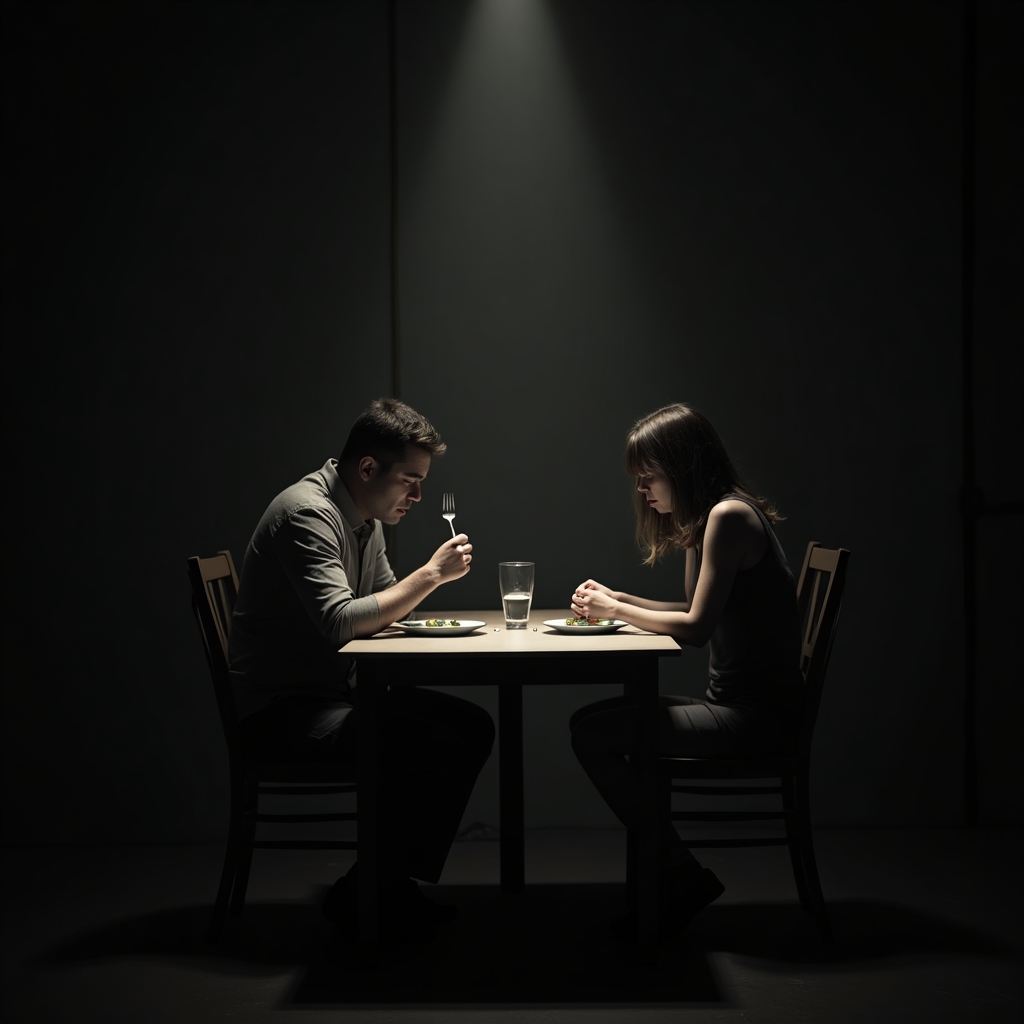
Her inner conflict simmered beneath the surface, invisible to those around her. To Elena, this silent struggle felt like walking a tightrope, balancing on a thin line between loyalty to her family’s dreams and fidelity to her own. The duality was especially pronounced during her visits home, where conversations often veered towards “when” she would apply to law school, not “if.” Her parents, especially her mother, spoke with a firmness that brooked no argument, eyes lit with a vision of Elena in a power suit rather than splattered with paint.
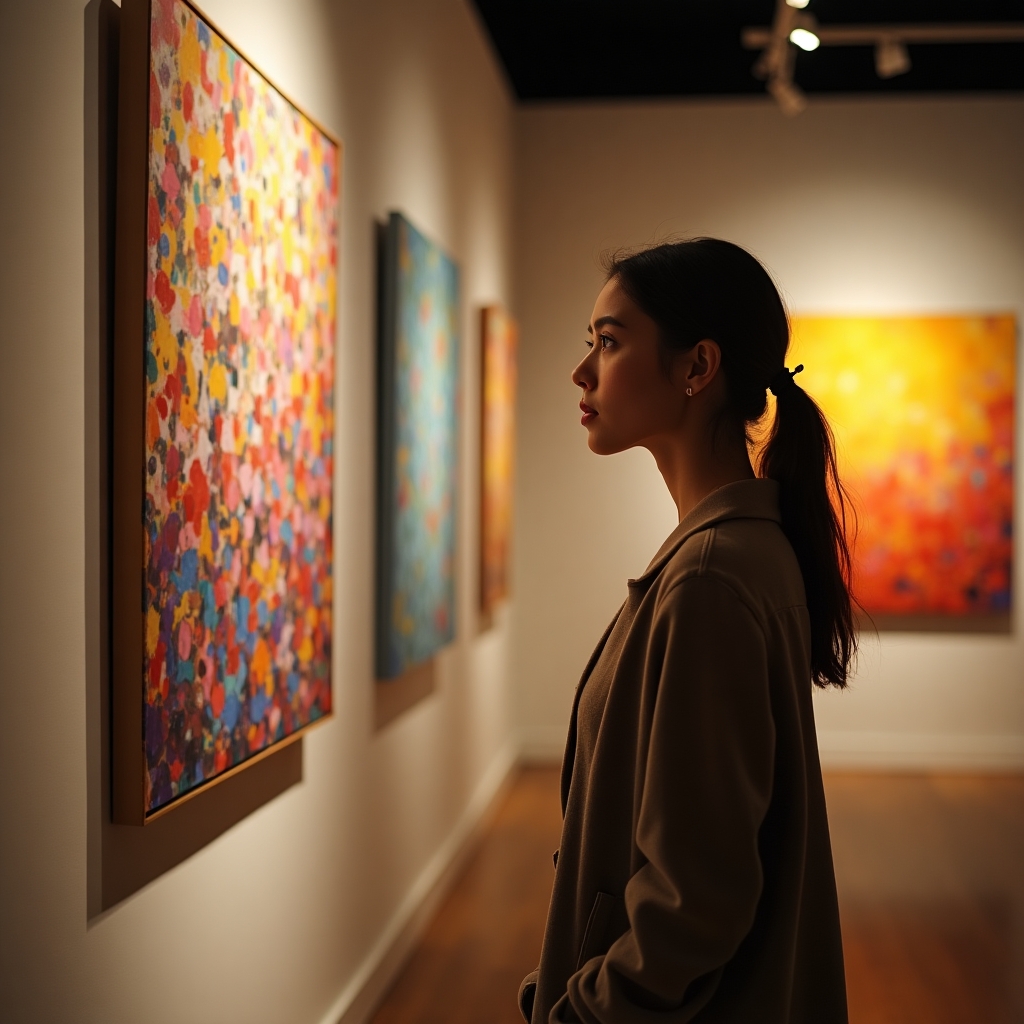
Engulfed by these familial expectations, Elena found solace in her art studio at school. It was a small, sunlit room tucked away on the third floor of the Fine Arts building, filled with canvases of all sizes, each one a testament to her inner world. Here, she painted stories, emotions, and dreams that she felt unable to voice. Her brushstrokes were a whisper of rebellion, a quiet assertion of her own desires.
Each return home, however, was like stepping back into a role she had no desire to play. She felt her own identity recede into the background, replaced by the dutiful daughter who nodded along to plans that felt like a cage. The psychological tension was subtle yet pervasive; a gnawing sensation that her life was being decided for her, bringing with it an undercurrent of resentment she couldn’t entirely shake off.
It was on a brisk autumn afternoon, during one such visit home, that the moment of clarity finally arrived. Elena had taken a walk to clear her mind, stepping out into the golden light that filtered through the towering cottonwood trees that lined the streets of her neighborhood. As she walked, she felt the weight of the unspoken words between her and her family, a silence that had grown heavier over time.
She found herself at the local park, where a small, old bridge spanned a narrow creek. It was a place she used to visit as a child, to escape into her own world of imagination. Standing there, the sun dipping low in the sky, the realization hit her with a gentle yet undeniable force. The expectations her family had for her were born out of love and fear, a desire for security in a world that had often been unpredictable and harsh for them. Yet, in living their dreams, she was slowly suffocating her own.
In that moment, Elena understood that pursuing her own path didn’t mean rejecting her family’s values but rather integrating them in a way that honored her truth. It was possible to build a bridge between their dreams and her reality, to walk a line that was her own, not simply imposed by others.
The next morning, over breakfast, Elena sat across from her mother. The familiar aroma of fresh tortillas filled the air, a comforting and grounding scent. This time, Elena spoke with a voice that was both steady and gentle, “Mamá, I need to talk to you about my future. I love you and Papa dearly, and I know you’ve always wanted what’s best for me.”
Her mother’s eyes met hers, a mixture of curiosity and an unnamed emotion flickering there. “Of course, mija. What’s on your mind?”
“I want you to know that becoming a lawyer is not my dream. I want to pursue art. It’s what makes me feel alive and true to who I am,” Elena continued, her heart pounding yet feeling strangely at ease.
The silence that followed was a chorus of unspoken words, but her mother’s expression softened, revealing a depth of understanding Elena had not expected. “I see. You are my daughter, and I love you for who you are, Elena,” her mother replied, her voice tender yet firm, “It’s important you find your own path, but know that we are always here for you.”
As Elena sat there, a warm sense of relief washed over her, mingling with the bittersweet recognition that this was just the beginning of her journey — a journey that would weave together her dreams and her family’s love in a tapestry uniquely her own.