



Clara stood at the kitchen sink, her hands submerged in warm, soapy water, as she stared out the window. The late afternoon sun streamed in, casting long shadows across the wooden floor. Outside, the wind rustled through the autumn leaves, creating a gentle soundtrack to her thoughts.
For years, Clara had lived in the subdued confines of her life, molded by the expectations and subtle criticisms of those around her. Her parents, loving but overbearing, had always emphasized the importance of being agreeable and accommodating. Her husband, Tom, though not unkind, often dismissed her ideas with a casual wave, choosing instead the path he deemed best for them both. It had become second nature to Clara to acquiesce, to nod and smile even when her heart protested.
As she scrubbed a plate, the weight of it all pressed down on her. It wasn’t one large boulder, but rather a collection of small stones, each bearing the mark of a time she had stifled her own voice. Moments like last night, when Tom had decided on their holiday plans without consulting her, were not uncommon. When she had questioned him, his response was gentle but dismissive, “You always trust me to make the right choice, don’t you, Clara?”
Her heart ached with the familiar tug of resignation. Clara placed the plate on the drying rack and turned off the tap. She dried her hands on a nearby towel, her mind churning with thoughts. At the core of her being, a small spark of defiance flickered.
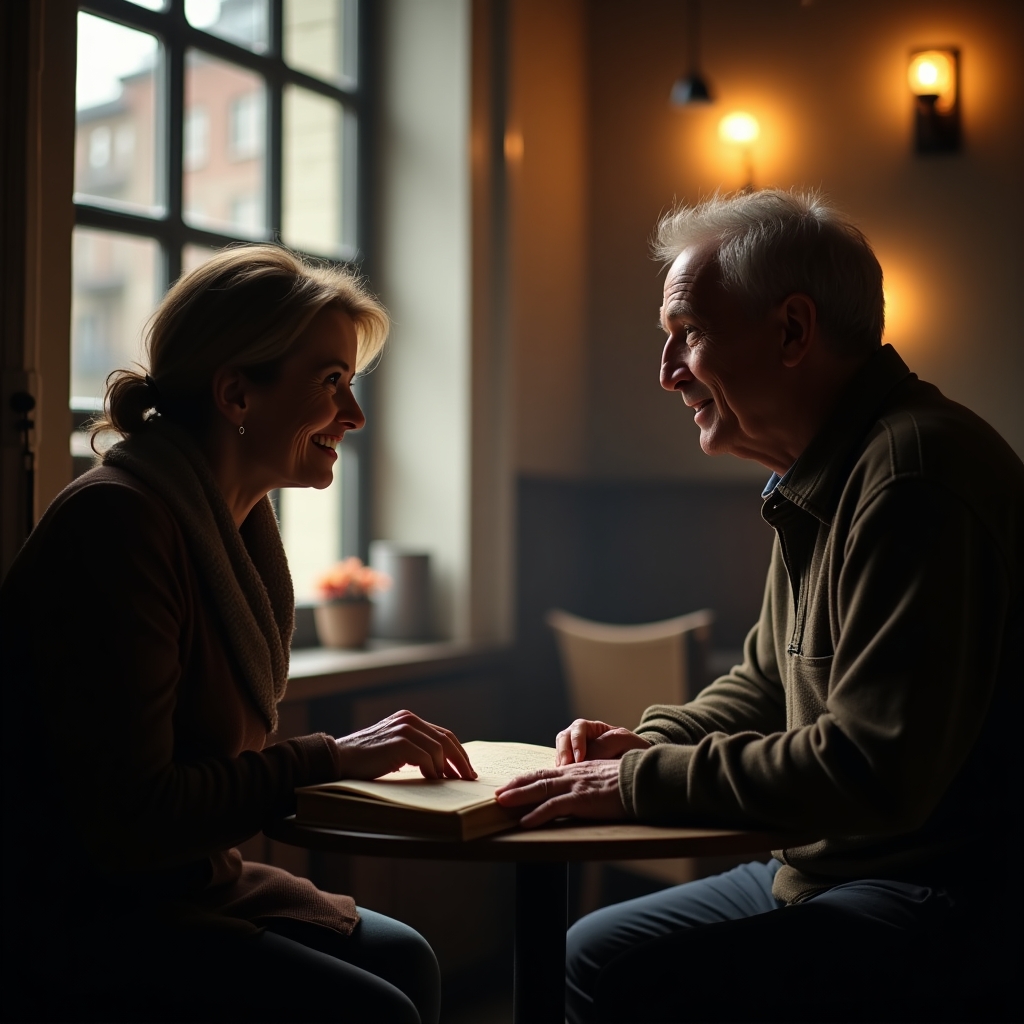
Later that evening, as Tom sat engrossed in the latest news broadcast, Clara sat beside him on the couch. The air was thick with the comfortable silence of routine, but Clara’s mind was elsewhere. She thought of her friend, Emily, who had recently taken up painting despite a busy schedule. “It’s never too late to start,” Emily had said over coffee last week, her eyes bright with conviction.
Clara had always loved the idea of painting, the way colors could blend and transform on a canvas. But she had never pursued it, always finding reasons to delay—a lack of time, of skill, of courage.
“Tom,” she said, her voice soft yet steady.
“Hmm?” he responded, eyes still glued to the television.
“I want to start painting,” she said, the words feeling foreign yet incredibly right.
Tom glanced at her, eyebrows raised in mild surprise. “Painting?” he echoed, as if the notion was entirely novel.
“Yes,” Clara replied, a small smile forming. “I’ve been thinking about it a lot. I’d like to take a class.”
He considered her for a moment, the news droning on in the background. “If that’s what you want,” he finally said, his tone neutral.
Clara nodded, feeling an unfamiliar thrill run through her. She had said it. She had expressed a desire—her desire.
The next day, she found herself in the town’s small art supply store, the scent of paint and canvas intoxicating. She wandered the aisles, marveling at the endless possibilities contained in tubes and brushes. The storekeeper, a kindly old man with twinkling eyes, offered assistance, and soon Clara walked out with the tools to start her journey.
Back home, Clara set up a small corner for herself by the window, where the light would be just right. She spread out her supplies with a sense of ceremony, each item placed with care. Then, with a deep breath, she dipped a brush into vibrant blue paint and made the first stroke on a blank canvas.
It was as if she had opened a door to a room long forgotten. The colors spoke to her, each stroke a whisper of liberation. For the first time in years, Clara felt in control, felt like herself.
That evening, as Tom came home, the smell of paint mingling with the usual aroma of dinner, he stopped short in the doorway. “Wow,” he said, genuinely taken aback by the vivid splash of color adorning the canvas.
Clara turned to him, a streak of blue adorning her cheek, and smiled. “I started,” she said simply.
Tom chuckled softly, a note of admiration in his voice. “It looks amazing, Clara.”
“Thank you,” she replied, her heart light.
Later that night, as Clara lay in bed beside Tom, listening to the rhythmic sound of his breathing, she felt different. Stronger. More complete. She had taken a step, small yet monumental, towards reclaiming her autonomy.
As sleep overtook her, Clara realized that the real art was in this—a life painted with her own choices, her own colors.