


The gentle hum of the city’s evening life filtered through the window, casting a soft, undulating glow across Mia’s small bedroom. She sat on her bed, her laptop closed, its dark surface reflecting the muted light of the streetlamp outside. A stack of textbooks lay beside her, untouched for the past hour as she stared out into the twilight, her mind a whirl of thoughts that refused to settle.
Mia, a second-generation immigrant in her family, was studying to become a doctor, something she had once proudly declared was her dream. Yet, as each day passed, the enthusiasm that had once fueled her ambitions seemed more like a dimming ember rather than a blazing fire. Her parents, who had sacrificed so much to provide her with opportunities they never had, held high expectations that their daughter would achieve everything they had envisioned for her. The weight of their dreams pressed heavily on her shoulders.
Her father often spoke of the pride in having a doctor in the family, his voice resonating with respect every time they visited family friends, and her mother would share stories of Mia’s academic successes with a glow of maternal satisfaction. Yet, behind her smiles and nods, Mia concealed the growing discomfort within her.
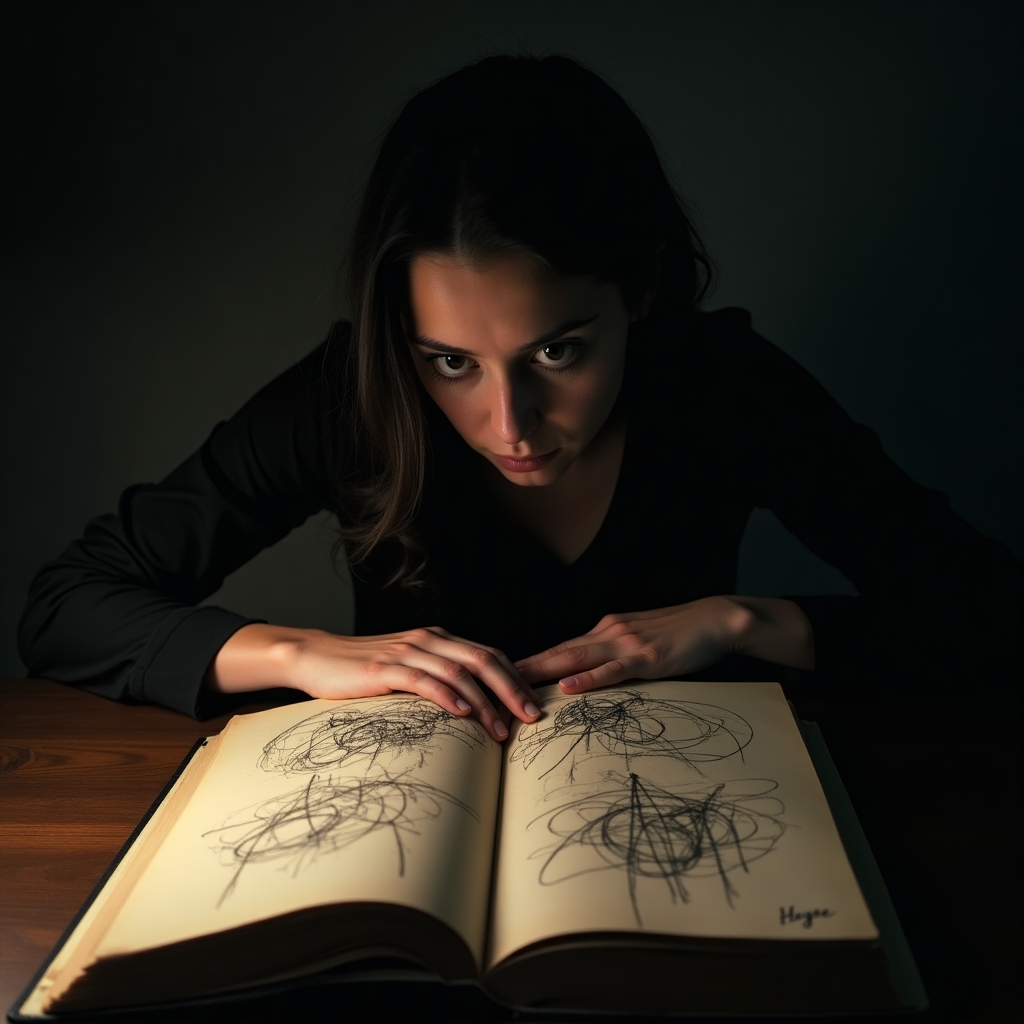
The truth was, Mia had discovered a passion for art. The way colors could express emotions words sometimes failed to convey fascinated her. Secretly, she attended a figure drawing class, losing herself in the charcoal smudges and the rhythm of her hands across the canvas. But every stroke of the pencil was accompanied by a pang of guilt and a reminder of the unspoken agreement of the path she was supposed to follow.
Her internal conflict manifested in the silent spaces of her life—a skipped meal here, a sleepless night there—small sacrifices she made hoping to buy time to figure out who she truly wanted to be. Conversations with her parents became exercises in restraint, her real feelings clamped down beneath layers of dutiful agreement.
It wasn’t a dramatic revelation or an impulsive decision that changed Mia’s path; rather, it was a moment crystallized in the ordinary. It happened one evening, during dinner when her family gathered around the table, laughter echoing softly against the walls. Her parents discussed their day, the usual anecdotes of work and the occasional news about relatives. Mia listened, chiming in when appropriate, her thoughts elsewhere, sketching vibrant canvases in her mind.
Then, her younger brother, Leo, inadvertently provided a spark of clarity. He was narrating his day at school, mentioning an art project he was working on. “I really love it, you know?” he said with a gleam in his eyes, one that Mia recognized immediately. “It doesn’t feel like schoolwork at all.”
A simple statement, yet it resonated deeply. Mia felt a pang in her heart, recognizing the pure, unadulterated joy in her brother’s voice—the same joy she felt when surrounded by her drawings. At that moment, surrounded by her family, her internal struggle surfaced, leaving her hands trembling slightly under the table.
The realization crept in slowly but with undeniable clarity: she had the right to seek that joy in her life, not just for fleeting moments but as a guiding principle. Her parents loved her, and though their dreams for her were born of love, they were not her own. Perhaps it was time she shared her truth.
That night, she lay awake, mulling over the courage it would take to voice her heart’s desires. The decision settled within her like a quietly flowing river, determined and steady. She knew that explaining her passion wouldn’t be easy, and she feared their disappointment, but she also knew that her happiness and authenticity were worth the vulnerability required.
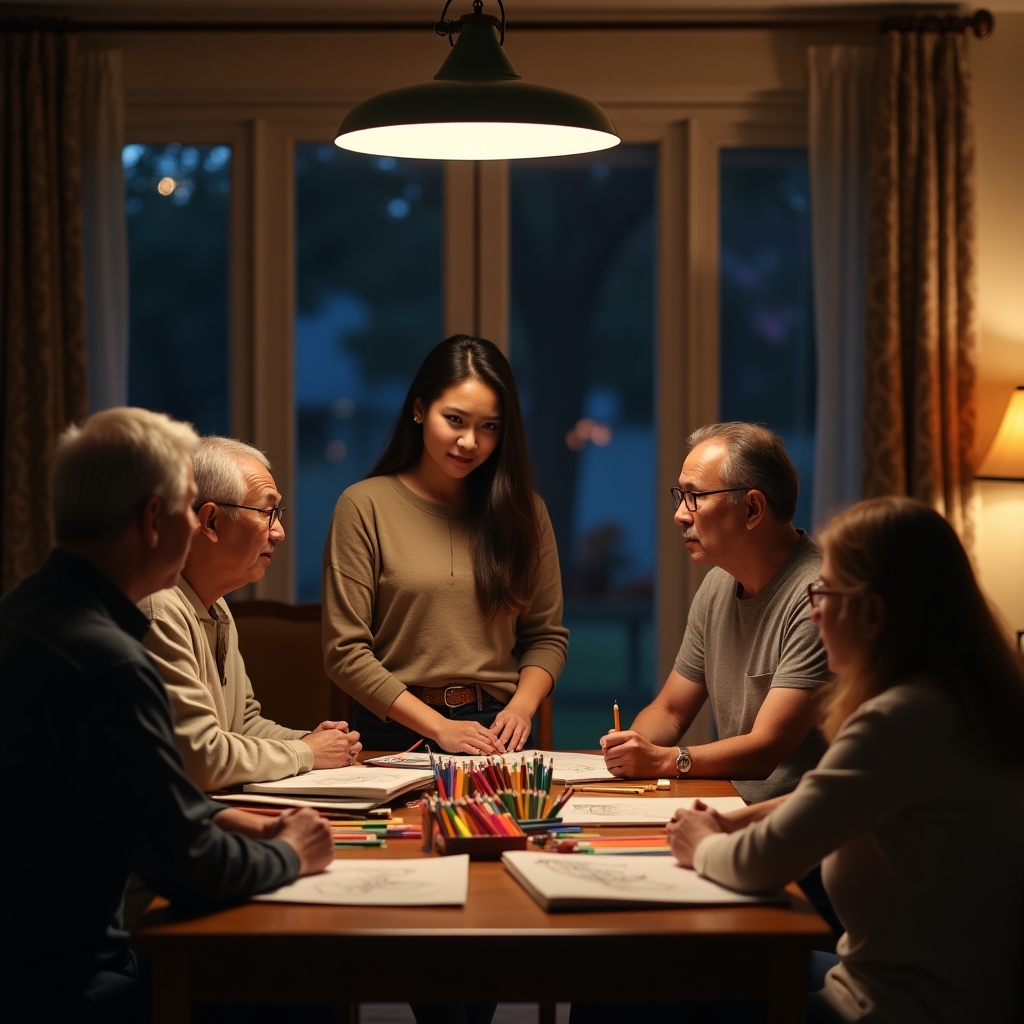
Early the next morning, Mia took a deep breath and gathered her art supplies. She set them on the dining table, a silent testament to what she had quietly nurtured. As her parents entered the room, she felt a nervous thrill course through her.
“Mom, Dad,” she began, her voice steady yet soft, “there’s something I need to talk about.” She gestured to the art supplies, before continuing, “This is who I am, who I want to be.”
Her parents exchanged a glance, surprise evident, but it was the beginning of a conversation—a tapestry of hopes, fears, and ultimately, understanding. It was the first step towards healing the generational expectations that had quietly bound them all, allowing for a narrative of love that recognized individual truth.
In the quiet after that moment, Mia felt a deep sense of relief and a burgeoning freedom, realizing that her path, colored with her own strokes of authenticity, was just beginning.