


Lydia stood at her kitchen sink, her hands submerged in lukewarm, soapy water. Her fingers brushed against the edges of the porcelain dish, but her mind was elsewhere. She could hear the familiar sounds of her family in the living room: her husband, James, flipping through TV channels and their teenage daughter, Emily, tapping away at her phone. It was another Sunday afternoon, indistinguishable from the rest.
For years, Lydia had slipped into the role of the accommodating spouse and mother. Her desires were quieted by the needs of those around her, her autonomy stifled under layers of love and obligation. It wasn’t that anyone had told her to be this way; it was simply the path she had unconsciously chosen because it was easier than confronting the discomfort of change.
But recently, subtle shifts had begun to stir inside her. It wasn’t a sudden realization, but rather a gradual awakening prompted by small moments: a friend’s offhand comment about a new job, an article about a woman who had started a business in her fifties, and, most profoundly, Emily’s innocent question last week, “Mom, what do you want to be when you grow up?”
Lydia had laughed at the time, but by evening, the question gnawed at her. She had never considered that the story of her life was still being written, that she could pick up the pen and alter its course.
“Lydia, did you pick up my dry cleaning?” James’s voice cut through her thoughts, mildly irritated.
“I didn’t have time today, James,” she replied, turning off the tap and wiping her hands on a dishtowel. She felt an unusual firmness in her words, one that surprised them both.
James glanced over his shoulder, slightly bemused. “I guess I’ll have to wear something else for tomorrow,” he said with a forced casualness that masked his surprise.
In the days that followed, Lydia began to observe the small rituals of her life through new eyes. The laundry that demanded folding, the dinners that were expected, the polite nods to neighbors all seemed part of a script she had memorized but not authored.
One evening, as she sat on the porch, watching the sunset paint the sky in hues of orange and pink, Emily joined her. “You okay, Mom? You’ve seemed different lately.”
Lydia smiled, touched by her daughter’s perceptiveness. “I’m just thinking about things, life, what I want to do next, I suppose.”
Emily, always the curious one, probed further. “Like what?”
Lydia hesitated, unsure how much to share. “I’m not entirely sure yet, but I’ve started taking a class at the community center, just for me.”
Emily’s eyes lit up. “That’s awesome! What class?”
“Painting,” Lydia replied, a bit of excitement seeping into her voice. “I used to love it when I was younger.”
“You should show me sometime,” Emily encouraged, her approval a balm to Lydia’s quietly rebellious spirit.
The weeks slipped by, and Lydia found herself eager for those two hours each Wednesday evening, where she was free to explore her creativity without interruption or judgment. The canvas became a mirror, reflecting her burgeoning sense of self.
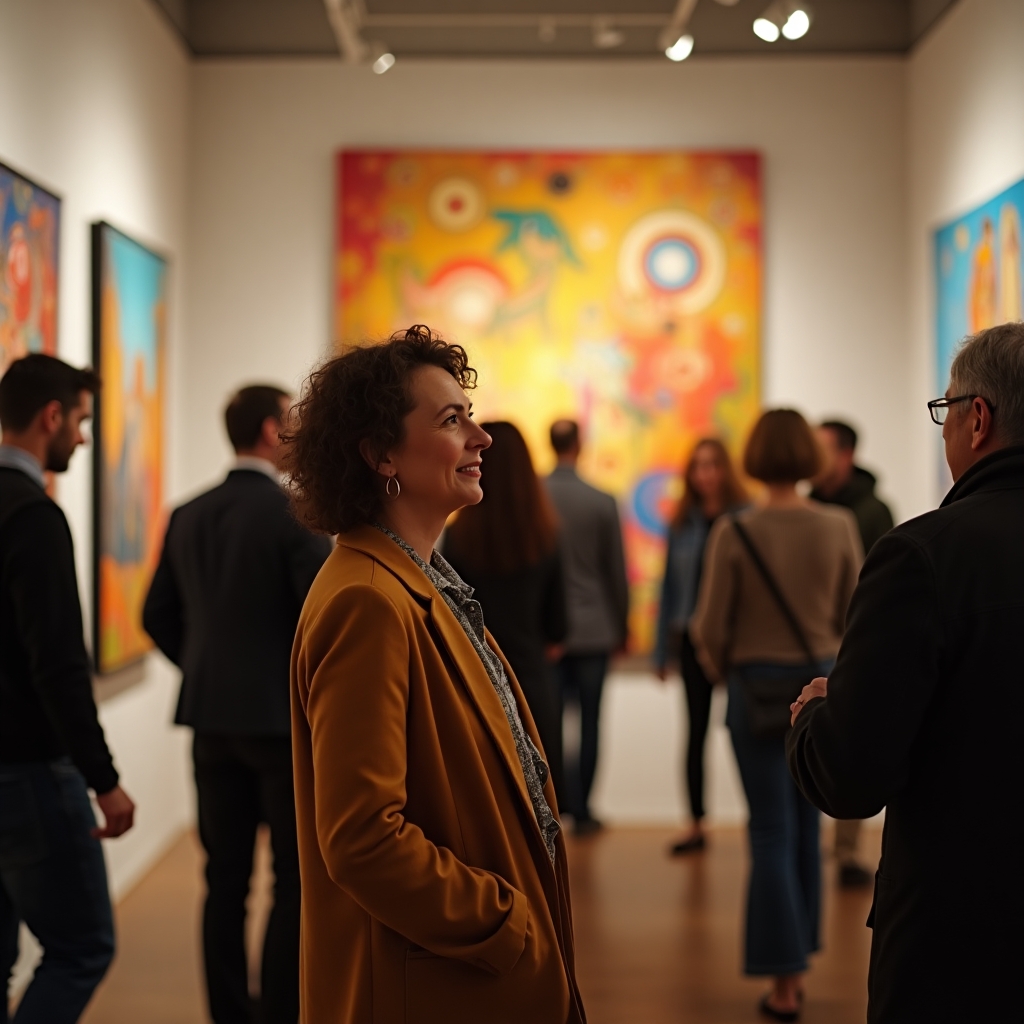
Then came a pivotal Saturday, the day of the community art exhibition. Lydia had debated whether to participate, the old fear of vulnerability and judgment lurking in the back of her mind. But Emily had encouraged her, even promising to come along for moral support.
As Lydia stood in the small makeshift gallery, surrounded by her fellow amateur artists, James arrived, surprised to find his wife in such a context. He wandered through the room in silence before stopping in front of Lydia’s painting.
“You did this?” he asked, genuine surprise in his voice.
“I did,” Lydia replied, her heart racing.
James nodded slowly, taking in the bold strokes, the vivid colors. “It’s… really good. I didn’t know you could paint like this.”
Lydia felt a warmth spread through her, a mixture of pride and a newfound sense of self-worth. “I didn’t either,” she admitted, smiling gently.
It wasn’t that everything changed overnight. The demands of everyday life still pressed in, and there were moments of doubt. But Lydia knew she had taken a step towards reclaiming her autonomy, a step that was as liberating as it was small.
On the ride home, Emily clutched her mother’s hand. “See, I told you you’re amazing.”
Lydia squeezed her daughter’s hand in return, gratitude swelling in her chest. She had reclaimed a part of herself, a piece that would grow and expand with every new decision she made. The quiet revolution within her had begun, and she was ready to see where it would lead.