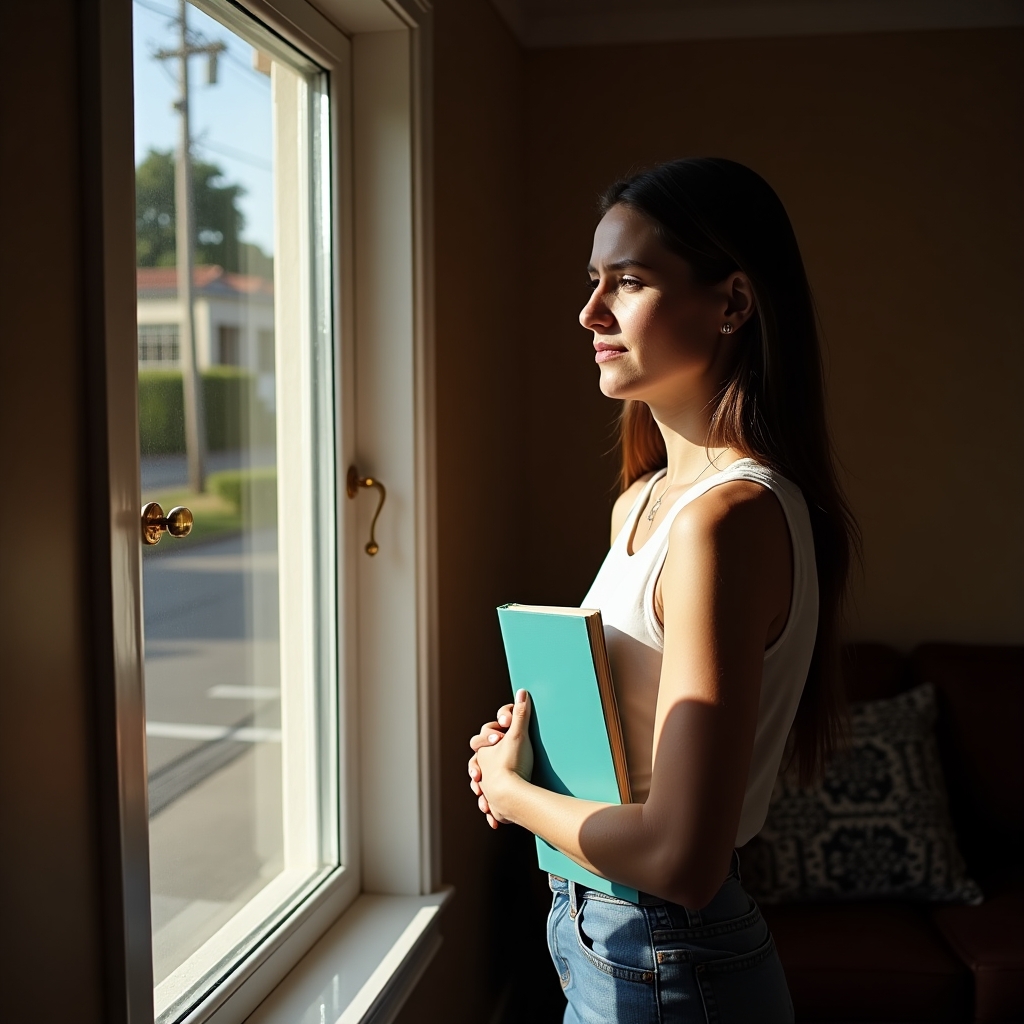
The Valenzuela household was never quiet. The walls resonated with the melodic chaos of family—a symphony of interwoven voices speaking both English and Spanish, the hum of conversations that seemed to overlap yet never truly clashed. To Maria, these sounds were both comforting and confining, like a warm quilt that sometimes felt too heavy.
At twenty-one, Maria was navigating the precarious balance between her own burgeoning identity and the deeply ingrained expectations of her cultural and familial lineage. Her parents, having emigrated from Mexico twenty-five years earlier, held firm to the belief in hard work, family loyalty, and the pursuit of dreams—so long as those dreams were sensible and secure. Maria, however, found herself drawn into the world of art, a world her parents viewed as uncertain and unstable.
Each Sunday during the afternoon meal, her father, Jorge, would ask her about her studies, a ritual she both cherished and dreaded. At the long oak table, amid bowls of arroz and plates of mole, Maria would carefully navigate the conversation, steering it away from her true passions.
“Los estudios van bien, Papi,” she would say, her voice steady, eyes trained on her plate.
“That’s good,” he would nod approvingly, and the conversation would pivot to her brother’s engineering courses or her sister’s nursing program.
In the quiet moments that followed, amid the clinking of silverware and the rustling of napkins, Maria felt the weight of the unspoken. Her heart ached with the desire to say, “I want to paint. I want to create.” But the fear of disappointment was a stronger tether than the courage she could muster.
Her mother, Elena, was the quiet observer, her sharp eyes missing nothing. One evening, as they washed dishes side by side, she said softly, “Tu corazón está en otra parte, hija. Lo veo.”
Maria paused, her hands submerged in suds, the weight of her mother’s perception feeling like an unasked question. She met her mother’s eyes, finding there an understanding that was both comforting and terrifying.
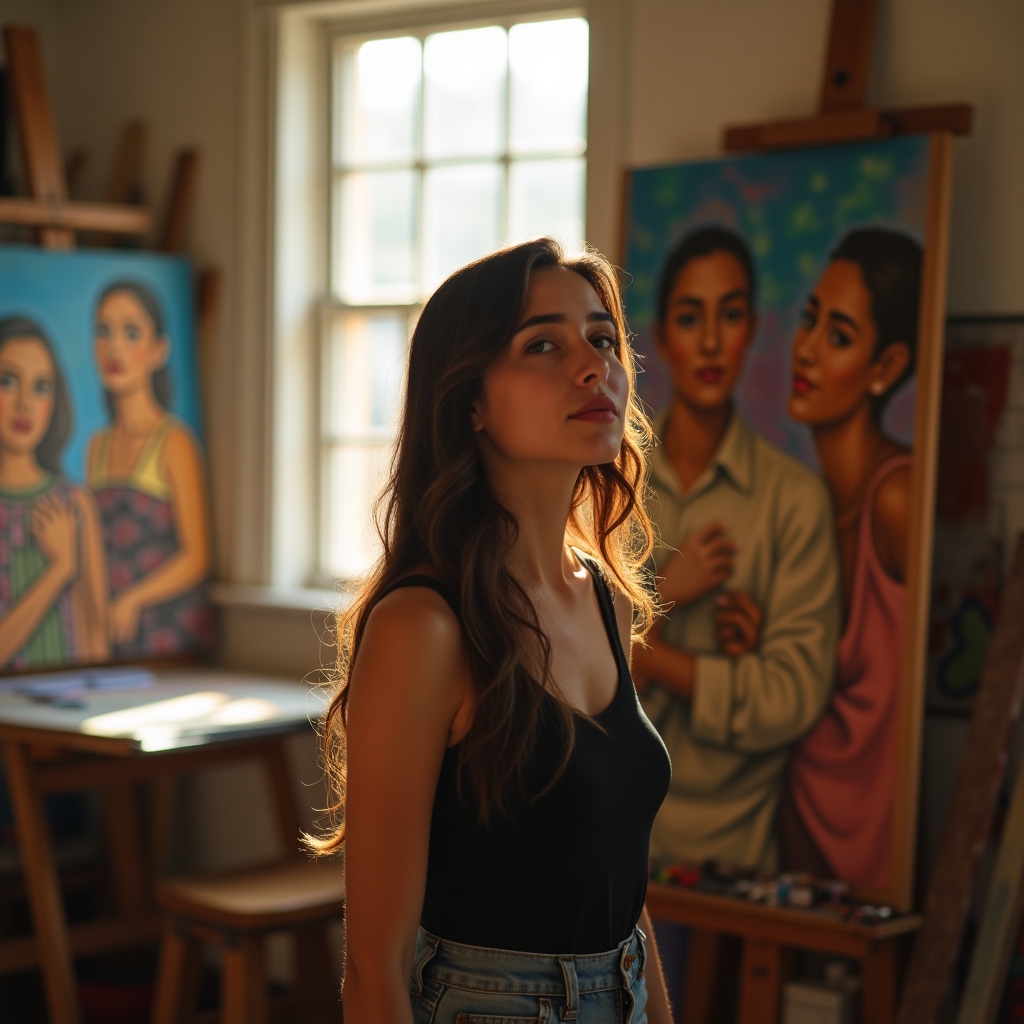
Over time, Maria poured herself into her art in stolen hours—late nights turned early mornings, when the house was finally quiet. Her small studio, a repurposed corner of the garage, became her sanctuary. She painted with urgency, as if trying to translate the cacophony of her thoughts and emotions into color and form.
The family noticed the change, although they spoke of it in whispers. Her father, proud but perplexed, would watch her disappear into herself and wonder how his vibrant, talkative daughter had become so introspective.
The tension simmered, an undercurrent beneath the surface of daily life, until the day Maria found herself at the local art fair. She had almost not submitted her work, but a late-night surge of determination had propelled her forward.
Walking through the rows of booths, Maria’s heart danced with both anxiety and excitement. When she reached her own small display, her paintings seemed to vibrate with the energy of her labor and love.
Her family came, not entirely understanding what they were walking into. Her father’s brow furrowed as he examined each piece, his thoughts opaque and unreadable to Maria. Her mother stood quietly, a small smile playing on her lips, pride tempered with the worry only mothers seem to know.
As they left, her father turned to her, his voice a blend of amazement and uncertainty. “This is what you have been working on?” he asked.
“Yes, Papi,” she replied, her voice barely above a whisper.
He nodded slowly, as if weighing each word before responding. “You have a gift, Maria. It is beautiful. But what about your studies?”
Maria took a deep breath, the air around her heavy with unspoken truths. “I will finish my studies, I promise. But I need this, Papi. Painting—it makes me feel alive.”
Her father was silent for a moment, a moment that stretched into eternity. Then, with a sigh that seemed to carry years of worry and love, he placed a hand on her shoulder. “I am learning, hija, that sometimes following your heart is also a kind of work. We will find a way.”
In that instant, the quiet struggle within Maria began to dissolve, replaced by a clarity and resolve she had never thought possible. Her father’s tentative acceptance was the validation she had longed for, and even though the path would not be easy, it felt right.
As they walked back to the car, Maria felt the weight of generations, yet also the lightness of new possibilities. The quiet symphony of her family continued, but in its melody, she heard new notes—her own.
The journey towards reconciling her values and expectations was just beginning, but for the first time, Maria felt ready to navigate it, armed with the knowledge that her truth was worth asserting.