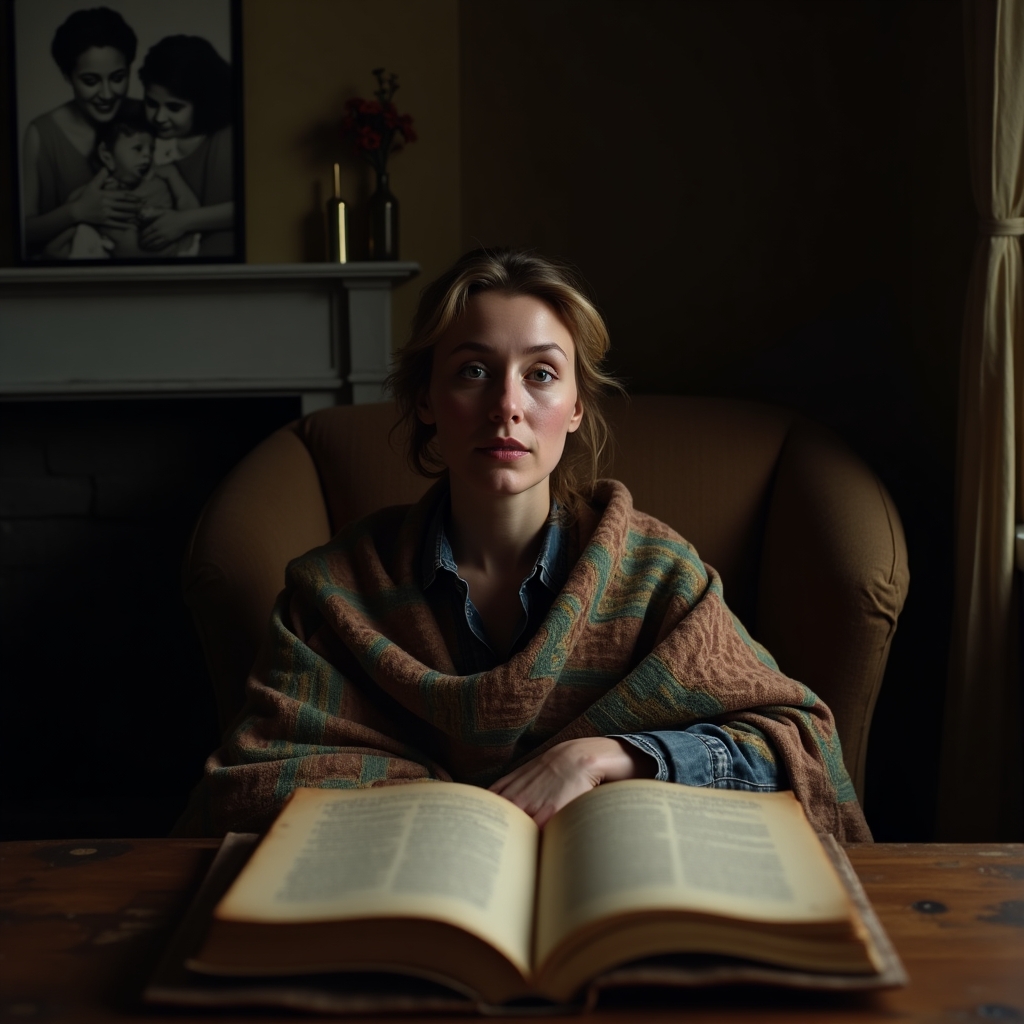





Nina walked the well-trodden path between her apartment and her parents’ house with the cautious intent of someone navigating a tightrope. Each step was measured and careful, a metaphor for her interactions with her family, whom she loved deeply yet quietly feared disappointing. Her parents, first-generation immigrants, had woven their lives from the threads of tradition, binding them tightly with expectations that spanned generations. Nina, caught in this intricate weave, often felt like a single thread trying to find her own unique color.
The cultural expectations were not overtly oppressive but rather like a gentle, persistent hum in the background of her life—a hum that remarked on her choice of career, her lifestyle, and her relationships. Her parents envisioned a life for her that mirrored their own values of stability and conformity, hoping she would find fulfillment and security by adhering to them.
Nina, on the other hand, was drawn to the arts, a world of uncertainty and potential chaos, yet one that filled her with an indescribable joy. She worked at a community theater, crafting set designs that spoke of worlds beyond her reach. This job, while satisfying her creatively, was a point of conflict with her parents, who saw it as fleeting and unreliable.
As she neared her parents’ house that afternoon, the sun dipped low, casting long shadows along the sidewalk. Her heart echoed with the weight of unspoken truths and hidden desires. Today was supposed to be a simple family gathering, yet she felt the familiar tension coil in her stomach, a prelude to the unexpressed expectations she would face.
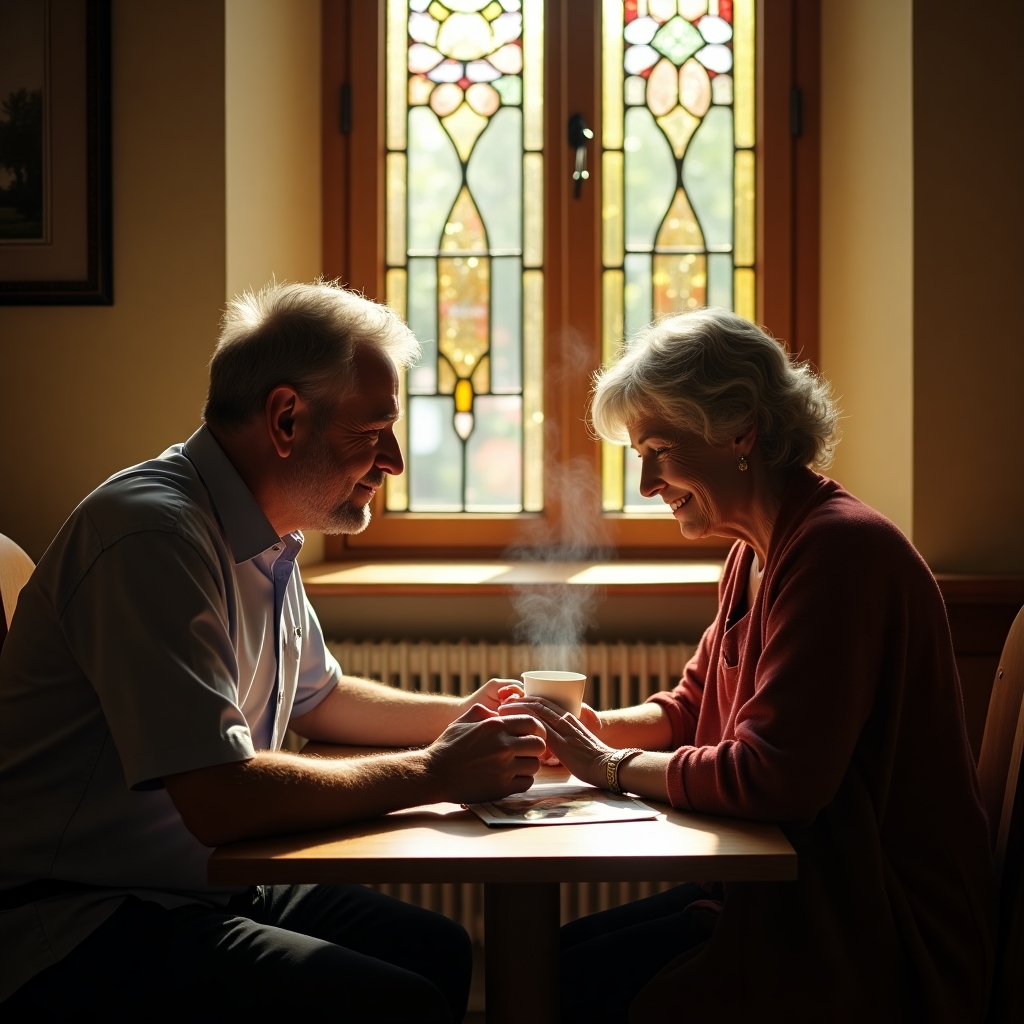
Inside, the house was filled with the rich aroma of spices and the comforting sounds of her mother’s laughter. Her father, stoic and gentle, greeted her with a warm hug. Their love was palpable, but so was the silent disapproval of Nina’s reluctance to step onto the path they had envisioned for her.
Dinner conversations danced around work and family, with occasional sidelong glances and pointed questions aimed at Nina’s uncertain future. Her father, though never overtly critical, often asked about her savings, her ‘plan,’ and subtly, when she might consider more ‘serious’ work.
Nina responded with practiced ease, deflecting and redirecting with a grace born from years of similar exchanges. Yet, inside, she felt the familiar gnawing doubt these conversations always left behind. Was she being selfish for pursuing her own path? Did her happiness justify the departure from the legacy her parents had built?
The evening progressed with the warmth of familial love mingled with the chill of unspoken conflict. It was her mother’s gentle touch on her arm, a signal to help with the dishes, that allowed Nina a brief escape to the kitchen.
Alone amidst the clatter of dishes and running water, Nina let herself ponder the quiet war within her. Her heart, a battleground of loyalty and individual desire, fought for clarity. In these moments, she wondered if the threads connecting her to her family would hold strong if she chose differently.
As she stood there, hands submerged in soapy water, she glanced out the window. The sun had fully set, leaving a dark canvas peppered with stars. One star, particularly bright, caught her eye—a lone beacon in the darkness. It was then, amidst the mundane task of dishwashing, that clarity arrived not as a bold revelation but as a gentle truth whispered from somewhere deep within.
Nina realized that her journey, her choices, and her happiness were not betrayals of her parents’ dreams but extensions of them. Her courage to choose her path was, in its way, an homage to the bravery her parents had shown in carving out a life in a foreign land. The strength they had modeled for her was not just in adherence to tradition but in the bravery to pursue what they believed was right.
With this understanding, Nina felt her internal tension ease, replaced by a calm determination. She understood now that asserting her truth did not mean severing the ties that bound her to her family but weaving a new pattern where both her dreams and their legacy could coexist.
When she returned to the dining room, her parents glanced up, sensing a change. Nina smiled, a genuine, unburdened smile. She would speak to them soon, when the time was right. But tonight, she simply sat down, her heart a little lighter, the echoes of belonging resonating clearer than before.
This moment of clarity, where emotional courage blossomed from quiet reflection rather than dramatic confrontation, was the true turning point in Nina’s journey toward self-acceptance and familial harmony.