




In the heart of an old town where cobblestones echoed the footsteps of countless generations, Elara found herself at the crossroads of expectation and desire. The town, with its centuries-old traditions, was a transitory place where the past and present seemed to dance a quiet duet, much like the one within Elara’s own heart.
Elara was the youngest daughter in a family renowned for their craftsmanship in pottery. The Hamidi family had, for generations, been the artisans who molded clay into vessels that were more than mere objects; they were the embodiment of the stories and rituals that had been passed down through time. Their pottery was coveted not just for its intricate designs but for the soul it seemed to carry.
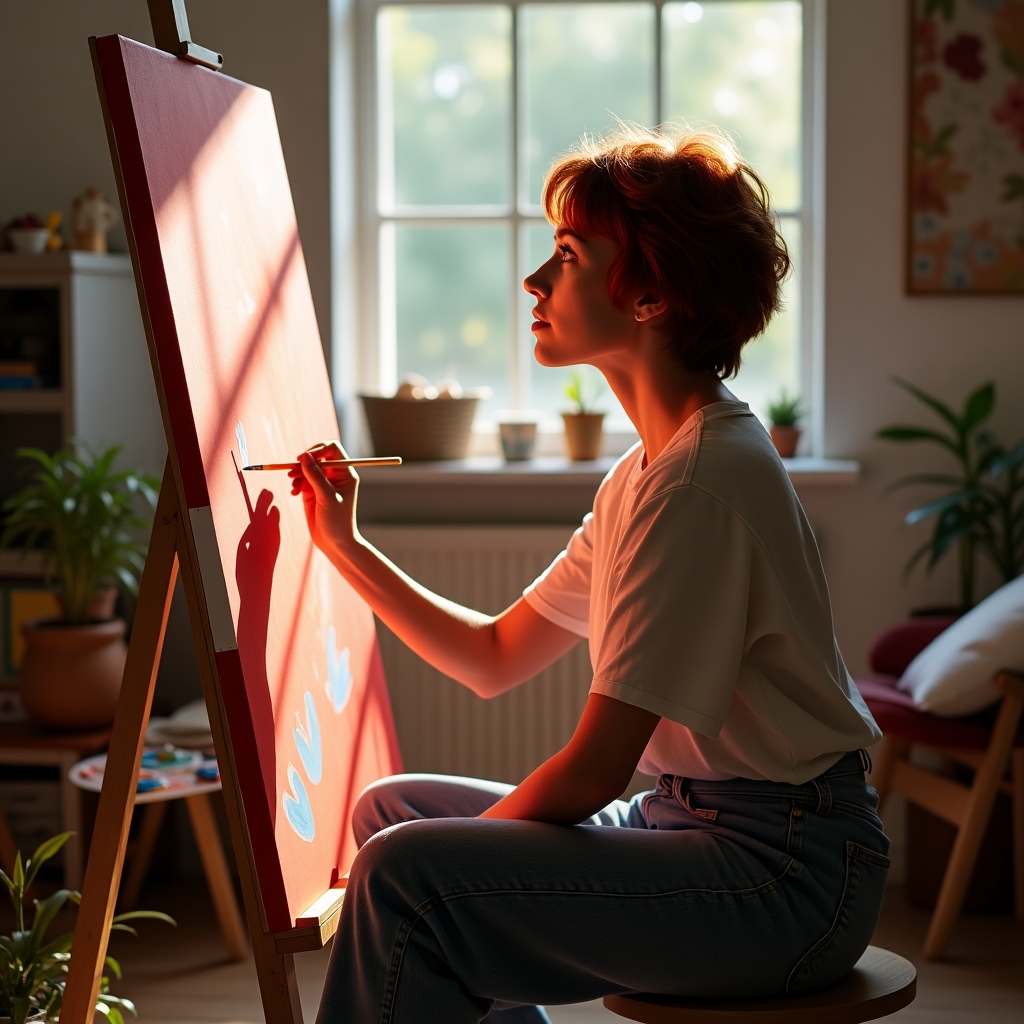
From a young age, Elara was trained to shape clay, her fingers learning the language of creation her family spoke so fluently. Yet, her heart sang a different tune, one not easily understood by others. Her passion lay in painting, a world of colors and canvas that took her imagination to realms far beyond the tactile confines of clay. She would spend hours in her small attic studio, listening to the whispers of the wind as it rustled through the leaves, her brush dancing to the rhythm of its invisible melody.
This dual existence created a quiet tension within Elara, one that was more a whisper than a shout. Her family, proud and loving, believed in her potential as the next great artisan to carry forward their legacy. Her father, in particular, was a man of tradition, his life dedicated to the continuity of their craft, believing deeply in the heritage and pride that came with it.
Yet every time Elara molded clay, a piece of her heart ached for the freedom of the brush, for the vibrant strokes that symbolized a life of her choosing. She struggled to articulate this longing, fearful of disappointing those she loved most. Her life became a delicate balance of honoring her family’s expectations while nurturing her own dreams in the shadows.
The emotional tension within her was like the surface of a calm lake, beautiful yet hiding the currents swirling beneath. She moved through her days with a gentle grace, attending to her duties in the pottery with diligence but retreating to her attic studio whenever she could steal a moment away.
It was during one such stolen moment that the clarity she sought came to her. The attic had always been a sanctuary, filled with the scent of oil paints and the soft light filtering through the small window perched high on the wall. That afternoon, as the sun dipped lower, bathing the room in a warm, golden hue, Elara found herself staring at a half-finished canvas. It depicted a young girl standing at the edge of a forest, gazing longingly at the open sky beyond the trees.
As she studied the painting, Elara saw herself. The girl’s expression was one of quiet determination, a yearning for freedom tempered by love and responsibility. It was in this moment of profound self-reflection that the emotional dam within her broke. Tears filled her eyes, not of sadness, but of a profound understanding.
Her truth, she realized, was not a rejection of her family or their legacy, but a continuation of it through her own unique voice. The same passion that drove her ancestors to shape clay resided in her, manifesting through the vibrant language of paint and brush. It was not a choice between love and dreams, but an integration of them both.
With newfound resolve, Elara knew she could honor her family’s traditions while forging her own path. The weight of generations lifted, making way for the possibility of a legacy that included both pottery and painting, tradition and innovation. She understood now that love need not be sacrificed on the altar of expectation but could instead be the foundation upon which her truth was built.
Energized by this clarity, Elara began to envision a conversation with her family, one where she would share her heart and invite them into her world of color and light. She longed to show them that her passion for painting was not a betrayal, but an extension of the values they cherished—creativity, artistry, and the courage to express one’s innermost self.
In the days that followed, Elara approached her family, her heart racing but her spirit steady. She spoke not with defiance but with love, painting for them a picture of her dreams. Her father, initially silent, listened intently. It was not an easy conversation, but it was a necessary one, planted in soil rich with mutual respect and understanding.
In the end, it was her mother who spoke first, reaching out to squeeze Elara’s hand in gentle support. Her father, after a moment of reflection, nodded, acknowledging the quiet strength his daughter possessed—the very strength that had come from them. The tradition of pottery would continue, now enriched by the colors of Elara’s world.
Elara’s journey had not called for grand gestures or dramatic confrontation but had instead been a quiet dance of shadows, culminating in a moment of light. Through love, she found the courage to be true to herself, to bridge the gap between expectation and identity, and to honor both the past and the future.
Her heart, once divided, now beat in harmony with her soul’s true calling, as the town outside her window continued its timeless dance, a living testament to the power of dreams woven into the fabric of tradition.