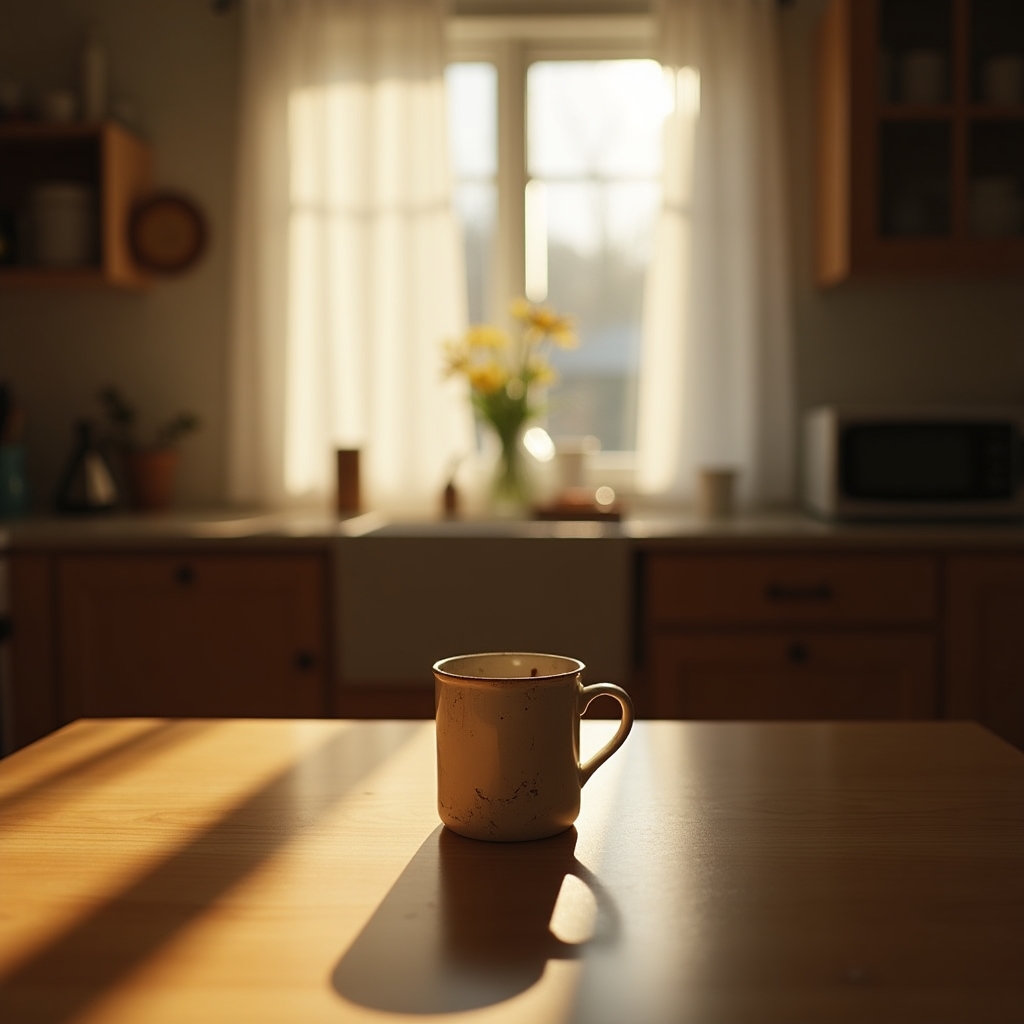

The morning sun filtered through the lace curtains, casting delicate patterns on the kitchen floor. Anna stood by the stove, stirring her oatmeal, her gaze lost in the rhythmic swirls of steam. The radio hummed quietly in the background, a soft murmur that filled the silence of the house.
“Anna, did you remember to pick up the dry cleaning?” Her mother’s voice floated in from the living room, sharp and expectant.
Anna hesitated, the spoon resting in her hand. “Not yet, but I will right after breakfast.”
“It opens at nine. Make sure you’re not late again.”
“I won’t be,” Anna replied, her voice barely above a whisper. It was always like this, she thought—a constant checklist of tasks and expectations. She felt herself shrinking as each day blurred seamlessly into the next, her own needs and desires buried beneath the weight of others’ expectations.
This had been her world for as long as she could remember. Her mother needed help, and Anna had always been the one to provide it. Her father, now gone, had once been the buffer, but without him, Anna had slipped effortlessly into the role of caretaker. Over the years, her own ambitions—the art classes she longed to take, the dreams she nurtured quietly—had been set aside.
The day unfolded predictably: errands, appointments, and endless demands that left little room for introspection. But today was different. Today marked the anniversary of her father’s passing, a day she always reserved for herself, though no one else seemed to remember.
As she walked down the familiar street toward the dry cleaner’s, she felt the weight of that unacknowledged anniversary pressing heavily on her heart. Her father had understood her in a way no one else did. He was the one who encouraged her to paint, to seek beauty in the mundane, to be more than what was expected.
At the dry cleaner’s, the bell above the door jingled, announcing her arrival. The shopkeeper looked up, offering a familiar nod. She handed over the claim ticket, her mind distant, barely registering the transaction.
“You seem off today, Anna,” the shopkeeper noted, his voice gentle but intrusive.
“Just a lot on my mind,” she replied, managing a small smile.
Back home, the house was quiet, her mother out at a meeting. She stood in the living room, the familiar tick of the clock filling the space. Her gaze fell on the easel tucked in the corner, a relic of a time when Anna painted freely.
A sudden surge of emotion overwhelmed her. The easel called to her, a silent reminder of who she used to be. She moved toward it, almost involuntarily, her fingers grazing the cool wooden frame.
Could she do it? Could she reclaim this piece of herself?
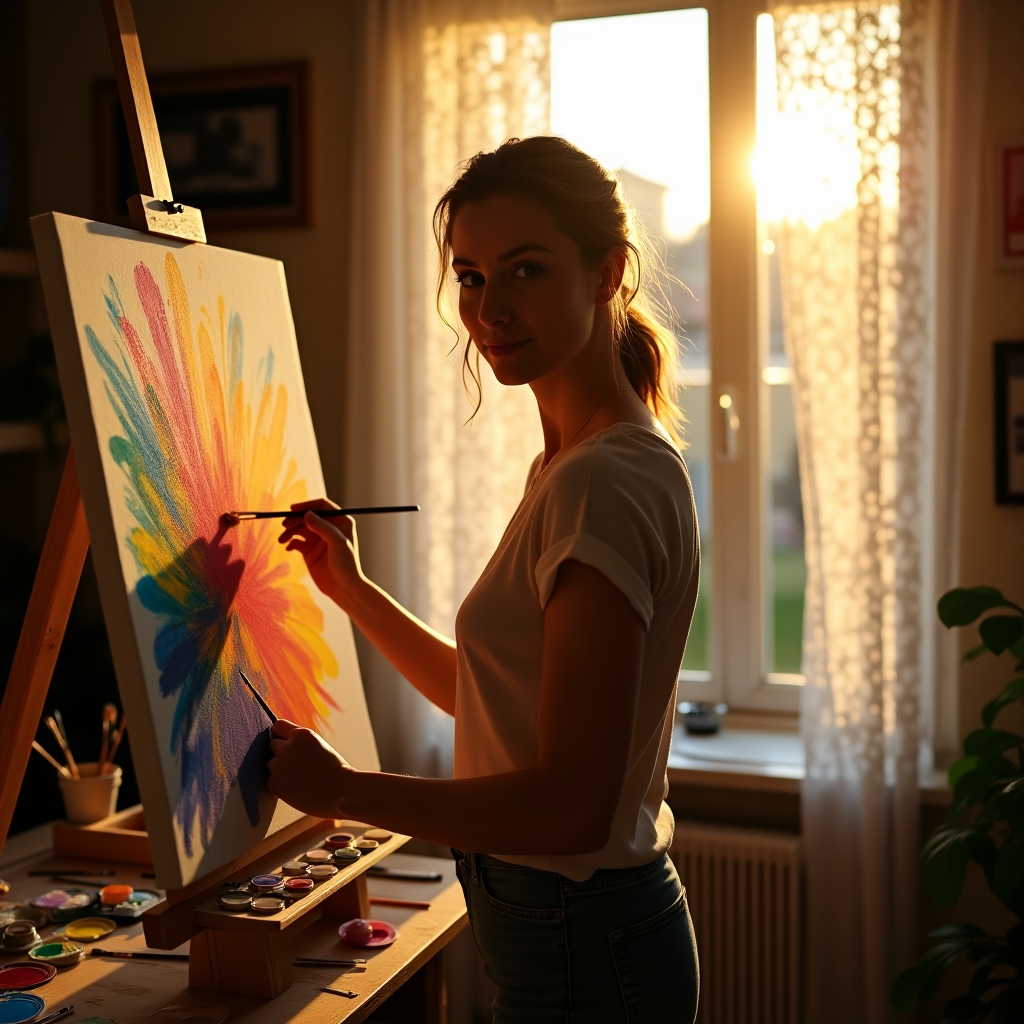
Her heart raced with a mix of fear and excitement. As she stepped back and set up the easel, the world around her shifted slightly, the colors more vivid, the air charged with possibility. She unfurled a canvas, her hands trembling with anticipation. It had been so long.
Anna picked up a brush, hesitating for a moment before dipping it into the paint. The first stroke felt like exhaling after a long-held breath—a release she hadn’t realized she was waiting for. As colors bloomed across the canvas, she lost herself in the rhythm, each stroke drawing her deeper into a forgotten world.
The front door creaked open, and her mother’s voice called out, jarring her from her reverie. “Anna, did you pick up the dry cleaning?”
“Yes, it’s in the hallway,” Anna replied, her voice steady.
Her mother appeared in the doorway, her gaze falling on the easel. “What are you doing?”
Anna didn’t flinch. “I’m painting,” she said simply.
There was a pause, the air laden with unspoken words. “You haven’t done that in a long time,” her mother observed.
“I know,” Anna replied, her eyes meeting her mother’s, a quiet strength in her gaze. “But I need this.”
Her mother hesitated, the controlled facade slipping away to reveal something akin to recognition. “Alright,” she said finally. “Just… don’t forget the things that need to be done.”
Anna nodded, a soft smile playing on her lips. “I won’t.” But as her mother turned away, Anna knew something fundamental had shifted. She had given herself permission to want, to create, to be.
That evening, Anna sat by her window, looking out at the setting sun. She felt different—a subtle, profound change that resonated deep within. Today, she had taken the first step toward reclaiming herself. It was small, perhaps, but powerful in its simplicity.
Her heart felt lighter, the colors of the world sharper, more vibrant. She was no longer just a caretaker, a dutiful daughter. She was an artist, a dreamer, a woman reclaiming her autonomy one brushstroke at a time.