


Emma opened the curtains of her kitchen window and watched as the morning sunlight struggled to break through the heavy winter fog. The kitchen was the heart of the house, a place she’d come to both love and loathe. Here, she’d spent countless hours preparing meals, washing dishes, and listening to the droning voice of her husband, Mark, as he went on about work and the daily news.
Her life had become a series of repetitions — predictable, safe, and smothering. Emma had been living in a cocoon of stifling comfort for years, her desires buried under the weight of familial obligations and unspoken expectations.
It wasn’t always like this. Emma once had dreams of becoming an art teacher. But those ambitions had been quietly shelved when she met Mark, who was practical and stable. The decision to prioritize his career over hers seemed reasonable at the time, but over the years, her dreams faded into faint shadows.
She sighed and turned away from the window, her gaze settling on the half-finished painting leaning against the far wall — a painting she hadn’t touched in months. Her phone buzzed, pulling her attention away. A text from her mom: ‘Bring a pie for dinner tonight.’ Emma felt a familiar tightening in her chest. Every Sunday dinner with the family brought a mix of love, judgment, and unspoken criticism. Her mother often had a way of making her feel inadequate, her little comments barely veiled as advice.
Mark shuffled into the kitchen, already dressed for work. His tie was slightly crooked, and Emma instinctively reached out to fix it, a ritual she carried out each morning.
“Busy day ahead?” she asked.
“Yeah, meetings all over. Remember, we’ve got dinner at your parents’ later,” he replied absentmindedly, his eyes scanning the headlines in the newspaper.
“I know. I’m making a pie,” she said, forcing a smile.
“Good, mom loves your pies,” he said, pecking her on the cheek. He grabbed his coffee and briefcase, leaving with a hurried “Love you.”
“Love you too,” she whispered to the empty room.
The day passed in a blur of chores and errands. The pie she’d promised sat cooling on the counter as Emma got ready for dinner. She looked at herself in the mirror, adjusting her hair, and felt a pang of dissatisfaction. The reflection staring back seemed tired—a stranger.
They arrived at Emma’s parents’ house to the familiar sight of her mother bustling around, her father ensconced in his favorite armchair, flipping through a history book. Her sister, Claire, was already there with her family, children’s toys scattered across the living room.
“Emma, you’re here! Let me see that pie,” her mother called out, bustling over. “Perfect, just like always.”
Emma smiled tightly. They all gathered around the table for dinner, a cacophony of voices filling the room. Emma found herself retreating into silence, as she often did in these gatherings.
In the middle of dinner, her mother began her usual litany of questions disguised as concern. “So, Emma, are you still doing your little painting projects?”
Emma felt her cheeks flush. “I paint when I can find the time,” she replied, trying to sound nonchalant.
“You should really think about more important things, dear,” her mother said, her voice dripping with well-meaning advice.
Emma nodded, swallowing the familiar bitterness. Her father chimed in, “Art is a fine hobby, but a stable life is what matters.”
She glanced at Mark, who was engaged in a conversation with Claire’s husband, and felt an overwhelming sense of being invisible. Something inside her began to unfurl—a small, persistent voice she hadn’t heard in years.
After dinner, as everyone settled into the living room, Emma slipped outside. The cold air was a relief against her flushed skin. She sat on the porch steps, looking up at the sky, the stars barely visible through the city’s light pollution.
Mark appeared in the doorway. “Everything okay?” he asked, concern in his eyes.
Emma hesitated, the words she longed to say locked behind years of conditioning. But then, the image of her art supplies gathering dust, her own voice drowned out by others, flashed through her mind.
“I’m tired, Mark. Tired of feeling like I’m living someone else’s life,” she finally said, her voice barely above a whisper.
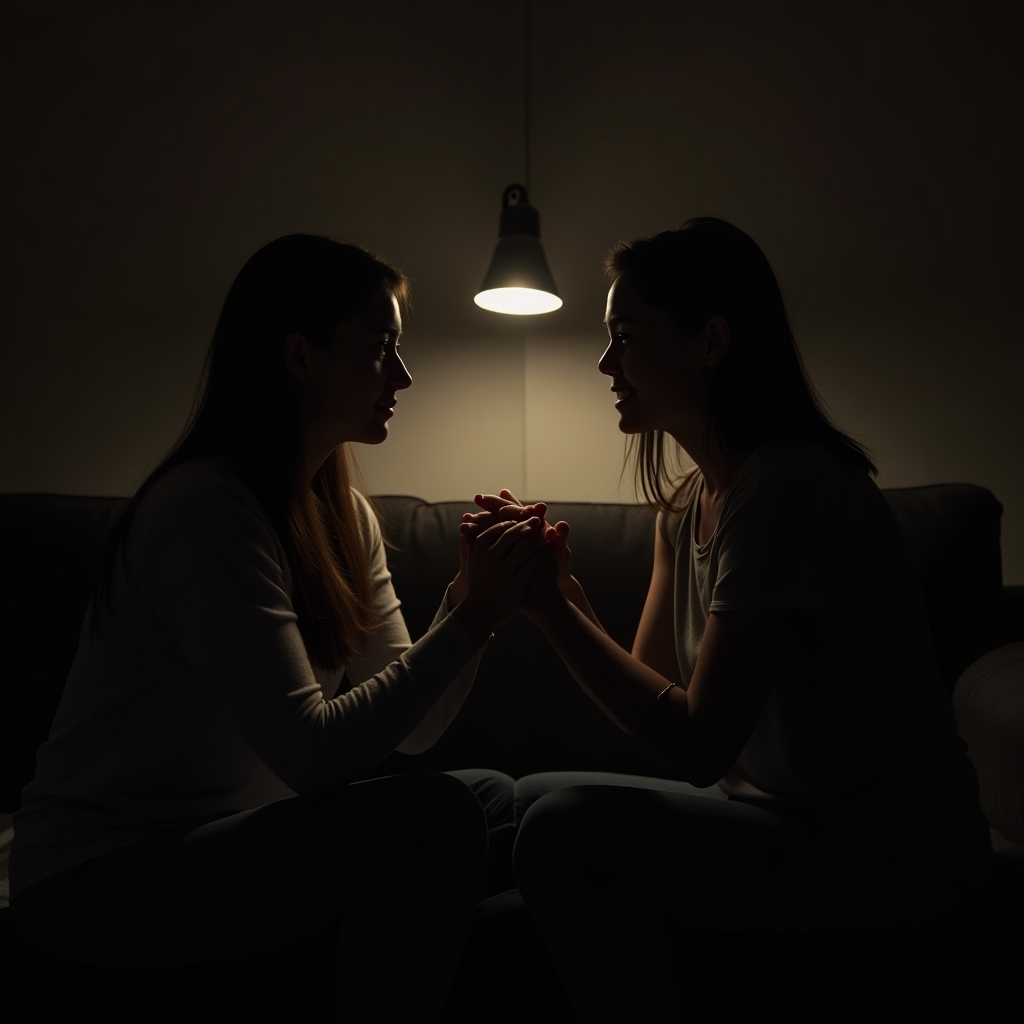
He sat beside her, silent, waiting.
“I want to teach art, Mark. I want to paint every day. Not just as a hobby, not just squeezing it in between everything else. I need more.”
Mark was quiet for a moment before he spoke. “Why haven’t you said anything?”
Emma shrugged, a tear escaping down her cheek. “I didn’t want to disappoint anyone.”
“Emma,” he said softly, “you’ve spent so long making sure everyone else is happy. You deserve to be happy too.”
His words were a balm she hadn’t realized she needed. Emma felt something shift inside her—an uncoiling of tension, a small but significant step towards reclaiming herself.
The next morning, Emma stood in front of the blank canvas. Her hand hovered uncertainly before she picked up a brush. The first stroke was tentative, but it was a beginning—the start of a journey back to herself.
It was a small act, but profound. Her brush danced across the canvas, each stroke a declaration of her autonomy, a quiet rebellion against years of silence. Emma was beginning to write her own story, one brush stroke at a time.