

Emma sat by the kitchen window, the soft morning light filtering through the lace curtains her mother had handed down to her. Sunlight glinted off the ceramic teacup resting between her hands, warm and inviting, yet too delicate to hold with certainty.
For years, Emma had lived her life like this — balanced on a beam, careful not to tiptoe into chaos, holding every thought and feeling on the precipice of silence. Her husband, Mark, was a reliable man in every practical sense. He came home at 6 P.M., kissed her cheek, and asked about dinner. Not once did he delve into the terrain of her mind, either out of habit or fear of what he might find.
Emma loved him, she supposed, in a loyal kind of way, much like the love one might have for worn-out slippers — comforting but no longer exciting. His absence of malice was matched only by his obliviousness.
“Emma, did you order the dry cleaning?” Mark called from the living room, not looking up from his newspaper as he sipped his coffee.
“Yes, I did,” Emma replied, her voice barely carrying over the soft rustling of the pages.
“Great, thanks.”
Their interactions were a series of motions — predictable, orderly, and void of surprise. Just as her childhood had been. Her parents loved her in a way they knew how: structured, proper, with expectations wrapped like barbed wire around her choices.
Emma’s mother had always said, “A lady knows her place and stays within it.” And Emma had tried her best to color within those lines, even as the colors bled outward in frantic attempts to make sense of themselves.
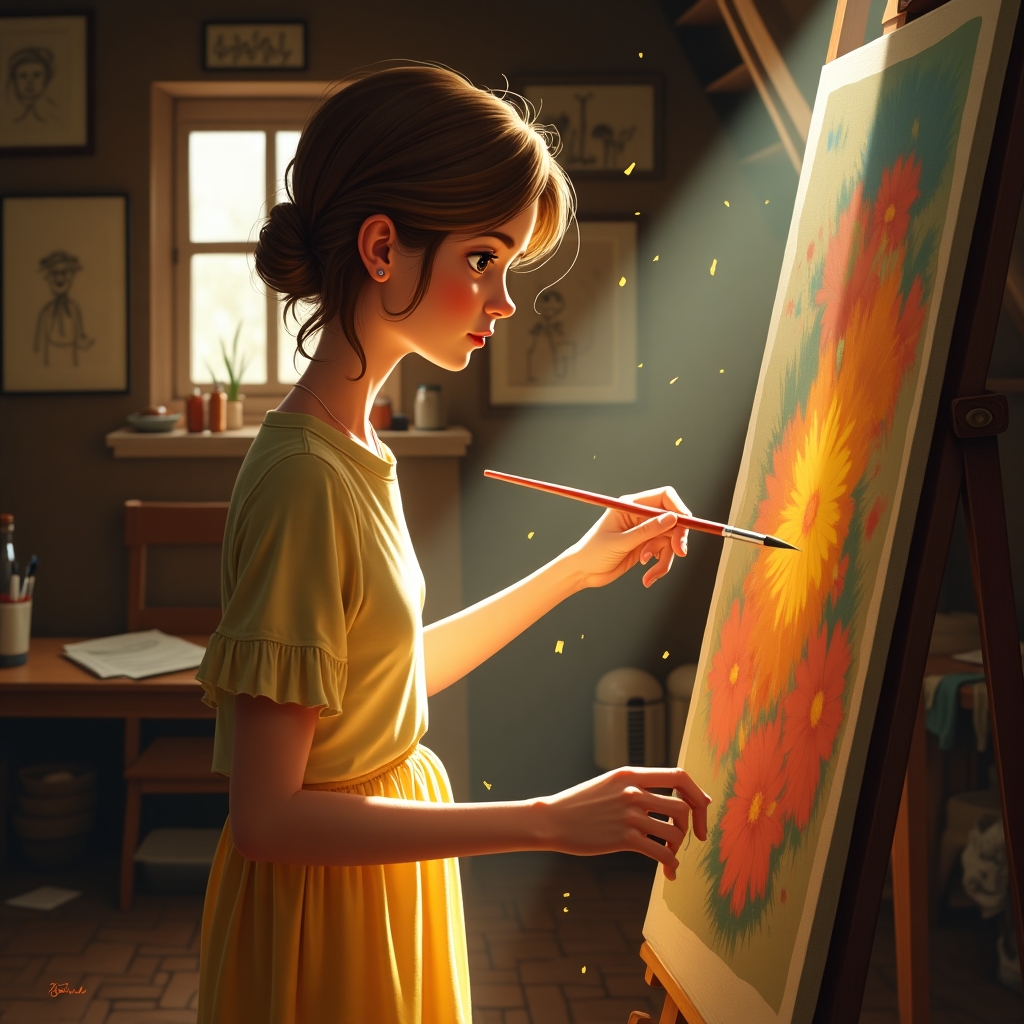
It started subtly, her rebellion. A book on philosophy tucked between the pages of her regular reading list, quiet searches on the internet about solo travel destinations, and dreams of painting vivid landscapes. She would imagine herself standing in fields of sunflowers, a wide-brimmed hat shielding her from the sun, a paintbrush in hand.
The first real external shift came one Tuesday. Emma met her friend Claire for lunch at a local café. Claire was everything Emma wasn’t — bold, vivacious, unapologetically herself. As Claire animatedly discussed her recent hiking trip, Emma felt a pang of longing as clear as the mountain streams her friend spoke of.
“You know, you could come with me next time,” Claire suggested, her eyes dancing with mischief.
Emma’s heart fluttered at the thought, but her mouth formed a familiar, polite refusal.
“I don’t know, Claire. I have so many things to take care of… and Mark…” her voice trailed off.
“Emma,” Claire interrupted gently, her tone firm yet compassionate, “when was the last time you did something just for you? Something that set your soul on fire?”
Emma’s mind drew a blank. She blinked back tears, embarrassed by the raw vulnerability of the moment. Claire reached across the table, her hand warm and reassuring. “It’s never too late to start.”
That evening, as Emma stood in the kitchen, her hands plunged into soapy water, her mind replayed the day’s conversation. The silence of the house only amplified her thoughts — gnawing, insistent.
A week later, Emma found herself standing in an art supply store, heart pounding with an unfamiliar thrill. The aisles were vibrant with possibility, each tube of paint a promise. Her hands hovered, undecided, before finally grasping a set of brushes and a canvas. She felt a bolt of guilt — Mark might question her spending, might disapprove of her ‘frivolous’ pursuits.
But then, almost like a whisper, Claire’s words echoed, “It’s never too late to start.”
Back at home, she set up a small easel in the corner of the spare room, a forgotten space that had once been intended for guests that rarely came. For weeks, she painted in stolen moments, each brushstroke a defiance of her carefully constructed life, a reclamation of herself.
Mark noticed the changes. “You’re painting now?” he asked one evening, surprise mingling with mild curiosity.
“Yes,” Emma replied, straightening her shoulders, “I am.”
He nodded, a noncommittal sound issuing from his throat, “If it makes you happy, Emma.”
And it did. She felt more alive, the colors vivid, her soul unraveling in hues and tones, with each stroke of the brush.
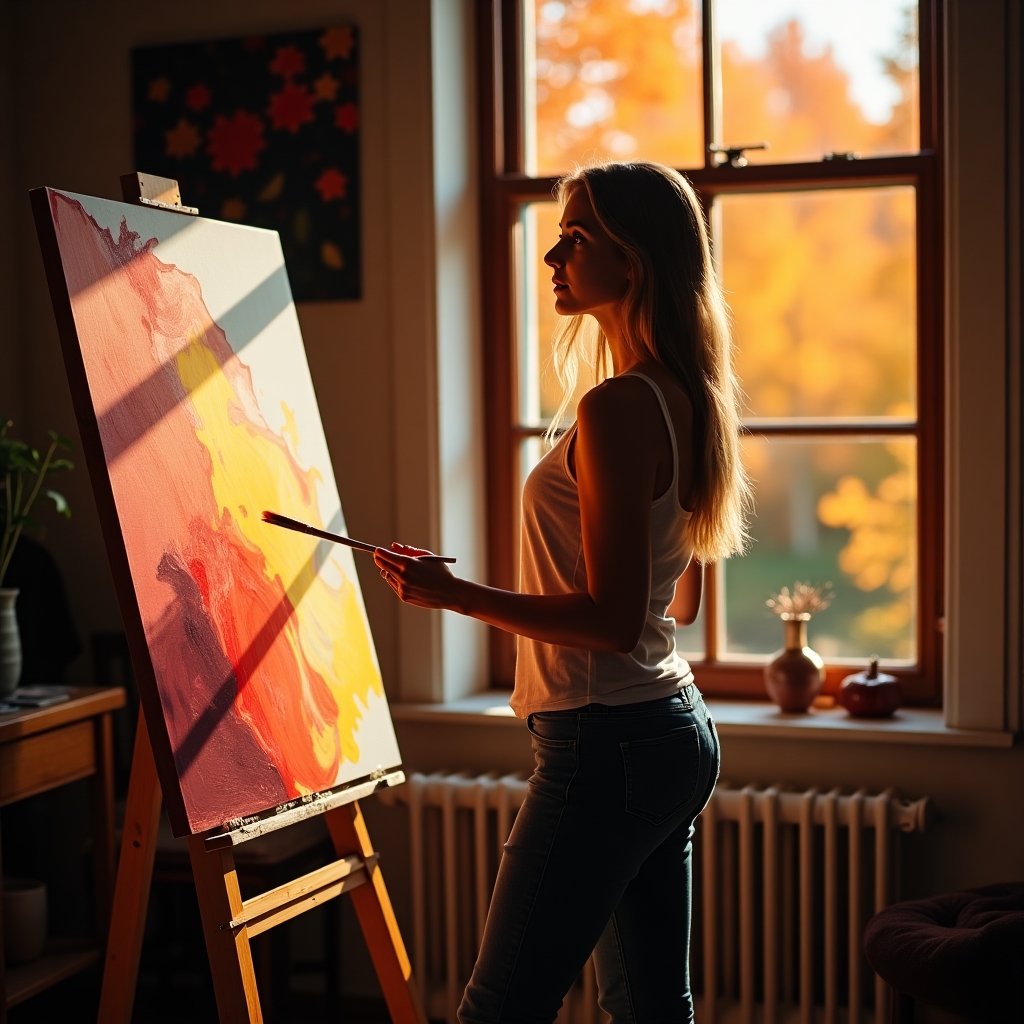
The turning point came one autumn afternoon, the leaves outside their window a riot of gold and red. Emma had been painting for hours, a landscape of mountains and fields, her dream daydreamed onto canvas. She heard the front door creak open and Mark entered, pausing at the threshold.
Emma turned to him, paint smudges across her cheek, eyes bright. “Mark,” she began, voice steady, “I’m going to take a trip with Claire next month.”
His eyebrows shot up, the surprise evident. “Oh? Where to?”
“The mountains, to hike and paint,” she said, her heartbeat steady now, a river instead of a tempest.
Mark hesitated, and for a moment, Emma braced for opposition. But then he nodded slowly, “If that’s what you want, Emma.”
In that moment, Emma reclaimed a piece of herself, a small yet monumental act of liberation. She smiled, feeling the sunflowers sway under an imagined sun.
“Yes,” she said softly, “it is.”