


A faint drizzle had settled over the town, casting a muted gray hue over the landscape. In the confines of her small bedroom, Mira sat by the window, her gaze lost in the mist. The rain had always been her solace, a gentle patter that drowned out the clamor of expectations. She flipped through the pages of her sketchbook, each page a testament to the world she wished to inhabit—a realm of colors and shapes unrestricted by the rigid lines her family had drawn for her.
Mira’s family had lived in this town for generations, their lives intertwined with the local traditions that dictated every action, every choice. Her father, a man of stern principles, had always envisioned Mira taking over the family business—a quaint bookstore nestled at the heart of the town. It was a legacy of sorts, a path paved with certainty and honor, but Mira’s heart yearned for the uncertain, the unpainted canvases that called to her in whispers.
Evenings at the dinner table were often a silent affair, words exchanged mostly in practiced politeness, a choreography perfected over years. Her mother, gentle but resolute, would occasionally steal glances at Mira, her eyes speaking the words left unsaid. ‘In time, you will understand,’ those eyes seemed to say, casting a shadow of inevitability over Mira’s dreams.
Yet, there was a part of Mira that sought resonance, a desire to stretch beyond the confines of her small world. She would sometimes venture into the nearby fields, armed with her sketchbook and pencils, seeking inspiration in the wildflowers that dared to grow amidst the weeds. It was during these solitary excursions that she found a sense of freedom, a quiet resistance against the tide of expectations pulling her under.
Each drawing in her sketchbook was an act of defiance, subtle but profound. The intricate patterns she etched onto the pages were mirrors of her soul, reflections of a life unconfined by duty. But with every stroke of the pencil, a voice within whispered of her betrayal—not to herself, but to her family, whose sacrifices had paved the way for her comfort.
One afternoon, Mira stumbled upon an art gallery in the neighboring town. It was a serendipitous discovery, the kind that feels like destiny masquerading as coincidence. The walls were adorned with paintings that seemed to breathe, each one a world unto itself. A particular piece caught her eye—a swirl of colors depicting a lone tree in a storm, roots stubbornly clinging to the earth while its branches reached toward the tumultuous sky.
Mira stood transfixed, the image resonating with her own struggle. This storm mimicked her own, a tempest of dreams clashing against duty. In that moment of clarity, she understood the quiet power of art, its ability to convey truths that words often failed to capture.
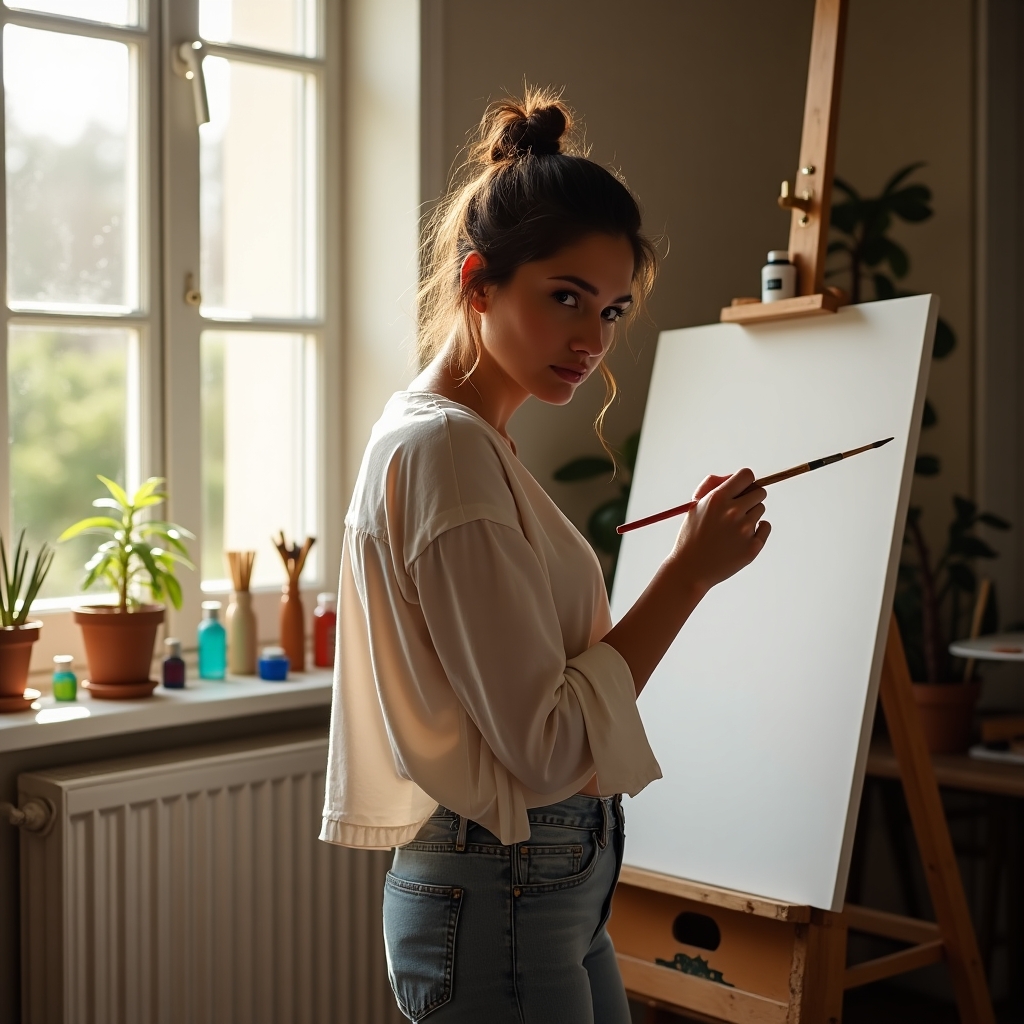
Back home, the rain had ceased, leaving behind a scent of earth and renewal. Mira sat once more by her window, the sketchbook open before her. Her heart was a cacophony of emotions, each beat a reminder of the choice she faced. She began to draw, her hand moving with certainty, painting her own storm—a mural of hopes and fears that captured the essence of her struggle.
The ensuing days saw a shift, imperceptible yet profound. Mira found herself engaging more during family dinners, her words imbued with a newfound confidence. She spoke of the art gallery, her voice steady, revealing a glimpse of the world she longed to inhabit. Her parents listened, the silence between them heavy with unspoken understanding.
It was a quiet transformation, a slow unraveling of one life in favor of another. Mira’s family did not resist; instead, they watched her with a mixture of resignation and pride, recognizing the courage it took to chart one’s own path in defiance of tradition. In their acceptance, Mira found the freedom to bloom, a flower unfurling its petals under the weight of the gentle rain.
In the end, Mira didn’t have to choose between her values and her family’s expectations. She realized that by embracing her own truth, she honored both herself and her family, who had taught her the importance of roots while allowing her to reach for the sky. It was the beginning of a dialogue, a bridge between generations built on the foundation of understanding and respect.