



In the heart of a bustling city, where skyscrapers scrape the sky and people weave through life like threads in a grand tapestry, lived Maya. At twenty-four, she felt the weight of expectation splayed heavily on her shoulders, like a finely woven cloak she was meant to wear proudly. Her family, coming from a long lineage of traditional artisans, held values that honored continuity, a seamless passing of the needle from one generation to the next. Maya’s father, a renowned textile designer, envisioned her taking over his thriving business, her life stitched with patterns of tradition.
But Maya felt different. She had a passion for colors, not just in the fabrics her family cherished, but in paints and canvases, in strokes that could tell stories untethered by history’s directives. Her soul craved the freedom to explore art beyond textiles, yet the fear of disappointing her family tugged her dreams back into the shadows of her heart.
Living in a world where familial love is intricately tied to respect and cultural reverence, Maya often found herself caught in a quiet storm. She loved her family deeply, their legacy was a rich tapestry she admired, yet she yearned to weave her own story, one that danced with hues of her choosing.
Every Sunday, the family gathered for dinner, a ritual as timeless as the heirlooms that adorned their home. These evenings were filled with laughter, stories of ancestors, and subtle nudges from her father about the ‘future of the business’. Maya listened, nodding along, her own voice submerged beneath the cacophony of tradition.
In stolen moments, she’d retreat to her small studio apartment – her sanctuary. Here, she painted fervently, each brush stroke a whisper to herself, a promise of a future unfettered by expectations. Her paintings were vibrant, an explosion of emotions she couldn’t voice aloud, but which screamed in color. Yet, despite the vividness of her creations, a dull ache lingered, the tension between who she was and who she was expected to be remaining unresolved.
One evening, as twilight seeped through the city, Maya sat in her apartment, her fingers stained with paint. An unfinished canvas lay before her, one she had been struggling with for weeks. She felt lost, her vision clouded by doubt. She thought of her father, his pride in her, his belief that she would honor their name by taking over the family business. Her heart ached at the thought of disappointing him.
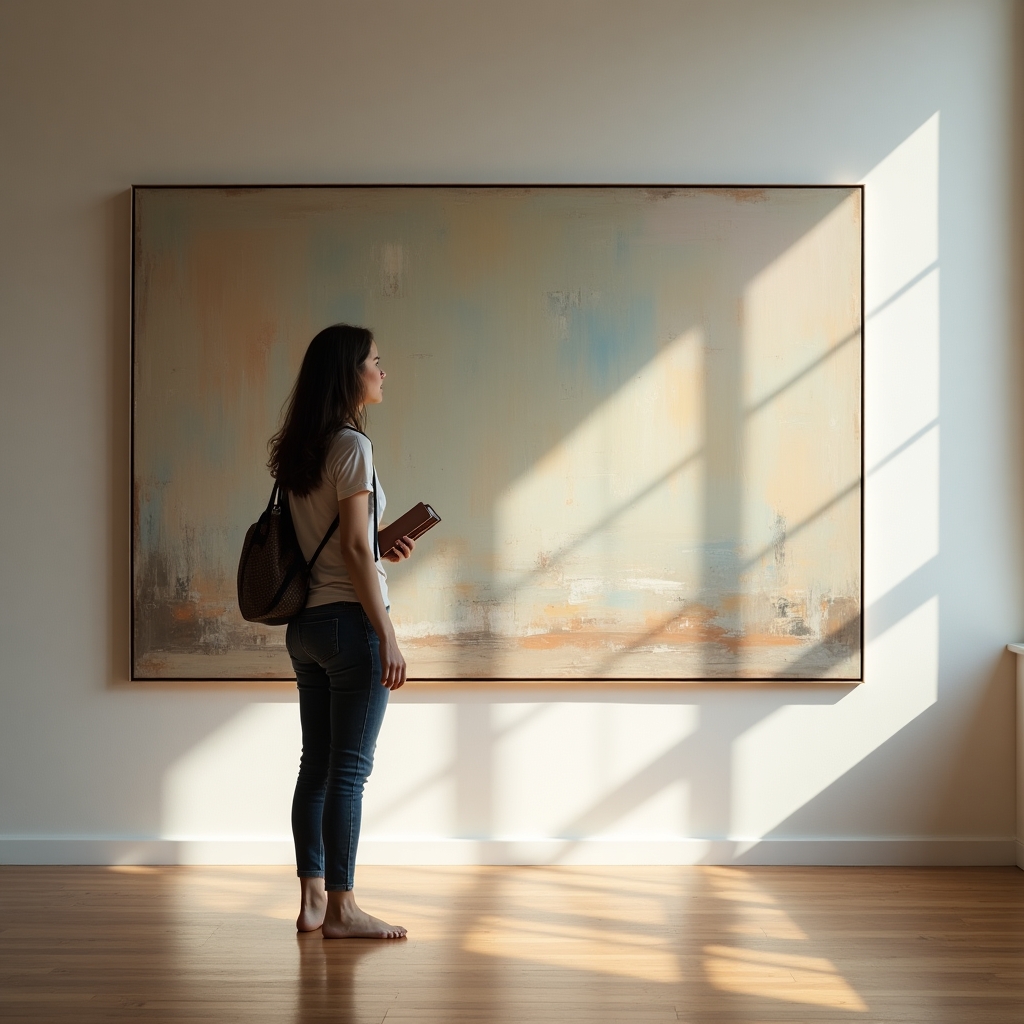
But then, her eyes caught the edge of a painting she had hung up months ago. It was the first piece she had ever truly poured herself into, an abstract landscape of emotion and dream. Looking at it now, something within her shifted, like a lock clicking open. She realized that the colors on that canvas were more honest than any words she had ever spoken. They were her truth, a testament to her desire to live authentically.
The realization was quiet, but powerful. In that moment, Maya understood that honoring herself didn’t mean disrespecting her family. She could forge a path that respected both her heritage and her individuality. It wasn’t about breaking away, but about expanding what it meant to be part of the family legacy.
With newfound clarity, she set to work on the unfinished canvas. Each stroke was deliberate, a dance between intention and instinct. The tension in her heart began to ease, replaced by a resolute sense of purpose. She knew the conversation with her family would be difficult, but for the first time, she felt ready to speak her truth.
The next Sunday, as they sat around the dinner table, Maya felt a familiar swell of anxiety. Her father spoke of upcoming projects, subtly hinting at her impending involvement. But this time, Maya took a deep breath and spoke up. Her voice was steady, yet gentle as she shared her dreams. She spoke of her love for art that reached beyond textiles, of a desire to build a bridge between the old and the new, of a future where her paintings could coexist with the family business.
Her father listened, his expression unreadable, but Maya saw the flicker of understanding in his eyes. It wasn’t an immediate resolution, but it was a beginning, a step towards a future that could embrace both tradition and change. With the courage to express her truth, Maya felt the first blooms of freedom unfurling within her, signaling the start of healing, for herself and perhaps, eventually, her family.