
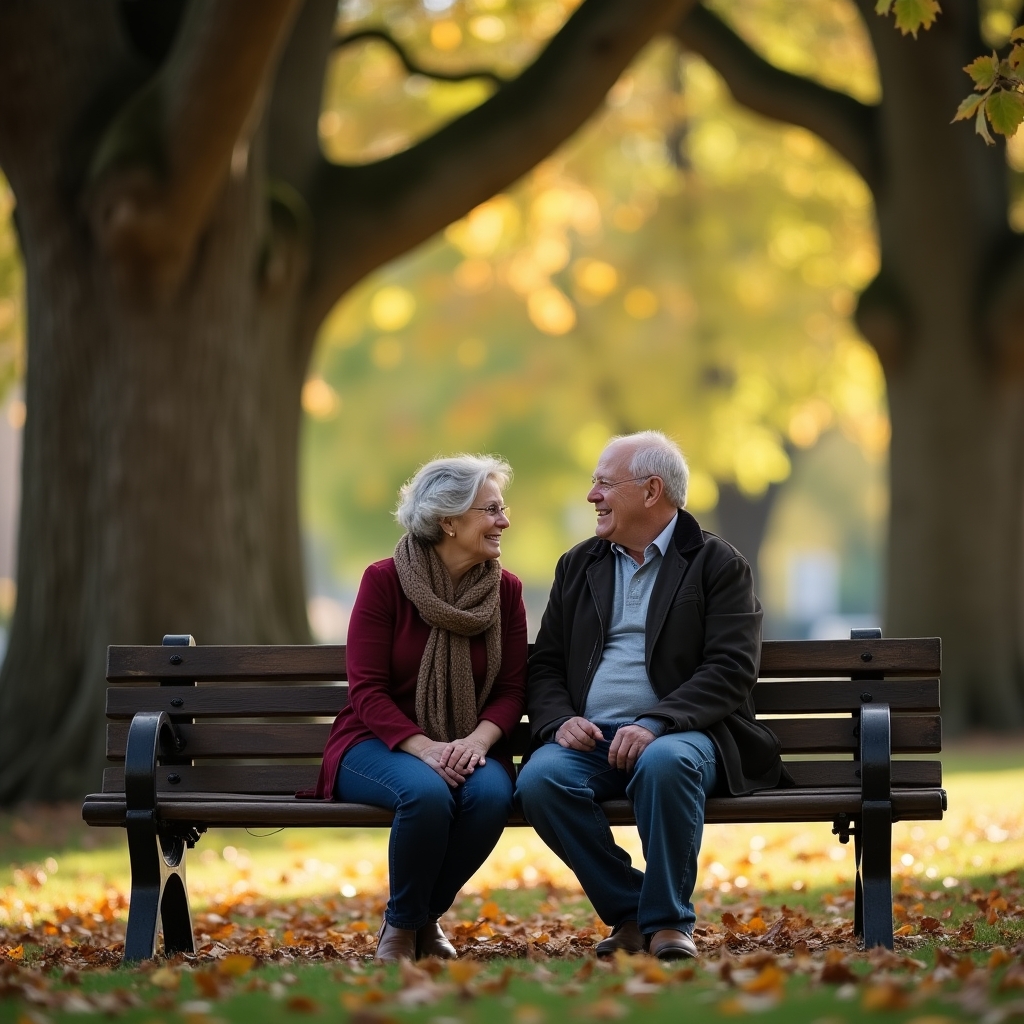
The bench had always been there, tucked away behind the library where the old oaks guarded it as if it were a secret. Ann had almost forgotten about it until she stumbled across it on her way to the grocery store. She paused, her gaze lingering over the peeling green paint and the initials carved into the wood—a dozen years ago by hands that were hers. Her heart gave a little twist.
Just as she was about to walk away, a soft voice stopped her. “Ann? Is that you?”
She turned to see a face she hadn’t seen in thirty years, though it was unmistakable. Hair that had once been a wild chestnut now bore streaks of silver, and the eyes were a little more tired, but the warmth was still there.
“Peter,” she said, the name feeling foreign on her tongue after so many years.
They stood facing each other, the silence expanding between them like a forgotten melody you struggle to remember. A slight breeze rustled the leaves, casting dappled shadows on the ground at their feet.
“I can’t believe it’s you,” Peter said, looking down at his shoes, then back up at her. There was a tightness in his voice, a mystery of unspoken emotions Ann could almost touch.
“I was just…taking a walk,” she said, gesturing vaguely and knowing well enough it was a lie. She had been drawn here by something more than the promise of groceries.
Peter gestured to the bench. “Shall we sit? For old times’ sake?”
Ann hesitated, but the invitation was genuine, and she found herself nodding. They sat down, careful not to touch, the space between them filled with years of silence.
“I often wondered what happened to you,” Peter said after a while, his eyes tracing the initials carved into the wood. “It’s as if one day you were there, and then you weren’t.”
Ann swallowed, memories she had struggled to bury now bubbling up like an untamed river. “Life took its course, I suppose,” she said, the words heavy with the weight of things unsaid.
They talked then, of inconsequential things at first—the weather, the price of groceries, mutual acquaintances they had lost touch with. But the rhythm of their shared past began to weave its way through their conversation, binding them together once more.
“You know, I kept that old letter you wrote,” Peter confessed suddenly, breaking the fragile comfort of casual chat. “The one where you talked about leaving.”
Ann’s eyes widened, a mixture of surprise and something akin to panic. “I never thought you’d keep it.”
Peter smiled, a touch ruefully. “Maybe I hoped you wouldn’t actually go.”
A silence fell, a knowing kind that only two people who had once cared deeply for each other could share. Ann traced the initials on the bench with her fingers, feeling the roughness of the wood beneath her skin.
“I thought about you too,” she admitted, her voice just above a whisper. “More often than I care to admit.”
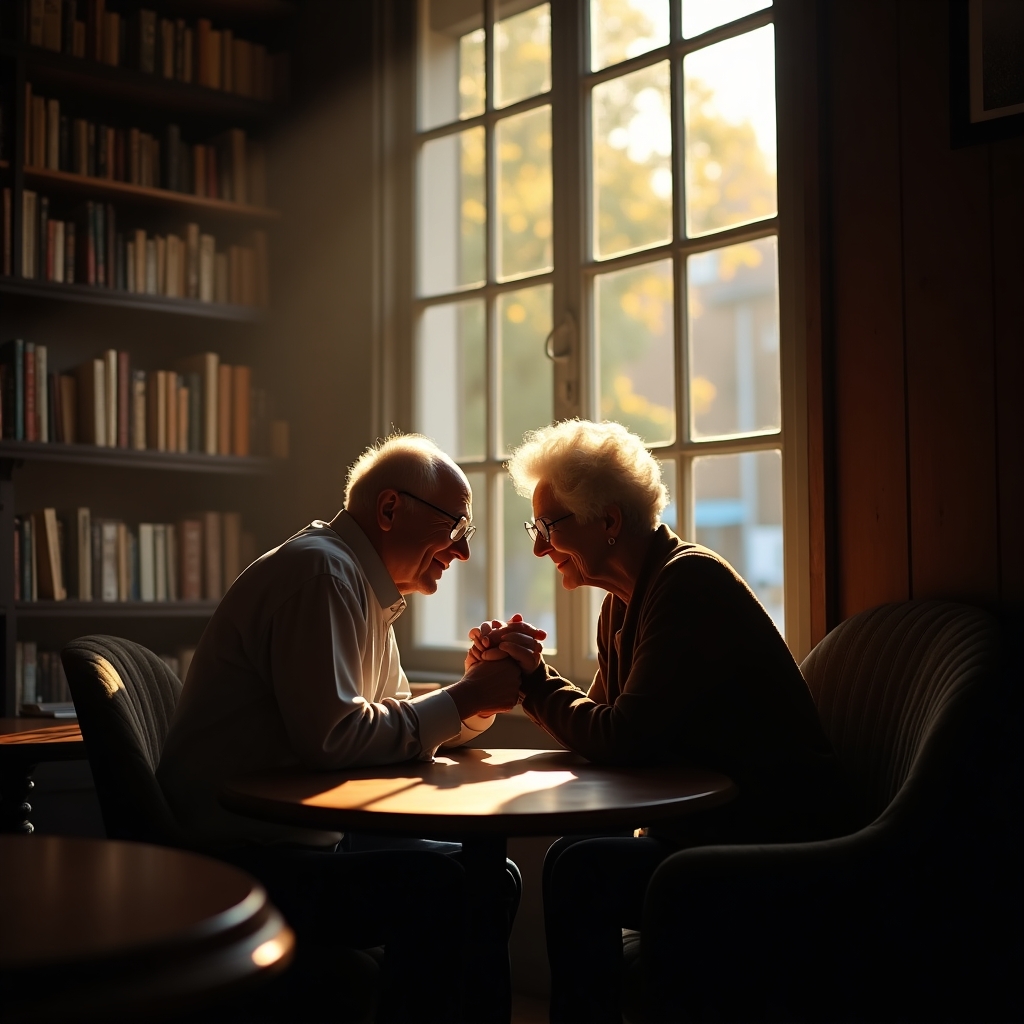
They sat that way for a long time, neither needing to fill the silence with words. The bench creaked slightly under their weight, just as it used to when they were children, friends, dreaming of lives they couldn’t yet imagine.
Peter stood up first, offering his hand to Ann. “Would you like to meet again? Here at the bench?”
Ann looked up, searching his eyes for something she couldn’t quite name. “I’d like that,” she said.
And so, a delicate truce was formed, not so much a rekindling of what was lost, but a quiet acknowledgment of what still remained. As they walked away, the shadows of the trees mingling with the fading light, Ann felt a warmth touching her heart, a gentle reassurance that some things, though changed, could still hold meaning.