

A millionaire screamed at his cleaning lady to get out of his sight — called her worthless, told her to crawl back to the attic. But karma didn’t even wait until morning.
Richard Calloway had a rule: invisible staff or fired staff. And Margaret Hines, sixty-two years old, arthritic knees, fifteen years of flawless service — had just violated that rule by existing in his eye line at the wrong moment.
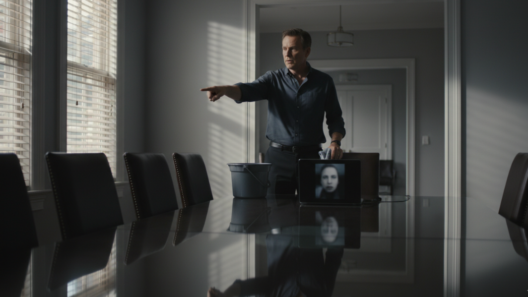
He was already furious when he walked into the dining room. The merger papers hadn’t come through. His lawyer wasn’t answering. And there she was — gray uniform, damp cloth, wiping the mahogany table in slow, careful circles.
“Stop.” His voice cut across the room like a whip.
Margaret froze.
“Do you call that clean?” He stepped closer, pointing at a faint streak near the table’s edge. “Look at that. Look at it. Are you blind or just incompetent?”
She opened her mouth. He didn’t let her speak.
“Fifteen years and you still can’t wipe a table.” He grabbed the cloth from her hand and slapped it on the surface. “You know what? I’m tired of looking at you. Go. Get your things. Go up to the attic, put your supplies away, and get out of my house. I don’t want to see your face again tonight.”
“Mr. Calloway—”
“I said get out.”
Margaret picked up her bucket. She didn’t cry. She never cried in his house. She walked to the hall, pulled her coat from the hook by the service door, and texted her son.
Coming home early tonight. He was on a bad one.
Her son’s response came in twelve seconds.
I’ll have dinner ready. Don’t let him live in your head, Mom.
His name was Daniel Hines. And in forty-eight hours, Richard Calloway would say it out loud for the first time — with his whole career hanging in the balance.
Richard’s problem became a crisis by Friday morning. Vantage Capital, the private equity firm backing his commercial portfolio — three hotels, two office towers, a pending resort acquisition — had frozen distributions pending a review. Someone at the top had flagged compliance issues with two shell subsidiaries Richard had been running through a Delaware LLC.
“They want a call at noon,” his CFO said, pale. “With the managing partner directly.”
“Fine. Who’s the managing partner?”
She slid a folder across the desk.
Richard opened it. His eyes landed on the name at the top. Daniel J. Hines. Managing Partner, Vantage Capital. Age 34.
His stomach moved.
“Get me everything on him,” Richard said. “Background. Photo. Everything.”
The photo came back in twenty minutes. Richard sat very still for a long time.
It was the same jaw. The same eyes. The same quiet expression Margaret Hines wore when he screamed at her and she refused to give him the satisfaction of flinching.
The call was at noon in Richard’s private conference room. Just him, his CFO, and his attorney dialed in from Boston.
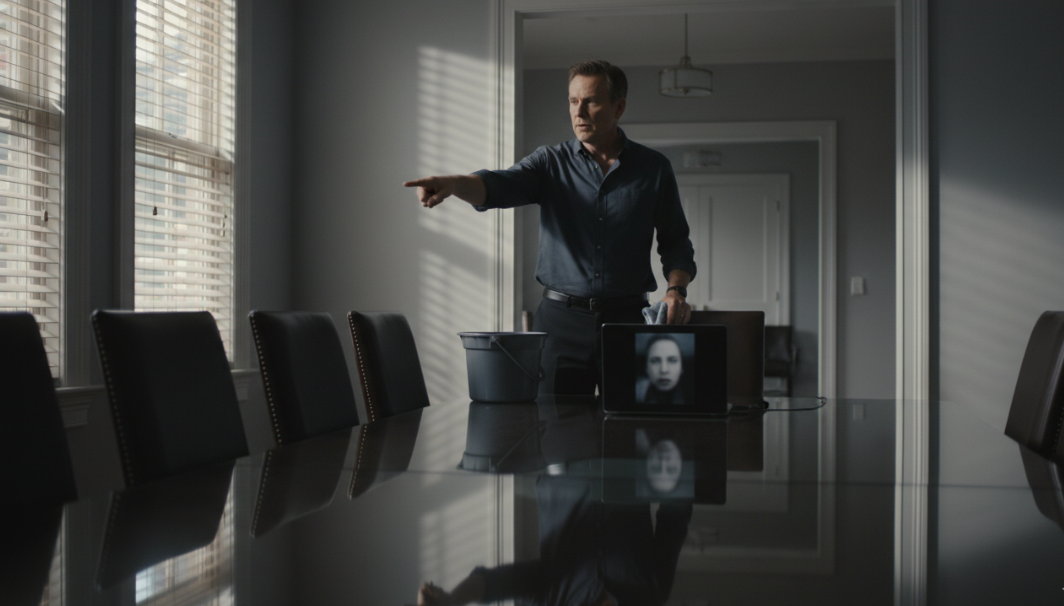
Daniel Hines appeared on the screen. Young. Calm. Suit that cost more than Richard’s first car.
“Mr. Calloway.” No smile. “Thank you for making time.”
“Of course.” Richard’s voice was wrong and he knew it. “I, uh — I wanted to say, before we get into the compliance details—”
“We’ll get to those.” Daniel opened a folder on his side of the screen. “I reviewed the entities in question. The structure is salvageable, but it requires full transparency and some remediation over ninety days. My firm is prepared to continue the partnership under revised terms.”
“That’s — that’s very reasonable. Very.”
A pause.
“I understand,” Daniel said, without looking up from his notes, “that my mother works in your home.”
Richard said nothing.
“She’s worked there for fifteen years.” Daniel’s tone didn’t shift. Still flat. Still professional. “She’s mentioned you several times over the years. In different contexts.” He looked up then. Direct eye contact. “I want to be clear that her employment status has no bearing on this financial decision. I don’t conduct business that way.”
“Of course not,” Richard said quickly. “I respect that completely.”
“Good.” Daniel returned to his notes. “Then I’d like to address clause seven of the revised agreement—”
“Daniel.” Richard’s voice cracked slightly. He pressed through it. “Before clause seven. I want to — I owe your mother an apology. I said some things Wednesday night that were inexcusable. I’ve been under pressure and I took it out on someone who didn’t deserve it. That’s not acceptable.”
Silence on the line. His attorney in Boston stopped typing.
Daniel looked at him for a long moment.
“That’s between you and her,” he said finally. “Call her. Not because of me. Because it’s the right thing.” A beat. “Now — clause seven.”
Richard called Margaret Thursday evening. He had practiced what he would say. He had written notes.
She picked up on the fourth ring.
“Mr. Calloway?”
“Margaret.” He exhaled. “I’m calling to apologize. Wednesday night — what I said was wrong. Completely wrong. You’ve given fifteen years of good work to this house and I treated you like you were nothing. I’m sorry.”
A pause.
“Okay,” she said.
“I’d like you to come back. On your terms. Better hours, better pay, whatever’s fair.”
“I’ll think about it,” she said. Not warmly. Not coldly. Just honest.
“That’s fair,” he said. “That’s completely fair.”
She hung up.
Margaret set her phone down on the kitchen table, next to Daniel’s half-eaten dinner. He raised an eyebrow.
“Him?” he asked.
“Him.”
Daniel nodded. “You don’t have to go back.”
“I know.” She picked up her fork. “That’s exactly why I might.”
She didn’t go back as the cleaning lady.
She called Richard the following Monday and named her terms: a formal household manager role, a written contract, a twenty-two percent raise, and two weeks of paid leave per year. Richard agreed to all of it before she finished the sentence.
He had screamed at the wrong woman on the wrong night. And every day she walked into that house after that, standing a little straighter, the evidence of that mistake walked in with her.
Karma doesn’t always arrive like thunder. Sometimes it rings the doorbell in a pressed coat and simply asks: ready to try this differently?