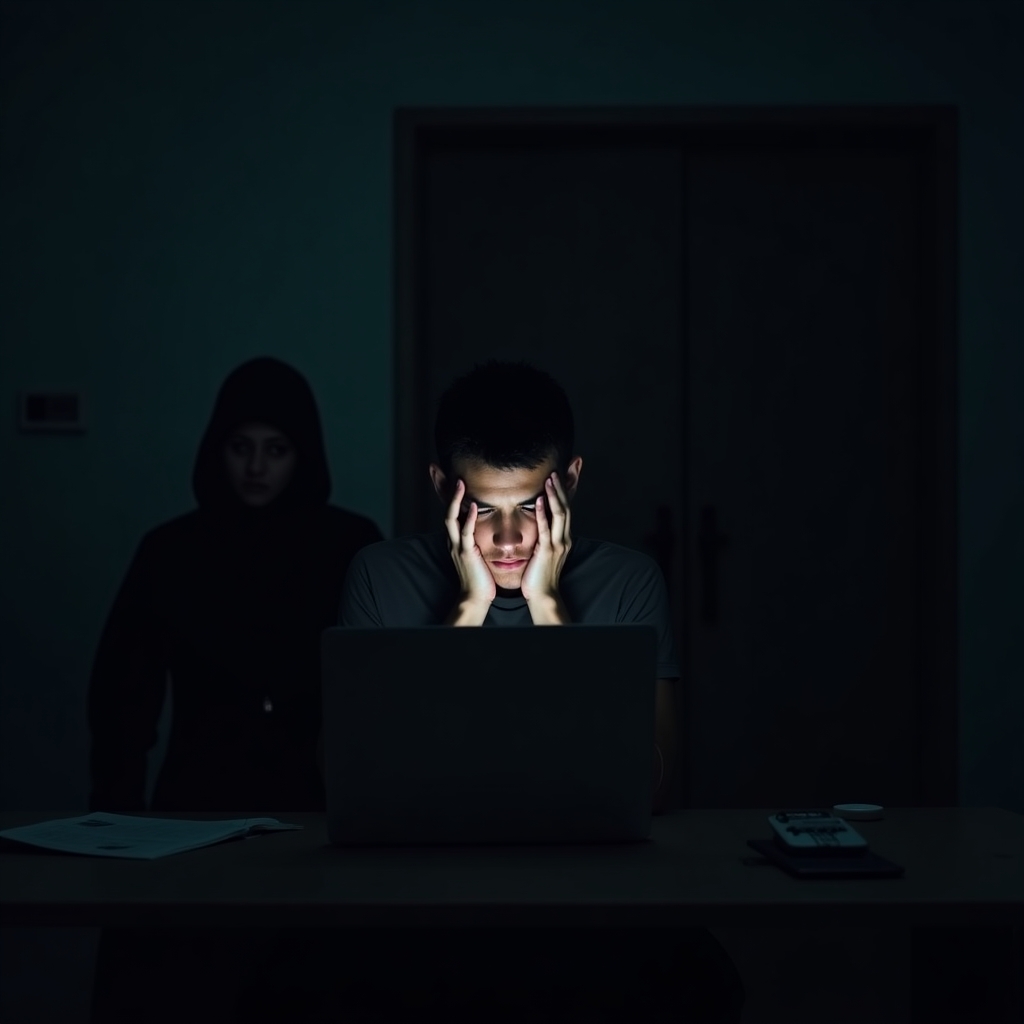



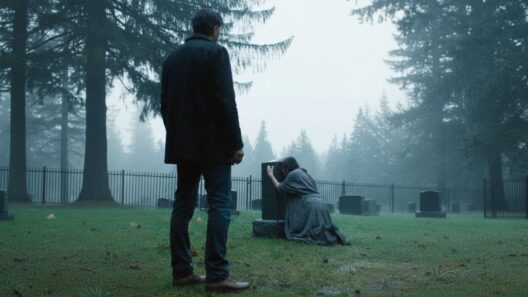

Clara had always prided herself on her intuition. It was a trait she believed she inherited from her mother, who could tell when Clara was sad even over the phone without a word being spoken. So, when a sensation like a cold finger trailing down her spine first alerted her to something amiss in her relationship with Leo, she chose not to ignore it.
It began subtly, almost imperceptibly at first. Leo, who was always bustling with energy, seemed to bring a piece of the outside world indoors each time he returned from work. Clara noticed the way he would pause at the door before entering, as though rehearsing for a role, and the way he hesitated before answering simple questions about his day.
“How was work?” she asked one evening as they chopped vegetables side by side for dinner. Leo’s hands moved methodically, but Clara noticed the slight tremor as he sliced the carrots.
“The usual,” he replied, his voice laden with a weariness she had never heard before.
She decided not to press that night, but the seed of doubt had been planted. Each evening, she observed him, the way his eyes drifted when he thought she wasn’t watching, or how he would retreat into silence, an uncomfortable visitor in their shared space.
The changes were small, like mismatched puzzle pieces in the perfect picture of their life. Leo used to be the sort of person who filled their home with laughter, whose warmth spread like wildfire. But now, it was as though he was conserving his energy, his smiles more reserved, his laughter infrequent and strained.
Clara tried to rationalize these differences. Work was stressful, perhaps. Everyone goes through phases, she reassured herself. Yet, in stolen moments when she caught her reflection—eyes searching, mind racing—she knew there was more lurking beneath the surface.
One afternoon, while cleaning, Clara stumbled upon a small notebook tucked away in the back of a drawer in his office. It was unremarkable, the kind of thing you might buy in bulk, but upon touching it, a small frisson of anxiety crept up her fingertips. She hesitated, her heart a drumbeat in her chest.
She flipped it open to a random page, half-expecting the banal lists and doodles of an ordinary life. Instead, she found something entirely different. Pages were filled with sketches, not of people or places she recognized, but of strange landscapes and surreal faces. There were notes written in a shorthand she didn’t understand, but the tone was unmistakably Leo’s—yet foreign, like a stranger wearing his skin.
Confronting Leo seemed premature, so Clara began to observe more closely, her heart a silent witness to the peculiarities that unraveled before her. Phone calls interrupted by his arrival, whispers that were hushed too quickly, and a lingering scent on his clothes—something floral, unfamiliar, like the memory of a season she hadn’t lived through.
Each day felt like walking on the edge of revelation, teetering between familiar comforts and the abyss of the unknown. Clara found herself pulling at threads, each discovery leading her further down a path she wasn’t sure she wanted to follow.
The tension built like the swell of a storm, each interaction a flash of lightning in the dark. She found herself chasing shadows in the house they both loved, feeling oddly like a stranger in what was once a sanctuary.
Then, one evening, Leo returned home with an unfamiliar softness in his movements, as though he was a different person entirely. Over dinner, Clara finally asked the question that had been clawing at her soul.
“Leo, is there something you need to tell me?” Her voice trembled slightly, betraying the calm facade she tried to maintain.
For a moment, time stood still, his fork suspended in mid-air. His eyes searched hers, a myriad of emotions surfacing—fear, regret, love—and then something broke.
“I’ve been… meeting someone,” he confessed, each word like a stone dropped into the chasm between them. Clara’s heart twisted, more at the revelation of his confidant than at the idea of any romantic betrayal. “She’s a therapist, Clara. For months, I didn’t know how to tell you that I needed help.”
Relief and hurt warred within her. The landscapes, the strange notes—they were glimpses into the turmoil he faced alone. And even though his silence had left her to wallow in her own fears, this truth—this unexpected revelation—offered a new perspective.
In that moment, with emotions raw and unguarded, they sat together in the fragile space of honesty. The fears that had driven them apart now forged a deeper, if not painful, understanding. It was not the end, but a beginning—a chance to rebuild, this time with truth as their foundation.
The path was not easy; it would require work and trust, a resilience neither had anticipated needing. But as they faced the shifting realities together, Clara realized that sometimes the greatest betrayals are not of actions, but of silence. And yet, sometimes, silence is also the first step toward healing.